Omicron to be dominant variant in EU by mid-January
Advertisement
Read this article for free:
or
Already have an account? Log in here »
To continue reading, please subscribe:

Digital Subscription
One year of digital access for only $205*
- Enjoy unlimited reading on winnipegfreepress.com
- Read the E-Edition, our digital replica newspaper
- Access News Break, our award-winning app
- Play interactive puzzles
*First annual payment billed as $205.00 + GST for one year. This annual subscription will automatically renew at $233.00 + GST every 52 weeks (10% off the regular annual price of $259.35). Offer available to new and qualified returning subscribers only. Cancel any time.
To continue reading, please subscribe:
Add Free Press access to your Brandon Sun subscription for only an additional
$1 for the first 4 weeks*
- Enjoy unlimited reading on winnipegfreepress.com
- Read the E-Edition, our digital replica newspaper
- Access News Break, our award-winning app
- Play interactive puzzles
*Your next Brandon Sun subscription payment will increase by $1.00 and you will be charged $17.95 plus GST for four weeks. After four weeks, your payment will increase to $24.95 plus GST every four weeks.
Read unlimited articles for free today:
or
Already have an account? Log in here »
Hey there, time traveller!
This article was published 15/12/2021 (1718 days ago), so information in it may no longer be current.
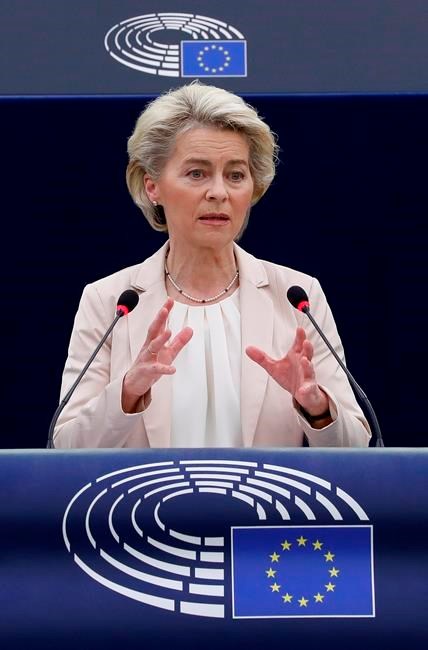
BRUSSELS (AP) — Omicron is expected to be the dominant coronavirus variant in the European Union’s 27 nations by mid-January, the bloc’s top official said Wednesday amid concerns that a dramatic rise in infections will leave Europe shrouded in gloom during the holiday season.
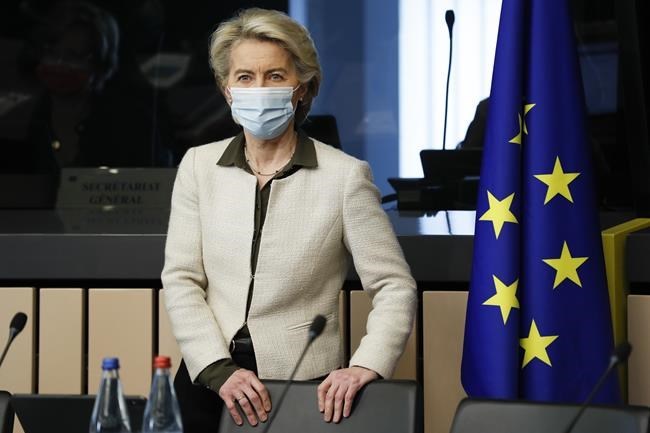
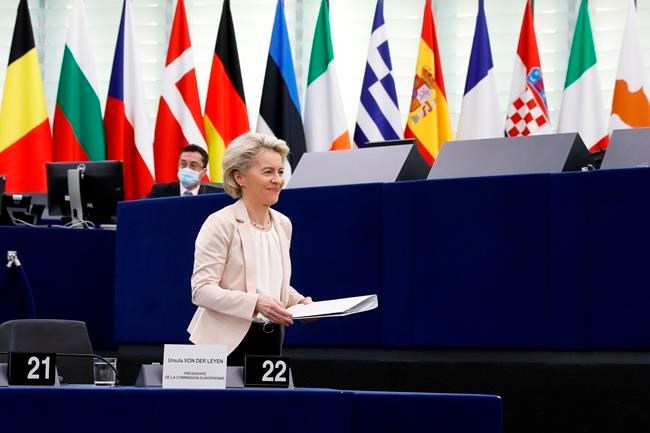
European Commission President Ursula von der Leyen said the EU is well prepared to fight omicron with 66.6% of its population fully vaccinated. She expressed disappointment that the pandemic will again disrupt year-end celebrations but said she was confident the EU has the “strength” and “means” to overcome COVID-19.
“Like many of you, I’m sad that once again this Christmas will be overshadowed by the pandemic,” she said.
The EU-wide vaccination rate obscures that some EU nations, like Portugal and Spain, have immunized the vast majority of their people while other countries lag way behind. Bulgaria, for example, has just 26.6% of its population fully vaccinated, according to the European Centre for Disease Prevention and Control.
Continental Europe can look at Britain for a sense of what lies ahead as omicron spreads; U.K. officials say it will be the country’s dominant variant within days. The head of the U.K. Health Security Agency, Dr. Jenny Harries, said omicron is displaying a staggering growth rate compared to previous variants.
“The difficulty is that the growth of this virus, it has a doubling time which is shortening, i.e. it’s doubling faster, growing faster,’’ Harries told a parliamentary committee on Wednesday. “In most regions in the U.K., it is now under two days. When it started, we were estimating about four or five.’’
Harries said the variant poses “probably the most significant threat we’ve had since the start of the pandemic.”
Britain on Wednesday recorded 78,610 new infections, its highest confirmed daily total of the pandemic. But deaths remained far lower than during the country’s previous peaks, before vaccines against the coronavirus were widely deployed. Scientists have said they don’t know yet if omicron is as lethal as other virus variants.
Alarming rises in infections as winter approached and the delta variant remained at large prompted many European governments to implement public health measures as excess mortality increased during the fall.
The head of the World Health Organization says 77 countries have reported cases of omicron but the variant is probably in most countries by now, just not yet detected. WHO says data is still coming in and much remains unknown about the new variant.
According to an analysis Tuesday of data from South Africa, where omicron is driving a surge in infections, the variant seems to be more easily spread from person to person and better at evading vaccines while causing less serious illness.
“Omicron is spreading at a rate we have not seen with any previous variant. We are concerned that people are dismissing omicron as mild,” WHO Director-General Tedros Adhanom Ghebreyesus said. “Surely we have learned by now that we underestimate this virus at our peril.”
Tedros emphasized that vaccines were just one tool — if a major one — to fight the pandemic, along with measures like mask-wearing, better indoor ventilation, social distancing and hand washing.
With omicron now on the scene, more countries are adopting restrictions. Italy this week required negative tests from vaccinated visitors, raising concerns that similar moves elsewhere will limit the ability of EU citizens to travel to see friends and relatives over the holidays.
Portugal adopted a similar measure on Dec. 1, requiring a mandatory negative test for all passengers on arriving flights, regardless of their vaccination status, point of origin or nationality.
Greece announced Wednesday that all arriving travelers must display a negative test starting Sunday unless they have spent less than 48 hours abroad.
Von der Leyen said the EU faces a double challenge, with a massive increase of cases in recent weeks due to the delta variant combined with the rise of omicron.
“We’re seeing an increasing number of people falling ill, a greater burden on hospitals and unfortunately, an increase in the number of deaths,” she told European Parliament lawmakers.
Von der Leyen insisted that the increase in infections in Europe right now remains due “almost exclusively” to the delta variant. She said that fighting vaccine skepticism is key, especially in EU nations with lower vaccination rates.
“Because the price that we will pay if people are not vaccinated continues to increase,” she said. “It’s also a problem for our elderly citizens, who once again this Christmas can’t see their grandchildren. And it’s also a problem for those children who once again can’t go to school. What kind of a life is that?”
Echoing von der Leyen’s comments, German Chancellor Olaf Scholz vowed Wednesday that his new government would do everything for Germany to overcome the coronavirus pandemic and let people return to normal lives.
“We have no time to waste,” said Scholz, who took office as Germany grapples with its biggest wave of infections during the pandemic to date.
Scholz also said his German government won’t tolerate a “tiny minority” of extremists trying to impose their will against coronavirus policies.
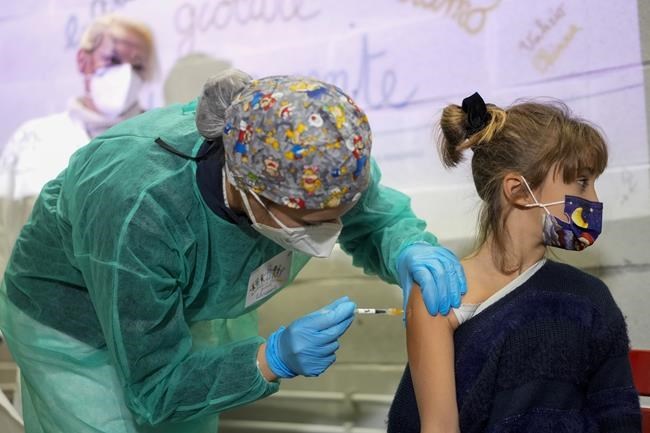
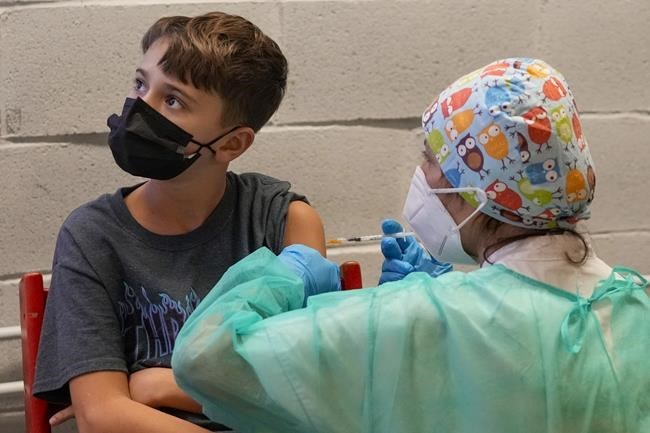
As governments braced for the holiday season, Greece, Italy, Spain and Hungary began vaccinating children aged 5-11 against COVID-19.

EU leaders have a summit scheduled for Thursday in Brussels.
___
Jamey Keaten in Geneva, Danica Kirka in London, Raf Casert in Brussels and Geir Moulson in Berlin contributed to this story.
___
Follow AP’s pandemic coverage at https://apnews.com/hub/coronavirus-pandemic