Provinces relax COVID-19 restrictions as Trudeau tests positive for virus
Advertisement
Read this article for free:
or
Already have an account? Log in here »
To continue reading, please subscribe:

Digital Subscription
One year of digital access for only $205*
- Enjoy unlimited reading on winnipegfreepress.com
- Read the E-Edition, our digital replica newspaper
- Access News Break, our award-winning app
- Play interactive puzzles
*First annual payment billed as $205.00 + GST for one year. This annual subscription will automatically renew at $233.00 + GST every 52 weeks (10% off the regular annual price of $259.35). Offer available to new and qualified returning subscribers only. Cancel any time.
To continue reading, please subscribe:
Add Free Press access to your Brandon Sun subscription for only an additional
$1 for the first 4 weeks*
- Enjoy unlimited reading on winnipegfreepress.com
- Read the E-Edition, our digital replica newspaper
- Access News Break, our award-winning app
- Play interactive puzzles
*Your next Brandon Sun subscription payment will increase by $1.00 and you will be charged $17.95 plus GST for four weeks. After four weeks, your payment will increase to $24.95 plus GST every four weeks.
Read unlimited articles for free today:
or
Already have an account? Log in here »
Hey there, time traveller!
This article was published 31/01/2022 (1690 days ago), so information in it may no longer be current.
Ontario and Quebec began lifting COVID-19 restrictions amid slight decreases in reported hospitalizations Monday while Saskatchewan’s premier defended plans to end vaccine requirements there, hours after Prime Minister Justin Trudeau revealed he tested positive for the virus.
Trudeau said in a press conference held outside his home that he felt well and had no symptoms.
He announced his positive test result on Twitter earlier in the day, adding he would keep working remotely this week as he follows public health guidelines. He also encouraged everyone to “please get vaccinated and get boosted.”
In Saskatchewan, Premier Scott Moe pointed to Trudeau’s positive test and his own recent experience acquiring COVID-19 as examples of the Omicron variant evading vaccine protection.
Moe said the province’s proof of vaccination or negative COVID-19 test requirement will “very soon come to an end,” arguing Omicron transmits among both vaccinated and unvaccinated individuals.
Vaccines have been shown to have significant benefit in preventing hospitalization and death, and data suggests a third dose boosts protection against the Omicron variant.
But Moe said the province’s vaccine requirement, which he credited with increasing Saskatchewan’s vaccination rates, had “run its course.” He did not say when the requirement would be removed.
The comments followed a similar heavily criticized position Moe espoused in a letter Saturday in support of the Ottawa-bound convoys protesting federal vaccine mandates on truckers crossing the border.
Dr. Eben Strydom, president of the Saskatchewan Medical Association, said Monday it’s incorrect for Moe to say vaccines don’t prevent transmission.
An epidemiologist based at the University of Saskatchewan, Nazeem Muhajarine, called Moe’s comments “irresponsible and dangerous.”
Saskatchewan reported 363 people with COVID-19 in hospital Monday — the most since the pandemic began. Of those, 42 were in intensive care.
Trudeau, who is fully vaccinated and received his booster at an Ottawa pharmacy in early January, revealed last Thursday he was going into isolation for five days after finding out the previous evening he had been in contact with someone who tested positive.
He told The Canadian Press on Friday that one of his three children had tested positive for COVID-19. Trudeau said in Monday’s news conference that two of his kids have now contracted the virus.
Ontario, meanwhile, reported 2,983 people in hospital with COVID-19 and 583 people in intensive care on Monday — down from 3,019 hospitalizations and 587 in intensive care the previous day. Health Minister Christine Elliott noted that not all hospitals report data from the weekends, however.
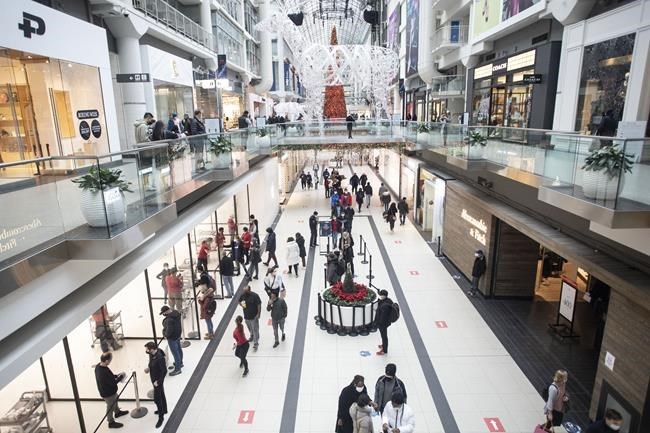
The province also reported 31 more COVID-19 deaths as restaurants, gyms and theatres began welcoming patrons back at half capacity for the first time in nearly a month. Larger venues reopened with capacity limited to 50 per cent or 500 people, whichever is fewer, and indoor-gathering limits increased to 10 people from five people.
Arif Ahmed, the general manager of downtown Toronto restaurant Hothouse, said pandemic-related closures have been “very challenging.”
He said it was “great news” that the restaurant could reopen Monday, though he hoped to see more patrons come through his doors.
“I’m excited that we’re open, but at the same time, it’s going to take a little bit of time for people to come out,” he said.
Quebec also took steps to reopen the province, including allowing restaurants to operate at half capacity, after partially shutting down over the holidays due to record-high hospitalizations.
Private indoor gatherings of up to four people, or two family bubbles, are also permitted and extracurricular sports resumed in elementary and high schools, CEGEPs and universities with the mandatory vaccine passport for students age 13 and over.
Premier François Legault announced plans last week to gradually loosen public health restrictions as the COVID-19 situation improved somewhat.
Quebec reported 33 deaths attributed to the virus on Monday, 2,888 people hospitalized and 223 people in intensive care, a decline of 10 from the previous day.
The second phase of Quebec’s plan to ease restrictions is set for next week, with places of worship, entertainment and sports venues allowed to reopen with limited capacity on Feb. 7.
Meanwhile in New Brunswick, schools reopened to in-person learning on Monday.
Ontario, which began its delayed in-person learning two weeks ago, listed eight schools closed due to COVID-19 operational reasons, while 165 schools reported staff and student absence rates of 30 per cent or more.
Ontario also said more than 56 per cent of long-term care homes in the province have active COVID-19 outbreaks.
Ontario plans to ease COVID-19 measures further on Feb. 21.
— With files from Noushin Ziafati in Toronto
This report by The Canadian Press was first published Jan. 31, 2022.