Peter MacKay suggests Magnitsky Act should be used against China for COVID-19
Advertisement
Read this article for free:
or
Already have an account? Log in here »
To continue reading, please subscribe:

Digital Subscription
One year of digital access for only $205*
- Enjoy unlimited reading on winnipegfreepress.com
- Read the E-Edition, our digital replica newspaper
- Access News Break, our award-winning app
- Play interactive puzzles
*First annual payment billed as $205.00 + GST for one year. This annual subscription will automatically renew at $233.00 + GST every 52 weeks (10% off the regular annual price of $259.35). Offer available to new and qualified returning subscribers only. Cancel any time.
To continue reading, please subscribe:
Add Free Press access to your Brandon Sun subscription for only an additional
$1 for the first 4 weeks*
- Enjoy unlimited reading on winnipegfreepress.com
- Read the E-Edition, our digital replica newspaper
- Access News Break, our award-winning app
- Play interactive puzzles
*Your next Brandon Sun subscription payment will increase by $1.00 and you will be charged $17.95 plus GST for four weeks. After four weeks, your payment will increase to $24.95 plus GST every four weeks.
Read unlimited articles for free today:
or
Already have an account? Log in here »
Hey there, time traveller!
This article was published 08/05/2020 (2334 days ago), so information in it may no longer be current.
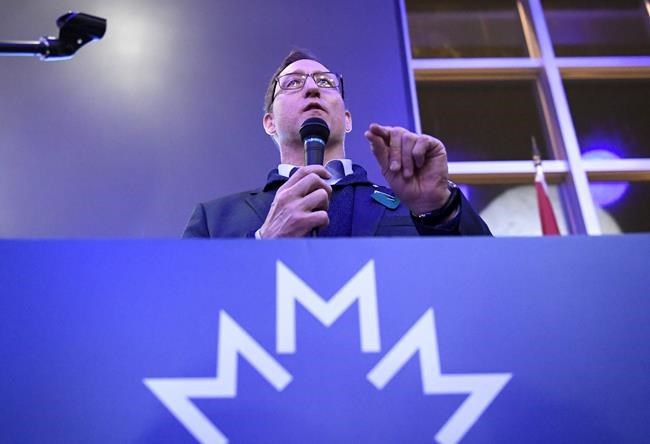
OTTAWA – Conservative leadership hopeful Peter MacKay is calling for use of the Magnitsky Act if specific individuals in China can be identified as having suppressed information related to COVID-19
A full inquiry, perhaps an international one, into how the novel coronavirus turned into a pandemic is required, MacKay told supporters.
“We need to invoke existing laws like the Magnitsky Act to hold individuals personally accountable for misdeeds if that evidence exists,” he said.
The act allows for sanctions against foreign nationals “responsible for gross violations of internationally recognized human rights.”
The legislation is named after Sergei Magnitsky, a Moscow lawyer who was tortured and died in a Moscow prison after uncovering fraud in Russia.
“If there was evidence that was suppressed, or falsified, or if there is information brought to the front that proves that the outbreak in Wuhan (city) either could have been prevented or we could have contained it much earlier, than I think we have to have a much, much greater degree of accountability,” MacKay said on a call with supporters this week.
There has been a running debate over how much Chinese government officials knew and potentially didn’t tell global health officials about the emergence of COVID-19 in that country late last year, leading to questions about whether the damage could have been averted.
Both China and the WHO have denied any cover-up.
MacKay is not the first to suggest using the act. Human rights advocate and former Liberal MP Irwin Cotler advanced the idea in April.
MacKay, as well as two other leadership candidates, Erin O’Toole and Derek Sloan, also joined Cotler and hundreds of other politicians, academics and human rights advocates in signing a letter condemning China’s actions.
A fourth candidate, Leslyn Lewis, does not appear to have signed the letter, though like her competitors she has called for a change in Canada-China relations.
Conservatives have long taken a harder line on China than their Liberal counterparts. Late last year, O’Toole successfully led a push to create a special House of Commons committee devoted to probing the relationship. His position on China is the first thing visitors to his Twitter page will see.
Still, the need to formulate policy and ideas on the specific issues posed by the COVID-19 pandemic — the role of China being one — has become an ever-growing part of the Conservative leadership campaign.
With billions of dollars in federal spending moving out the door, and provinces beginning to reopen their economies, the candidates are increasingly fielding questions about how they’d handle bringing Canada back to some measure of normal.
When the Conservative leadership race resumed late last week — it had been put on pause because of the pandemic — MacKay refreshed his entire website, adding a document about his “vision” for rebuilding Canada in the post-COVID-19 era.
Among other things, he called for a plan similar to what was used in post-war Europe to rebuild there, and one that ensures Canada has all the supplies it needs should the outbreak return or a new one emerge.
He does not lay out how, exactly, that can be achieved.
Lewis framed some of her own response this week also in terms of vision, making the case that a new “normal” is required based on the lessons learned from the pandemic.
“Amidst the fear of COVID-19, we’re learning humility and realizing what we’ve left behind: a country where we cared about our elderly neighbour and bought them groceries, shovelled their snow and cut their grass,” she wrote.
Sloan’s COVID-19 ideas have generated some controversy. He appeared to attack the loyalty of Dr. Theresa Tam, the chief public health officer who was born in Hong Kong, by asking whether the fact she relied on the WHO meant she was actually working for China. He later said he wasn’t going after her personally.
O’Toole, seen as running neck-and-neck with MacKay in the race, is shortly expected to lay out a refreshed slate of ideas to tackle COVID-19 recovery, contained in the full policy platform his campaign intended to roll out earlier this year, but delayed.

He’s already put out forward one bold proposition — that with him, the Conservatives would win a majority.
The man he is seeking to replace, Andrew Scheer, was pilloried by some in his party during the federal election last fall for suggesting the party could at that point win a majority.
The prevailing wisdom was that Canadians were still too wary of Scheer to turf the Liberals altogether and hand the government over to the Opposition, so suggesting a majority was possible was a political turn-off.
Conservative party members will elect a new leader later this year.
This report by The Canadian Press was first published May 8, 2020.