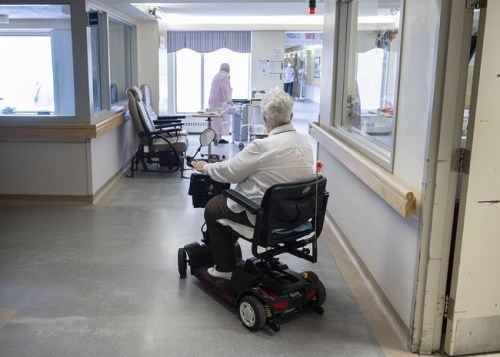
2021 census shows number of seniors over 85 expected to triple in next 25 years

Advertisement

Advertise with us

OTTAWA - Canada’s seniors over the age of 85 are the fastest-growing age group in the country, marking another milestone on the slow march to what experts warn will be a crisis in care for the country’s elders.

Read this article for free:


or

Already have an account? Log in here »

To continue reading, please subscribe:

Subscribe and receive a limited-edition Free Press branded hat or tote.

Digital Subscription

One year of digital access for only $205*

  • Enjoy unlimited reading on winnipegfreepress.com
  • Read the E-Edition, our digital replica newspaper
  • Access News Break, our award-winning app
  • Play interactive puzzles

*First annual payment billed as $205.00 + GST for one year. This annual subscription will automatically renew at $233.00 + GST every 52 weeks (10% off the regular annual price of $259.35). Offer available to new and qualified returning subscribers only. Cancel any time.

To continue reading, please subscribe:

Add Free Press access to your Brandon Sun subscription for only an additional

$1 for the first 4 weeks*

  • Enjoy unlimited reading on winnipegfreepress.com
  • Read the E-Edition, our digital replica newspaper
  • Access News Break, our award-winning app
  • Play interactive puzzles
Start now

*Your next Brandon Sun subscription payment will increase by $1.00 and you will be charged $17.95 plus GST for four weeks. After four weeks, your payment will increase to $24.95 plus GST every four weeks.

Hey there, time traveller!
This article was published 27/04/2022 (1604 days ago), so information in it may no longer be current.

OTTAWA – Canada’s seniors over the age of 85 are the fastest-growing age group in the country, marking another milestone on the slow march to what experts warn will be a crisis in care for the country’s elders.

The latest census data from 2021 shows that since 2016, the number of people aged 85 and older grew by 12 per cent — more than twice as high as the overall growth of the Canadian population at 5.2 per cent.

The number of people over 85 more than doubled since the 2001 census, and is expected to triple by 2046.

The pace of aging is expected to accelerate with every new candle added to the boomer generation’s birthday cake each year.

Last year the oldest baby boomers turned 76, and most probably live independently, said Bonnie-Jeanne MacDonald, director of financial security research at the National Institute on Ageing at Toronto Metropolitan University.

“They haven’t started hitting these critical ages that are usually associated with needing care and support,” MacDonald said. “But it’s really something that’s now very clearly on the horizon.”

Statistics Canada director of demography Laurent Martel calls the phase Canada is entering a “date with demographic destiny.”

By 2050, the 85-and-older population could reach more than 2.7 million people, the census shows, as the last cohort of baby boomers turns 85.

The question is: who will care for that generation, and where will they live?

“One of the big impacts of the aging population is on the health care system, and on the need for long-term care,” said Environics chief demographer Doug Norris.
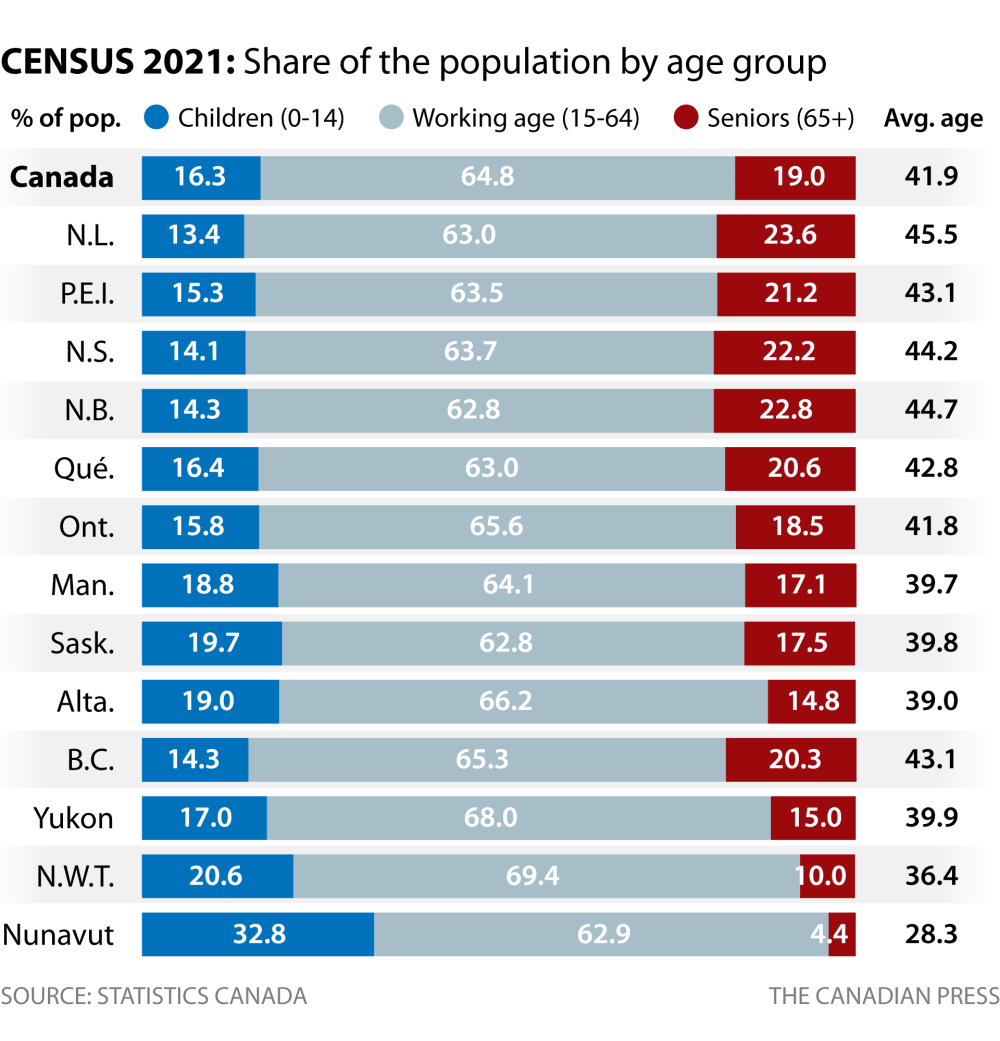
More than one in four seniors in that age bracket currently live in a “collective dwelling” like a seniors residence, nursing home, long-term care residence or hospital, the census shows.

The proportion of elders living in those settings only increases with age, as more than half of centenarians receive care in one of those homes.

Wait-lists for long-term care beds can already stretch on for years, leaving people stuck in hospitals because there is nowhere else for them to go, or families struggling to care for their loved ones at home.

“It’s going to affect the country in terms of the way the medical resources are distributed. It’s going to certainly require more of our tax budget to be allocated towards caring for seniors. But I think most of all, it’s going to affect everyone personally,” she said.

That’s especially true because Canada’s older adults have not had as many children as previous generations.

That means fewer caregivers to tend to the growing number of people who won’t have access to long-term care spaces.

“Baby boomers aren’t just the largest generation, they’re also the first generation to have relatively few children. So they’re not going to have the same family support that’s existed since basically the beginning of time,” MacDonald said.
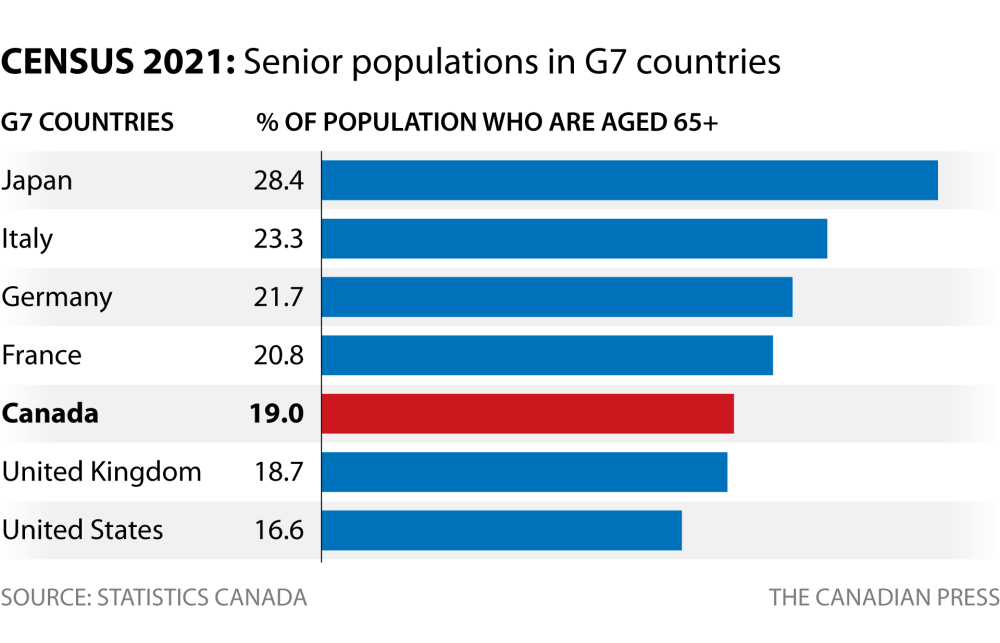
Now, with one in five people in Canada aged 65 and older, the immediate threat will be costly to avoid, she said.

While the millennial population is trending toward becoming the largest generation in Canada by 2026, the sheer number of over-85s in the country will make it difficult to fund the increased demand for health services and care.

It’s a problem MacDonald has personally contended with. When her aunt, who has no children, stopped eating at her retirement home, MacDonald and her other family members needed to take turns dropping by to feed her.

That trend could continue into the future, since birthrates have been falling since 2016, leaving fewer people to care for millennials when they reach old age as well, said Statistics Canada’s Martel.

In fact, 2020 saw the lowest birthrate since the First World War, he said.

“When you have shocks like these in the age pyramid, you do have challenges for the new generation supporting the generation on top of them, especially as this generation gets older,” Martel said.

People are also living longer, and while that’s great news, it also means health care is going to have to change to accommodate an older population.

A Statistics Canada building and sign is pictured in Ottawa on Wednesday, July 3, 2019. THE CANADIAN PRESS/Sean Kilpatrick

“The health-care system in Canada was devised when the average age was like 28,” said Parminder Raina, scientific director of the McMaster Institute for Research on Aging.

“Acute-care hospitals are not designed for an aging population.”

Many of the effects of Canada’s grey wave won’t be felt for about five to 10 years, when Canada can expect to see massive increases in the number of people over 85.

But the country has already missed the boat on large new investments, since the people who need the care won’t be paying income tax toward a solution.

That means Canada will need to get creative in caring for its elders over the next decades.

“We need to create not just better systems, but smarter systems,” MacDonald said.

Solutions may look different region to region. Rural populations are aging faster than big cities, and Atlantic provinces are greying faster than the rest of the country — partially due to a lower influx of immigrants.
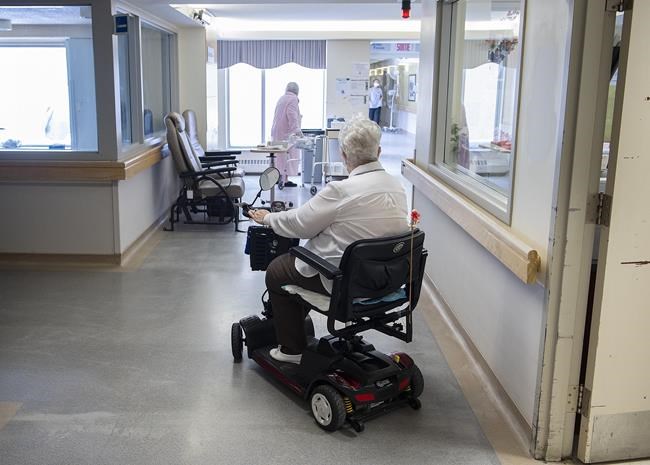
Residents are shown at Idola Saint-Jean long-term care home in Laval, Que., Friday, February 25, 2022. The latest census release on aging marks another milestone on the slow march to what experts warn will be a crisis in care for Canada’s elders. CANADIAN PRESS/Graham Hughes

Fortunately, Canada still skews younger than some other G7 countries like France, Germany, Italy and Japan, which are ahead of the aging curve.

“We certainly can learn from their experiences,” Martel said.

This report by The Canadian Press was first published April 27, 2022.

Report Error Submit a Tip

More Stories

Suspension on the horizon for Hellebuyck as pre-season set to start

Ken Wiebe 7 minute read Preview

Suspension on the horizon for Hellebuyck as pre-season set to start

Ken Wiebe 7 minute read Yesterday at 6:21 PM CDT

In this high stakes game of chicken, Kevin Cheveldayoff, Connor Hellebuyck or any of the potential suitors for the Winnipeg Jets franchise netminder appear ready to blink.

Read
Yesterday at 6:21 PM CDT

Seniors are fastest-growing age group in Canada

Laura Osman, The Canadian Press 5 minute read Preview

Seniors are fastest-growing age group in Canada

Laura Osman, The Canadian Press 5 minute read Wednesday, Apr. 27, 2022

OTTAWA - Canada’s seniors over the age of 85 are the fastest-growing age group in the country, marking another milestone on the slow march to what experts warn will be a crisis in care for the country’s elders.

The latest census data from 2021 shows that since 2016, the number of people aged 85 and older grew by 12 per cent — more than twice as high as the overall growth of the Canadian population at 5.2 per cent.

The number of people over 85 more than doubled since the 2001 census, and is expected to triple by 2046.

The pace of aging is expected to accelerate with every new candle added to the boomer generation’s birthday cake each year.

Read
Wednesday, Apr. 27, 2022

Transit safety drives first mayoral debate

Morgan Modjeski 4 minute read Preview

Transit safety drives first mayoral debate

Morgan Modjeski 4 minute read Yesterday at 2:01 AM CDT

The safety of Winnipeg Transit drivers was front and centre Monday as the first mayoral debate of the 2026 election focused on public transit.

Kevin Klein, the most experienced of the 10 candidates at the Amalgamated Transit Union 1505-hosted debate, said the time for partial safety shields has passed.

“The partial shields have failed drivers. That’s why we need change,” the former PC MLA and city councillor said, adding driver safety is not a staffing issue, but a “protection failure.”

If elected, Klein said he will bring in full-shield implementation across the city within two years and start a nine-bus pilot project immediately.

Read
Yesterday at 2:01 AM CDT

Federal Court awards OCN $27M, 62 years after construction of hydro dam

Nicole Buffie 5 minute read Preview

Federal Court awards OCN $27M, 62 years after construction of hydro dam

Nicole Buffie 5 minute read Updated: 12:02 PM CDT

The Federal Court has ordered Ottawa pay Opaskwayak Cree Nation $27 million over damages suffered due to the construction of the Grand Rapids hydro dam in the 1960s.

In a decision dated Sept. 3, Federal Court Justice Sébastien Grammond says the federal government had a fiduciary duty to protect the community from the impacts of the dam.

“When the Crown exercises a discretionary power over an Indigenous interest, it has a fiduciary duty and it must exercise the discretion in the best interests of the Indigenous group,” the ruling said. “Canada breached its fiduciary duty to OCN because it approved the (project) without ensuring that the impacts of the Grand Rapids dam on OCN’s traditional way of life were mitigated or compensated.”

The First Nation took the federal government to court in February over impacts on the community after the dam, located about 145 kilometres southeast of Opaskwayak Cree Nation, was installed on the Saskatchewan River in 1964. The case was heard over 14 days in a judge-alone trial in Winnipeg.

Read
Updated: 12:02 PM CDT

Teenage e-scooter driver in critical condition after crash

Chris Kitching 6 minute read Preview

Teenage e-scooter driver in critical condition after crash

Chris Kitching 6 minute read Updated: 5:50 PM CDT

A teenager riding an e-scooter suffered life-threatening injuries when he was struck by an SUV in southwest Winnipeg on Monday night.

Witnesses provided first aid to the injured rider, who police said is under 18, after the collision happened at Waverley Street and Arbour Meadow Gate/Lake Crest Road at about 9:30 p.m.

“It feels like it happened in slow motion,” said driver Audrey Vanderspek, who was waiting at a red light when she witnessed the incident. “Maybe it’s because you’re helpless, that it just feels like everything slows down in the moment.”

Police said the electric scooter rider was crossing Waverley and was hit by a southbound 2010 Honda CR-V. The posted speed limit on that stretch of Waverley is 70 kilometres per hour.

Read
Updated: 5:50 PM CDT

Powerful personal drama provides both bark and bite

Ben Waldman 4 minute read Preview

Powerful personal drama provides both bark and bite

Ben Waldman 4 minute read 4:22 PM CDT

Well before playwright Rafaella Marcus’ words have the chance to entangle us in the stickiness of Sap, the performance space initiates the task in director Elio Zarrillo’s staging of this discomfiting and affecting story of restraint and liberation.

Shortly after the audience takes its seats in four segments surrounding a central channel — a shimmering tunnel containing cellist Grace Morningstar — it becomes clear as actors Hera Nalam and Liz Whitbread make their way around the tight corners of David Oro and Hazel Venzon’s set that certain actions will go unseen unless viewers keeps their heads on a swivel: in a production meant to uproot understanding, a fixed perspective will never do.

In this vulnerable and powerful production from Theatre by the River (105 minutes) the actors meet the excellence of Marcus’s twisty script, which calls for emotionally draining and jolting depictions of a relationship headed down a rocky road.

Nalam plays a young communications pro for a women’s aid charity whose dating life is a work in progress. She’s bright and optimistic, taking notice of elements of nature that nobody else seems to recognize. On her daily commute, she looks out from the bus window in awe of a home overflowing with branches and leaves.

Read
4:22 PM CDT