FDA adds warning about rare reaction to J&J COVID-19 vaccine

Advertisement

Advertise with us

WASHINGTON (AP) — U.S. regulators on Monday added a new warning to Johnson & Johnson’s COVID-19 vaccine about links to a rare and potentially dangerous neurological reaction, but said it’s not entirely clear the shot caused the problem.

Read this article for free:


or

Already have an account? Log in here »

To continue reading, please subscribe:

Subscribe and receive a limited-edition Free Press branded hat or tote.

Digital Subscription

One year of digital access for only $205*

  • Enjoy unlimited reading on winnipegfreepress.com
  • Read the E-Edition, our digital replica newspaper
  • Access News Break, our award-winning app
  • Play interactive puzzles

*First annual payment billed as $205.00 + GST for one year. This annual subscription will automatically renew at $233.00 + GST every 52 weeks (10% off the regular annual price of $259.35). Offer available to new and qualified returning subscribers only. Cancel any time.

To continue reading, please subscribe:

Add Free Press access to your Brandon Sun subscription for only an additional

$1 for the first 4 weeks*

  • Enjoy unlimited reading on winnipegfreepress.com
  • Read the E-Edition, our digital replica newspaper
  • Access News Break, our award-winning app
  • Play interactive puzzles
Start now

*Your next Brandon Sun subscription payment will increase by $1.00 and you will be charged $17.95 plus GST for four weeks. After four weeks, your payment will increase to $24.95 plus GST every four weeks.

Hey there, time traveller!
This article was published 12/07/2021 (1894 days ago), so information in it may no longer be current.

WASHINGTON (AP) — U.S. regulators on Monday added a new warning to Johnson & Johnson’s COVID-19 vaccine about links to a rare and potentially dangerous neurological reaction, but said it’s not entirely clear the shot caused the problem.

The Food and Drug Administration announced the new warning, flagging reports of Guillain-Barre syndrome, an immune system disorder that can causes muscle weakness and occasionally paralysis. Health officials described the side effect as a “small possible risk” for those getting the shot.

The action comes after the FDA and the Centers for Disease Control and Prevention reviewed reports of about 100 people developing the syndrome after receiving the one-dose vaccine. Almost all of were hospitalized and one person died, the FDA said.
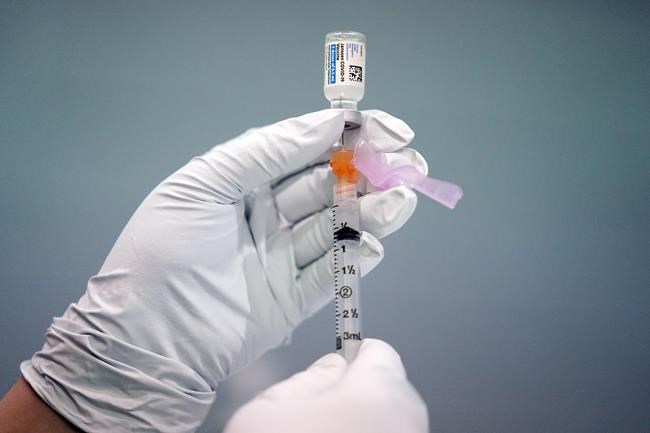
FILE - In this March 26, 2021, file photo a member of the Philadelphia Fire Department prepares a dose of the Johnson & Johnson COVID-19 vaccine at a vaccination site setup in Philadelphia. U.S. health officials say Johnson & Johnson’s COVID-19 vaccine may pose a “small possible risk” of a potentially dangerous neurological reaction. The Centers for Disease Control and Prevention said Monday, July 12 that it has received reports of 100 people who got the shot developing an immune system disorder that can causes muscle weakness and occasionally paralysis. (AP Photo/Matt Rourke, File)

Guillain-Barre syndrome occurs when the body’s immune system mistakenly attacks some of its nerve cells, causing muscle weakness and sometimes paralysis that typically is temporary. An estimated 3,000 to 6,000 people develop the syndrome each year, according to the CDC.

The number of cases reported in connection with J&J’s vaccine represents a tiny fraction of the nearly 13 million Americans who have received the one-dose shot. Most cases were reported in men — many 50 years old and up — and usually about two weeks after vaccination.

J&J said in a statement it has been discussing the reports with the FDA and other health regulators around the world.

The CDC said it would ask its panel of outside vaccine experts to review the issue at an upcoming meeting.

The government said the vaccines most used in the U.S., made by Pfizer and Moderna, show no risk of the disorder after more than 320 million doses have been administered.

The new warning will be included in pamphlets given to people getting the J&J shot. They should seek medical attention if they experience any symptoms, which include tingling sensations, trouble walking and double vision, the FDA said.

Vaccines historically provide broad protection with little risk but come with occasional side effects just like other drugs and medical therapies. The three COVID-19 vaccines used in the U.S. were each tested in tens of thousands of people, but even such huge studies can’t rule out extremely rare side effects.

The CDC and the FDA have been monitoring side effect reports submitted by physicians, drugmakers and patients to a federal vaccine safety database.
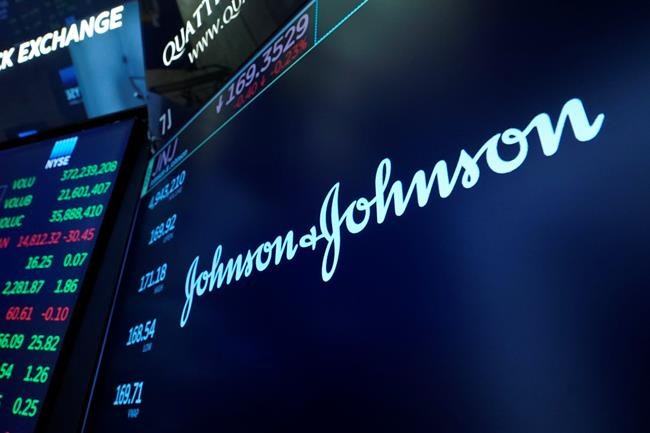
The Johnson & Johnson logo appears above a trading post on the floor of the New York Stock Exchange, Monday, July 12, 2021. Johnson & Johnson's COVID-19 vaccine may pose a
The Johnson & Johnson logo appears above a trading post on the floor of the New York Stock Exchange, Monday, July 12, 2021. Johnson & Johnson's COVID-19 vaccine may pose a "small possible risk" of a rare but potentially dangerous neurological reaction, U.S. health officials said Monday. (AP Photo/Richard Drew)

Guillain-Barre can be triggered by a number of infections, including flu, cytomegalovirus and Zika virus. But there have been rare cases in which people develop the disorder days or weeks after receiving certain vaccines.

J&J’s vaccine was highly anticipated because of its one-and-done formulation and easy-to-ship refrigeration. But early on, it was linked to another rare risk, of blood clots, and the company hasn’t been able to produce as much as expected because of problems at a Baltimore factory that helps make the shots.

___

The Associated Press Health and Science Department receives support from the Howard Hughes Medical Institute’s Department of Science Education. The AP is solely responsible for all content.

Report Error Submit a Tip

More Stories

Manitobans mostly optimistic about time change

Nicole Buffie 5 minute read Preview

Manitobans mostly optimistic about time change

Nicole Buffie 5 minute read Yesterday at 6:47 PM CDT

Turning the page on turning back the clocks in Manitoba was met with enthusiasm — and some hesitation — Thursday.

Calling the move “perfect,” the general manager of Larters at St. Andrews Golf & Country Club said a switch to permanent standard time would have hurt men’s and women’s golf leagues.

The course could have tried to open an hour earlier, but some after-work leagues may have been forced to cancel owing to not enough daylight.

“It would get dark too early and people can’t leave work early to go play an hour earlier,” said Geoff Kehler. “It would have been really bad for the business.”

Read
Yesterday at 6:47 PM CDT

Winnipeg chamber chair seeks to get creative

Gabrielle Piché 5 minute read Preview

Winnipeg chamber chair seeks to get creative

Gabrielle Piché 5 minute read Yesterday at 7:22 PM CDT

Could Royal Manitoba Theatre Centre tickets be the next company-wide perk?

It’s a question Bob Somers is posing. He’s slated to take the reins as Winnipeg Chamber of Commerce board chair on Oct. 1.

“There’s just such a barrier to engagement with the creative sector,” said Somers, a principal landscape architect at Scatliff + Miller + Murray.

He’s attended chamber events over the past 20 years. Many videos shown at luncheons come without local music or a credit to the filmmaker, Somers said.

Read
Yesterday at 7:22 PM CDT

Manitoba abandoning spring, fall clock changes

Carol Sanders 8 minute read Preview

Manitoba abandoning spring, fall clock changes

Carol Sanders 8 minute read Updated: Yesterday at 5:36 PM CDT

Time’s up for the time change in Manitoba.

Manitobans won’t be setting their clocks back an hour in November. The province has decided to permanently stay on daylight time after surveying residents on the twice annual clock adjustment.

“We heard from Manitobans loud and clear — no more changing the clocks in Manitoba,” Premier Wab Kinew said in a news release Thursday.

Most of the 72,000 votes submitted in an online EngageMB survey — 92 per cent — said they would like to see the practice end. The survey asked if they preferred earlier sunrises in winter with standard time or the later sunsets in summer with daylight time. More than half of survey participants (58 per cent) indicated a preference to stay on permanent daylight time; 34 per cent voted to eliminate the time change but stay on standard time.

Read
Updated: Yesterday at 5:36 PM CDT

‘Parental rights’ issue resurfaces

Maggie Macintosh 5 minute read Preview

‘Parental rights’ issue resurfaces

Maggie Macintosh 5 minute read Yesterday at 2:00 AM CDT

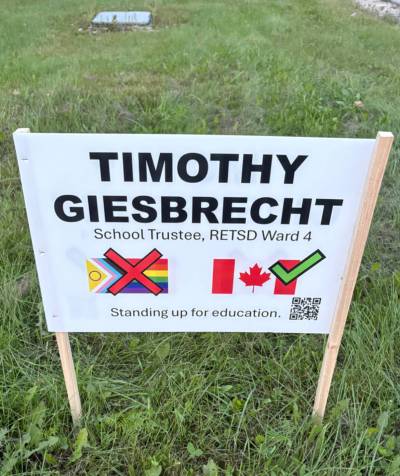
Trustee campaign material that condemns rainbow flags is being met with outrage of all kinds, written complaints and, in one case, a cease-and-desist order.

“Parental rights,” including questions about classroom diversity, equity and inclusion policies, are resurfacing heading into school board elections across Manitoba.

“People are trying to advance their politics and their issues while simultaneously calling teachers ideologues and brainwashers,” said Shannon Moore, an associate professor at the University of Manitoba who studies sexual health education. “And I find that rich.”

Moore said parents have a right to choose independent school or homeschool, but they do not have a right to dictate curriculum that is currently developed using research and mainstream morals.

Read
Yesterday at 2:00 AM CDT

Day 1 of Jets training camp in the books with pairings essentially cemented

Ken Wiebe 7 minute read Preview

Day 1 of Jets training camp in the books with pairings essentially cemented

Ken Wiebe 7 minute read Yesterday at 6:08 PM CDT

Nearly six minutes into his question-and-answer session, Scott Arniel took a welcome detour from the news of the day.

After exhausting the discussion around the goalie who wasn’t in training camp, the head coach of the Winnipeg Jets finally got a query about the line combinations and defensive pairings that were unveiled in training camp.

And unlike past years, when exhibition games were more frequent and the training camp wasn’t this condensed, Arniel conceded these groupings were intentional and were likely staying together for some time.

The expansion to an 84-game regular season brings with it a reduction to four pre-season games and a much shorter training camp, which could limit the amount of experimentation that Arniel can do during the next two weeks.

Read
Yesterday at 6:08 PM CDT

Federal Court awards OCN $27M, 62 years after construction of hydro dam

Nicole Buffie 5 minute read Preview

Federal Court awards OCN $27M, 62 years after construction of hydro dam

Nicole Buffie 5 minute read Wednesday, Sep. 16, 2026

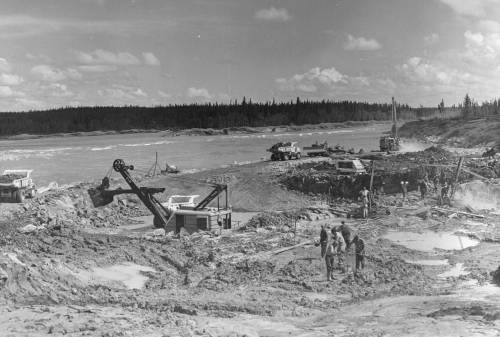
The Federal Court has ordered Ottawa pay Opaskwayak Cree Nation $27 million over damages suffered due to the construction of the Grand Rapids hydro dam in the 1960s.

In a decision dated Sept. 3, Federal Court Justice Sébastien Grammond says the federal government had a fiduciary duty to protect the community from the impacts of the dam.

“When the Crown exercises a discretionary power over an Indigenous interest, it has a fiduciary duty and it must exercise the discretion in the best interests of the Indigenous group,” the ruling said. “Canada breached its fiduciary duty to OCN because it approved the (project) without ensuring that the impacts of the Grand Rapids dam on OCN’s traditional way of life were mitigated or compensated.”

The First Nation took the federal government to court in February over impacts on the community after the dam, located about 145 kilometres southeast of Opaskwayak Cree Nation, was installed on the Saskatchewan River in 1964. The case was heard over 14 days in a judge-alone trial in Winnipeg.

Read
Wednesday, Sep. 16, 2026