Nature Conservancy recommends a better fate for your Christmas tree

Advertisement

Advertise with us

Canada's Christmas tree farms produce over three million pine, spruce and fir trees each year — and most of them are simply abandoned at the curb soon after Santa makes his annual visit.

Read this article for free:

or

Already have an account? Log in here »

To continue reading, please subscribe:

Subscribe and receive a limited-edition Free Press branded hat or tote.

Digital Subscription

One year of digital access for only $205*

  • Enjoy unlimited reading on winnipegfreepress.com
  • Read the E-Edition, our digital replica newspaper
  • Access News Break, our award-winning app
  • Play interactive puzzles

*First annual payment billed as $205.00 + GST for one year. This annual subscription will automatically renew at $233.00 + GST every 52 weeks (10% off the regular annual price of $259.35). Offer available to new and qualified returning subscribers only. Cancel any time.

To continue reading, please subscribe:

Add Free Press access to your Brandon Sun subscription for only an additional

$1 for the first 4 weeks*

  • Enjoy unlimited reading on winnipegfreepress.com
  • Read the E-Edition, our digital replica newspaper
  • Access News Break, our award-winning app
  • Play interactive puzzles
Start now

*Your next Brandon Sun subscription payment will increase by $1.00 and you will be charged $17.95 plus GST for four weeks. After four weeks, your payment will increase to $24.95 plus GST every four weeks.

Hey there, time traveller!
This article was published 26/12/2018 (2767 days ago), so information in it may no longer be current.

Canada’s Christmas tree farms produce over three million pine, spruce and fir trees each year — and most of them are simply abandoned at the curb soon after Santa makes his annual visit.

Now, the Nature Conservancy of Canada is suggesting that people should instead haul their tree to the backyard, to help nature and learn a bit about ecology.

“There are better things we can do with our live Christmas tree when we’re done with it,” said Dan Kraus, senior conservation biologist with the Nature Conservancy of Canada.
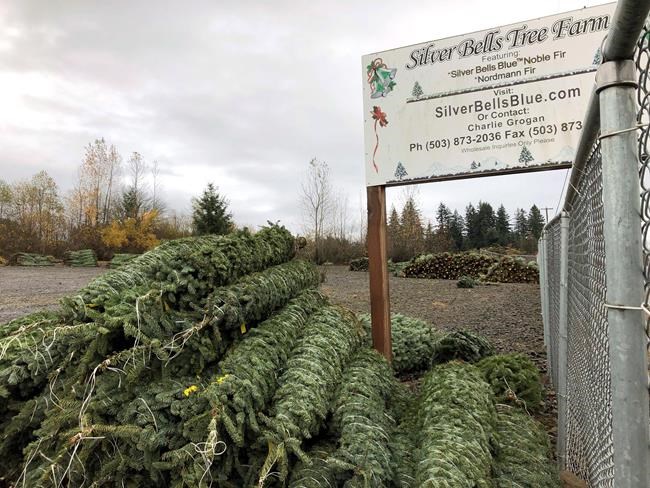
The Nature Conservancy of Canada urging people to use their old Christmas trees in their backyard as shelter for birds and other creatures and allowing them to decompose to feed the soil, rather than putting the old trees out to the curb. In this November 2018 photo, Christmas trees sit in a dirt lot at Silver Bells Tree Farm in Silverton, Ore., before being loaded onto a semi-truck headed for a Los Angeles tree lot. THE CANADIAN PRESS/AP Photo/Gillian Flaccus

Most municipalities have programs to chip and compost old Christmas trees, but Kraus said residents have an opportunity to make the most of their old tree.

“Put it out in the backyard and you’ll find that backyard birds start using it right away, especially if you have a birdfeeder. The birds will land in the tree before they go to the feeder. Some of them may even stay in it at night to get some shelter,” he said.

“You can decorate your old tree for birds and squirrels by doing things like hanging suet, or peanuts.”

He said that over winter, many of the needles will fall off, and by spring the tree will be ready to introduce to the soil.

Kraus suggests cutting off the branches in the spring and laying them on the ground around flowers.

“They’ll provide a little bit of shelter. They’ll help hold moisture in the soil, and then you can just put the tree trunk somewhere on the ground, even as a border for your garden area. That will start to provide some habitat right away for things like toads or various insects through the summer in your garden,” he said.

Kraus said the smaller you cut the branches, and the more they are in contact with the soil, the sooner they will begin to decompose.

“You are feeding the soil. By fall the smaller branches and twigs that have been in contact with the soil will have probably broken down quite a bit. They might not even be there anymore,” he said.

He said it could take a couple years for the trunk of the tree to completely decompose, but drilling holes in it will speed the process.

“That will encourage insects to burrow into the wood. It will provide habitat and make the trunk break down more quickly,” he said.

Kraus said, for those who don’t have a place on their property to recycle a tree, make sure your municipality composts them.

He said many places used to just put the trees in the landfill, which creates methane that’s not good for climate change.
Report Error Submit a Tip

More Stories

Why is Cuba embracing freer markets?

Peter McKenna 5 minute read Preview

Why is Cuba embracing freer markets?

Peter McKenna 5 minute read 2:00 AM CDT

As long as Donald Trump is entangled in a war with Iran, Cuba is probably safe from being next on his hit list.

But if the mercurial U.S. president can somehow extricate himself from the Persian Gulf trap, then all bets are off. One thing is certain: Trump is not going to give up the idea of getting his greedy hands on the Caribbean island.

In response to Trump’s threats of military invasion, the beleaguered Cuban government is understandably in full panic mode. Right now, it is just trying desperately to keep its head above water as the situation on the ground in Cuba deteriorates further with each passing day.

Not all of the blame for the country’s current humanitarian crisis can be laid at the feet of the Trump White House. The Cuban political leadership deserves its fair share of blame for poor economic and financial management, for too much emphasis on expanding the tourism market, and for not enough attention on modernizing the electrical grid and attracting much-needed foreign investment.

Read
2:00 AM CDT

You can work out your social situation

Maureen Scurfield 4 minute read 2:00 AM CDT

DEAR MISS LONELYHEARTS: When I was a young bisexual guy going to university and working in bars at night, I was surrounded by new people — guys and girls all the time.

There were a lot of great late-night parties after work, and I always had my eye on somebody new. I was never lonely in those days. Where did all that fun and happiness go?

Now I’m a few years older with a career and don’t need a job as a bartender to help support me. But it seems like there’s nobody around to meet, other than at bars.

Also, I’m realizing that while there are lots of straight people out there looking for fun and relationships, it’s hard to convince them that I could be true to them alone, being bisexual. But I’m true to whomever I’m with — and I only want one lover at a time.

Small business group says immigration cut makes it tough to hire workers

Carol Sanders 5 minute read Preview

Small business group says immigration cut makes it tough to hire workers

Carol Sanders 5 minute read Yesterday at 2:01 AM CDT

Canada’s immigration clampdown has put employers in remote and rural places in a bind and put fear into employees from abroad who want to stay.

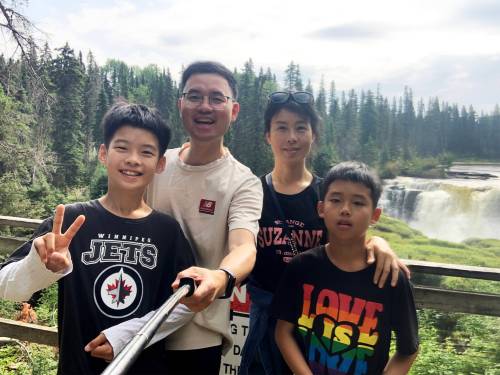
Yi (Rick) Zheng and his family from China, who’ve been working in Thompson for two years and hope to gain permanent residency, said they fear their work permits will expire and they’ll have to leave the country.

Zheng, 41, says he works as a restaurant cook and his wife works at a hotel in the northern city, where their two children, ages 10 and 12, are thriving in school.

“I work very hard every day. Our kitchen doesn’t have enough staff.”

Read
Yesterday at 2:01 AM CDT

Bell under fire after 911 outage

Chris Kitching 7 minute read Preview

Bell under fire after 911 outage

Chris Kitching 7 minute read Updated: Yesterday at 6:06 PM CDT

Bell Canada — Manitoba’s 911 service provider — is facing questions about reliability and redundancy measures after an hours-long outage outside Winnipeg, caused by a severed fibre optic cable, prevented dozens of calls from getting through Wednesday.

Bell spokeswoman Elise von Scheel said backup systems that reroute 911 calls when an outage occurs due to equipment damage also experienced “issues” after a third party cut the cable during construction “near Winnipeg.”

“Manitoba’s 911 system relies on legacy architecture that does not support the failsafes that newer systems have, which is why Bell is in the process of upgrading the ecosystem to next generation 911,” von Scheel wrote in an email.

“All Manitoba public safety answering points are planned to be migrated to the new system by the end of 2026. Migration to NG911 is the fastest and most effective remediation to prevent instances like this in the future.”

Read
Updated: Yesterday at 6:06 PM CDT

Cross Lake pro blueliner walks away from sport he loves to live and work in northern community he loves even more

Mike McIntyre 18 minute read Preview

Cross Lake pro blueliner walks away from sport he loves to live and work in northern community he loves even more

Mike McIntyre 18 minute read Yesterday at 4:10 PM CDT

CROSS LAKE — It’s a hot, hazy Tuesday evening in northern Manitoba, and Jericho Blacksmith and his buddies are gathered inside a baseball dugout.

There isn’t a glove or bat in sight.

Instead, the young men are engaged in a loud, good-natured race to see who can get blackout drunk the fastest, passing around bottles and cans purchased from the local vendor, which had just been restocked when the weekly truck rolled into town earlier that day.

“Honestly, everything can be pretty brutal around here,” says the 26-year-old lifelong resident, pointing to isolation, a lack of opportunity and relentless boredom.

Read
Yesterday at 4:10 PM CDT

Letters, July 24

6 minute read 2:00 AM CDT

Follow the science

Some say the fires in northern Canada are a result of poor forest management.

However, the science is clear: the more fossil fuels we burn, the hotter the atmosphere gets, resulting in more heat waves.

For every one degree Celsius (1.8 F) the air is hotter, it holds seven per cent more moisture, an effect named the Clausius-Clapeyron equation. With the increase in strong winds from the volatility of the jet stream, caused by distorted global heating patterns, forests dry out faster, storms are worse, fires sparked by lightning and stoked by strong winds blaze into larger conflagrations in the remote, tinder-dry forests. The majority of these forests are too remote for human management.