Organic price premiums dip as demand grows, choices multiply
Advertisement
Read this article for free:
or
Already have an account? Log in here »
To continue reading, please subscribe:

Digital Subscription
One year of digital access for only $205*
- Enjoy unlimited reading on winnipegfreepress.com
- Read the E-Edition, our digital replica newspaper
- Access News Break, our award-winning app
- Play interactive puzzles
*First annual payment billed as $205.00 + GST for one year. This annual subscription will automatically renew at $233.00 + GST every 52 weeks (10% off the regular annual price of $259.35). Offer available to new and qualified returning subscribers only. Cancel any time.
To continue reading, please subscribe:
Add Free Press access to your Brandon Sun subscription for only an additional
$1 for the first 4 weeks*
- Enjoy unlimited reading on winnipegfreepress.com
- Read the E-Edition, our digital replica newspaper
- Access News Break, our award-winning app
- Play interactive puzzles
*Your next Brandon Sun subscription payment will increase by $1.00 and you will be charged $17.95 plus GST for four weeks. After four weeks, your payment will increase to $24.95 plus GST every four weeks.
Read unlimited articles for free today:
or
Already have an account? Log in here »
Hey there, time traveller!
This article was published 23/01/2019 (2740 days ago), so information in it may no longer be current.
DETROIT – U.S. shoppers are still paying more for organic food, but the price premium is falling as organic options multiply.
Last year, organic food and beverages cost an average of 24 cents more per unit than conventional food, or about 7.5 per cent more, according to Nielsen. That was down from a 27 cent, or 9 per cent, premium in 2014.
There’s a lot of variation within those numbers. The average price for a gallon of organic milk — $4.76 — is 88 per cent higher than the $2.53 shoppers pay for a gallon of regular milk. Organic eggs have an 86 per cent premium. At $4.89 per loaf, organic bread is double the cost of regular bread.
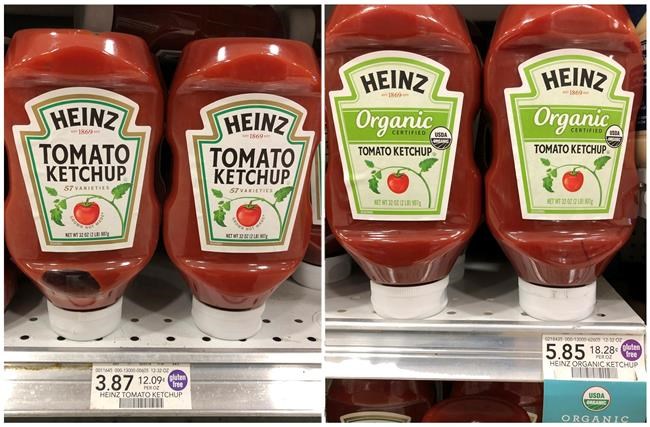
Parents buying organic baby food, on the other hand, pay just 3 per cent more than they would for conventional baby food. In mid-January, a bunch of organic kale was 5 per cent more than organic kale, according to the U.S. Department of Agriculture. Some organic products — like artichokes, soy milk and Granny Smith apples — may even cost less than their conventional counterparts.
There are many shifting factors behind the prices for organic foods. Premiums for milk and eggs tend to be much higher, for example, because the government has very specific rules for what “organic” means. For example, cows producing organic milk must be allowed to graze for at least one-third of their food intake, says Jeremy Moghtader, the manager of the campus farm at the University of Michigan.
The rules “have real benefits to the animal, the consumer and environment, but they do increase the price of production,” Moghtader said.
Organic and conventional vegetables are grown in similar ways, so the price difference tends to be lower. Organic farmers can save money by not using pesticides or synthetic fertilizers, but they may have to pay more for workers to pull weeds or control bugs, Moghtader said.
One reason organic premiums are falling is the increase in products on the shelves. Organics used to be confined to health food stores and high-end groceries like Whole Foods, but mainstream stores are increasingly offering them. Kroger, one of the nation’s largest grocery chains, says it stocks 9,000 organic items in its stores and notched $1 billion in organic produce sales in 2017.
On a recent weekday, Kroger was selling Simple Truth organic orange juice — its in-house brand — for $3.49 for 52 fluid ounces. That was $1 more than the same size of conventional Kroger-brand orange juice, or 49 cents more than conventional Tropicana-brand orange juice.
Costco’s Kirkland Signature store brand introduced organic eggs in 2007 and organic beef in 2012. Walmart’s Great Value store brand sells a 15-ounce can of organic pumpkin for $1.88; that’s just 10 cents more than conventional Libby’s brand canned pumpkin.
Consumer demand also impacts prices. Right now, demand for organics is outpacing supply in many categories. U.S. sales of fast-moving consumer goods — a category that includes food, beverages and toiletries — were flat last year, but sales of organic goods jumped 9 per cent, Nielsen said.
Millennial households are leading that charge, as they stock up on organic milk and baby food for their children. But other generations are also buying more organic products. Overall, 88 per cent of American households have bought organic food or beverages.
“Consumers are more focused on products that have some benefit to them,” Sarah Schmansky, a vice-president of growth and strategy at Nielsen.
In some cases, organics are breathing life back into dusty grocery aisles. Sales of conventional lunchmeat and cheese at the deli counter had been weakening, since consumers didn’t want to wait for them to be sliced. But buyers seeking fresh, organic options are returning to the deli. Sale of organic deli lunchmeat have risen an average of 18 per cent annually over the last four years, while organic deli cheese sales are up 26 per cent.
Schmansky said food scares — like E. coli outbreaks traced to lettuce — are also leading some consumers to organic labels because they trust them.
While price premiums may continue to drop, it’s difficult to say if they’ll ever go away entirely, says Ryan Koory, a senior economist at Mercaris, a data firm that tracks organic agriculture.
Looser government policies and crop insurance programs better tailored to small organic farms could help lower those premiums, Koory said.
A recession could also lower consumer demand for organics, and therefore their price premiums. But if the last recession is any guide, those premiums could bounce back quickly.