‘Code red’: UN scientists warn of worsening global warming
Advertisement
Read this article for free:
or
Already have an account? Log in here »
To continue reading, please subscribe:

Digital Subscription
One year of digital access for only $205*
- Enjoy unlimited reading on winnipegfreepress.com
- Read the E-Edition, our digital replica newspaper
- Access News Break, our award-winning app
- Play interactive puzzles
*First annual payment billed as $205.00 + GST for one year. This annual subscription will automatically renew at $233.00 + GST every 52 weeks (10% off the regular annual price of $259.35). Offer available to new and qualified returning subscribers only. Cancel any time.
To continue reading, please subscribe:
Add Free Press access to your Brandon Sun subscription for only an additional
$1 for the first 4 weeks*
- Enjoy unlimited reading on winnipegfreepress.com
- Read the E-Edition, our digital replica newspaper
- Access News Break, our award-winning app
- Play interactive puzzles
*Your next Brandon Sun subscription payment will increase by $1.00 and you will be charged $17.95 plus GST for four weeks. After four weeks, your payment will increase to $24.95 plus GST every four weeks.
Read unlimited articles for free today:
or
Already have an account? Log in here »
Hey there, time traveller!
This article was published 08/08/2021 (1880 days ago), so information in it may no longer be current.
BERLIN – Earth is getting so hot that temperatures in about a decade will probably blow past a level of warming that world leaders have sought to prevent, according to a report released Monday that the United Nations called a “code red for humanity.”
“It’s just guaranteed that it’s going to get worse,” said report co-author Linda Mearns, a senior climate scientist at the U.S. National Center for Atmospheric Research. “Nowhere to run, nowhere to hide.”
But scientists also eased back a bit on the likelihood of the absolute worst climate catastrophes.
The authoritative Intergovernmental Panel on Climate Change (IPCC) report, which calls climate change clearly human-caused and “unequivocal” and “an established fact,” makes more precise and warmer forecasts for the 21st century than it did last time it was issued in 2013.
Each of five scenarios for the future, based on how much carbon emissions are cut, passes the more stringent of two thresholds set in the 2015 Paris climate agreement. World leaders agreed then to try to limit warming to 1.5 degrees Celsius (2.7 degrees Fahrenheit) above levels in the late 19th century because problems mount quickly after that. The world has already warmed nearly 1.1 degrees Celsius (2 degrees Fahrenheit) since then.
Under each scenario, the report said, the world will cross the 1.5-degree-Celsius warming mark in the 2030s, earlier than some past predictions. Warming has ramped up in recent years, data shows.
“Our report shows that we need to be prepared for going into that level of warming in the coming decades. But we can avoid further levels of warming by acting on greenhouse gas emissions,” said report co-chair Valerie Masson-Delmotte, a climate scientist at France’s Laboratory of Climate and Environment Sciences at the University of Paris-Saclay.
In three scenarios, the world will also likely exceed 2 degrees Celsius (3.6 degrees Fahrenheit) over pre-industrial times — the less stringent Paris goal — with far worse heat waves, droughts and flood-inducing downpours unless there are deep emissions cuts, the report said.
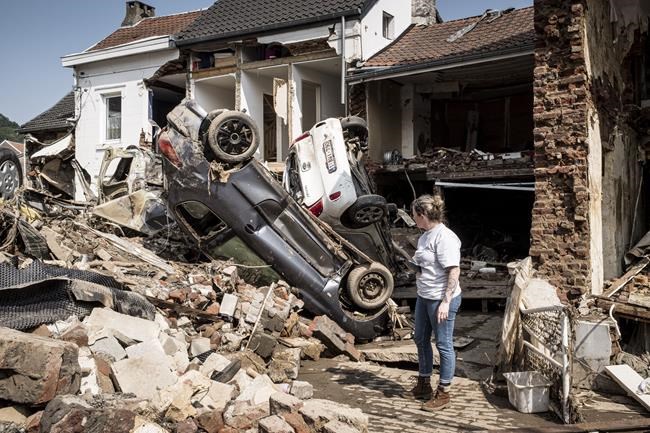
“This report tells us that recent changes in the climate are widespread, rapid and intensifying, unprecedented in thousands of years,” said IPCC Vice Chair Ko Barrett, senior climate adviser for the U.S. National Oceanic and Atmospheric Administration.
With crucial international climate negotiations coming up in Scotland in November, world leaders said the report is causing them to try harder to cut carbon pollution. U.S. Secretary of State Anthony Blinken called it “a stark reminder.”
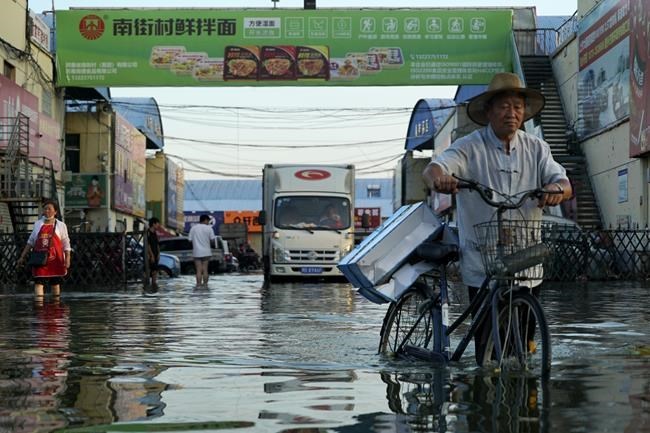
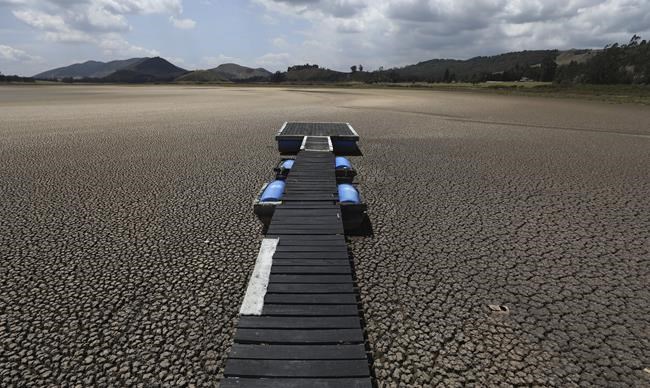
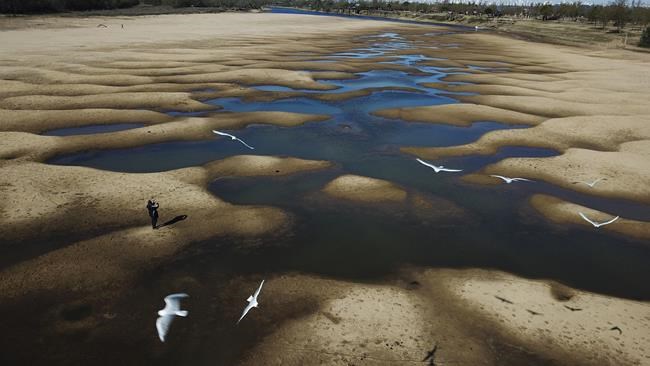
The 3,000-plus-page report from 234 scientists said warming is already accelerating sea level rise and worsening extremes such as heat waves, droughts, floods and storms. Tropical cyclones are getting stronger and wetter, while Arctic sea ice is dwindling in the summer and permafrost is thawing. All of these trends will get worse, the report said.
For example, the kind of heat wave that used to happen only once every 50 years now happens once a decade, and if the world warms another degree Celsius (1.8 degrees Fahrenheit), it will happen twice every seven years, the report said.
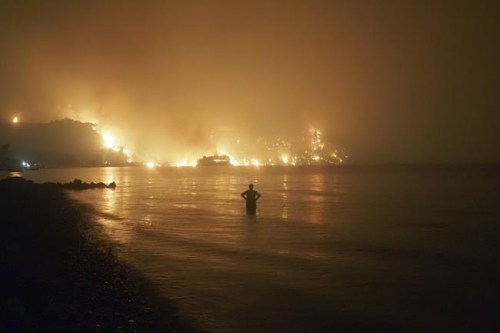
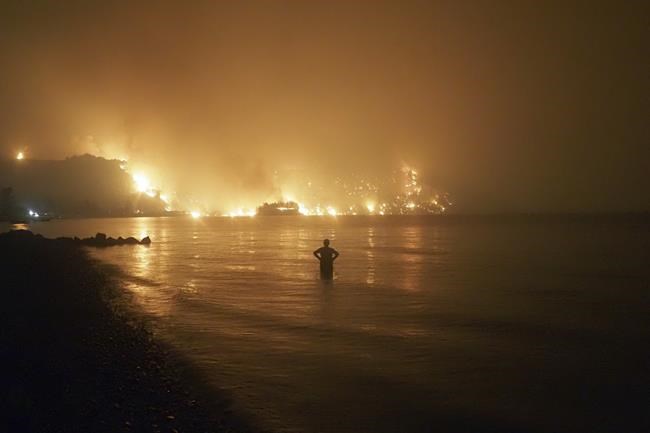
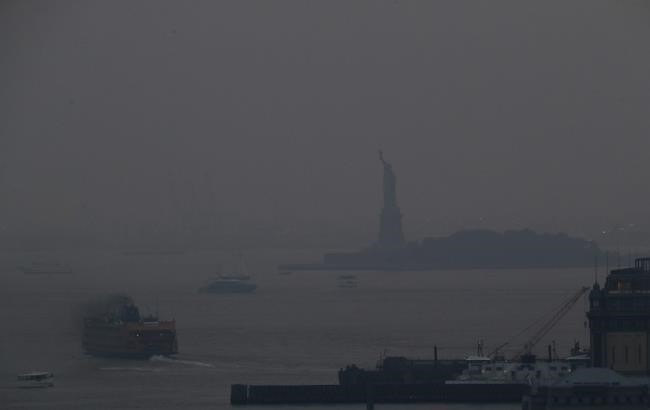
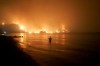
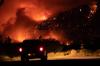
As the planet warms, places will get hit more not just by extreme weather but by multiple climate disasters at once, the report said. That’s like what’s now happening in the Western U.S., where heat waves, drought and wildfires compound the damage, Mearns said. Extreme heat is also driving massive fires in Greece and Turkey.
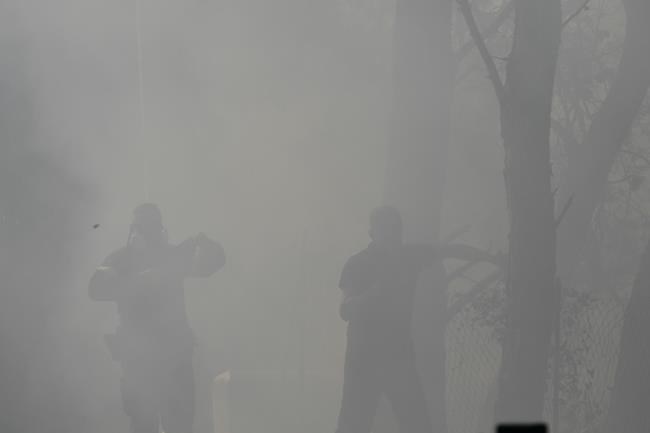
Some harm from climate change — dwindling ice sheets, rising sea levels and changes in the oceans as they lose oxygen and become more acidic — is “irreversible for centuries to millennia,” the report said.
The world is “locked in” to 15 to 30 centimeters (6 to 12 inches) of sea level rise by mid-century, said report co-author Bob Kopp of Rutgers University.
Scientists have issued this message for more than three decades, but the world hasn’t listened, said United Nations Environment Program Executive Director Inger Andersen.
For the first time, the report offers an interactive atlas for people to see what has happened and may happen to where they live.
Nearly all of the warming that has happened on Earth can be blamed on emissions of heat-trapping gases such as carbon dioxide and methane. At most, natural forces or simple randomness can explain one- or two-tenths of a degree of warming, the report said.
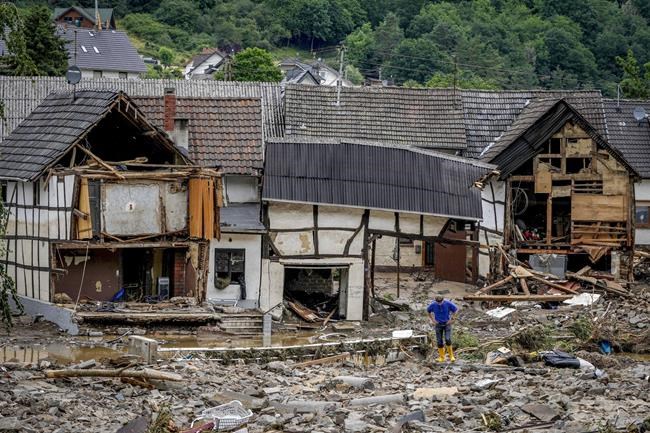
The report described five different future scenarios based on how much the world reduces carbon emissions. They are: a future with incredibly large and quick pollution cuts; another with intense pollution cuts but not quite as massive; a scenario with moderate emission cuts; a fourth scenario where current plans to make small pollution reductions continue; and a fifth possible future involving continued increases in carbon pollution.
In five previous reports, the world was on that final hottest path, often nicknamed “business as usual.” But this time, the world is somewhere between the moderate path and the small pollution reductions scenario because of progress to curb climate change, said report co-author Claudia Tebaldi, a scientist at the U.S. Pacific Northwest National Lab.
While calling the report “a code red for humanity,” U.N. Secretary-General Antonio Guterres kept a sliver of hope that world leaders could still somehow prevent 1.5 degrees of warming, which he said is “perilously close.”
Alok Sharma, the president of the upcoming climate negotiations in Scotland, urged leaders to do more so they can “credibly say that we have kept 1.5 degrees alive.”
“Anything we can do to limit, to slow down, is going to pay off,” Tebaldi said. “And if we cannot get to 1.5, it’s probably going to be painful, but it’s better not to give up.”
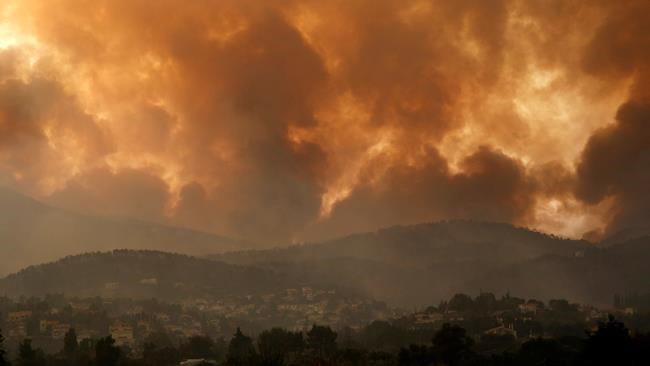
In the report’s worst-case scenario, the world could be around 3.3 degrees Celsius (5.9 degrees Fahrenheit) hotter than now by the end of the century. But that scenario looks increasingly unlikely, said report co-author and climate scientist Zeke Hausfather, climate change director of the Breakthrough Institute.
“We are a lot less likely to get lucky and end up with less warming than we thought,” Hausfather said. “At the same time, the odds of ending up in a much worse place than we expected if we do reduce our emissions are notably lower.”
The report also said ultra-catastrophic disasters — commonly called “tipping points,” like ice sheet collapses and the abrupt slowdown of ocean currents — are “low likelihood” but cannot be ruled out. The much talked-about shutdown of Atlantic ocean currents, which would trigger massive weather shifts, is something that’s unlikely to happen in this century, Kopp said.
A “major advance” in the understanding of how fast the world warms with each ton of carbon dioxide emitted allowed scientists to be far more precise in the scenarios in this report, Mason-Delmotte said.
In a new move, scientists emphasized how cutting airborne levels of methane — a powerful but short-lived gas that has soared to record levels — could help curb short-term warming. Lots of methane the atmosphere comes from leaks of natural gas, a major power source. Livestock also produces large amounts of the gas, a good chunk of it in cattle burps.
More than 100 countries have made informal pledges to achieve “net zero” human-caused carbon dioxide emissions sometime around mid-century, which will be a key part of the negotiations in Scotland. The report said those commitments are essential.
“It is still possible to forestall many of the most dire impacts,” Barrett said.
___

Read more of AP’s climate coverage at http://www.apnews.com/Climate
___
Follow Seth Borenstein on Twitter at @borenbears
___
The Associated Press Health and Science Department receives support from the Howard Hughes Medical Institute’s Department of Science Education. The AP is solely responsible for all content.
5 things to know about the new report
GENEVA (AP) — The U.N.-appointed Intergovernmental Panel on Climate Change published a new report Monday summarizing the latest authoritative scientific information about global warming. Here are five important takeaways.
BLAMING HUMANS
The report says almost all of the warming that has occurred since pre-industrial times was caused by the release of heat-trapping gases such as carbon dioxide and methane. Much of that is the result of humans burning fossil fuels — coal, oil, wood and natural gas.
The authors say global temperatures have already risen by 1.1 degrees Celsius (2 degrees Fahrenheit) since the 19th century, reaching their highest in over 100,000 years, and only a fraction of that increase can have come from natural forces.
PARIS GOALS
Almost all countries have signed up to the 2015 Paris climate accord, which aims to limit global warming to an increase of 2 degrees Celsius (3.6 Fahrenheit) above the pre-industrial average by the year 2100. The agreements says that ideally the increase would be no more than 1.5 degrees Celsius (2.7 degrees Fahrenheit).
But the report’s 200-plus authors looked at five scenarios and concluded that all will see the world cross the 1.5-degree threshold in the 2030s — sooner than in previous predictions. Three of those scenarios will also see temperatures rise 2 degrees Celsius.
DIRE CONSEQUENCES
The 3,000-plus-page report concludes that ice melt and sea level rise are already accelerating. Wild weather events — from storms to heat waves — are also expected to worsen and become more frequent.
Further warming is “locked in” due to the greenhouse gases humans have already released into the atmosphere. That means even if emissions are drastically cut, some changes will be “irreversible” for centuries, the report said.
SOME HOPE
While many of the report’s predictions paint a grim picture of humans’ impact on the planet and the consequences that will have going forward, the IPCC also found that so-called tipping points, like catastrophic ice sheet collapses and the abrupt slowdown of ocean currents, are “low likelihood,” though they cannot be ruled out.
BIG CATCH
Although temperatures are expected to overshoot the 1.5-degree-Celsius target in the next decade, the report suggests that warming could be brought back down to this level through what are known as “negative emissions.” That means sucking more carbon dioxide out of the atmosphere than is added, effectively cooling the planet again.
The panel said that could be done starting about halfway through this century but doesn’t explain how, and many scientists are skeptical it’s possible.
-The Associated Press
Related Articles
Experts say intense weather stark evidence of climate crisis

Advertisement Advertise With Us
Advertisement Advertise With Us