Learning about 9/11: Attacks part of identity, racism lesson in Canadian classrooms

Advertisement

Advertise with us

Most undergraduate students sitting in a class about Canada's military history at the University of Calgary have never known or can't remember a world before Sept. 11, 2001.

Read this article for free:


or

Already have an account? Log in here »

To continue reading, please subscribe:

Subscribe and receive a limited-edition Free Press branded hat or tote.

Digital Subscription

One year of digital access for only $205*

  • Enjoy unlimited reading on winnipegfreepress.com
  • Read the E-Edition, our digital replica newspaper
  • Access News Break, our award-winning app
  • Play interactive puzzles

*First annual payment billed as $205.00 + GST for one year. This annual subscription will automatically renew at $233.00 + GST every 52 weeks (10% off the regular annual price of $259.35). Offer available to new and qualified returning subscribers only. Cancel any time.

To continue reading, please subscribe:

Add Free Press access to your Brandon Sun subscription for only an additional

$1 for the first 4 weeks*

  • Enjoy unlimited reading on winnipegfreepress.com
  • Read the E-Edition, our digital replica newspaper
  • Access News Break, our award-winning app
  • Play interactive puzzles
Start now

*Your next Brandon Sun subscription payment will increase by $1.00 and you will be charged $17.95 plus GST for four weeks. After four weeks, your payment will increase to $24.95 plus GST every four weeks.

Hey there, time traveller!
This article was published 08/09/2021 (1812 days ago), so information in it may no longer be current.

Most undergraduate students sitting in a class about Canada’s military history at the University of Calgary have never known or can’t remember a world before Sept. 11, 2001.

David Bercuson, an associate professor in the university’s history department, says educating successive generations about events leading up to the 9/11 terrorist attacks in the United States has been odd.

“They take it in stride. But I think they think, ‘OK, well, you know, it’s just like the invasion of Normandy,” Bercuson says.
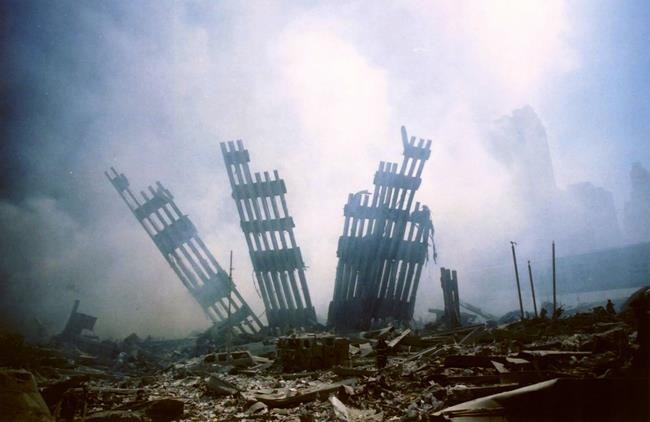
In this Sept. 11, 2001 file photo, the remains of the World Trade Center stand amid debris following the terrorist attack on the building in New York. Some undergraduate students sitting in a class about Canada's military history at the University of Calgary have never known or can't remember a world before the attack.THE CANADIAN PRESS/AP/Alexandre Fuchs

“The hardest thing about teaching students this kind of history is to get them to feel it. Books (are) something anybody could absorb. But what was it like for the people who were there?”

Bercuson says 9/11 not only transformed the way teachers educate their students, it also changed their own perspectives.

Retired Edmonton high school teacher Robert Gardner, who contributed to the Canadian Social Studies textbook, agrees.

“In the hours and days immediately following the attacks I would be pulled out of what had been a relatively comfortable and familiar teaching practice into a much more demanding and complicated circumstance,” Gardner wrote in the book.

“I found that I had to significantly expand my knowledge and understanding of the intricacies of world history, cultures and religions.”

Gardner says in the book that memories of the 9/11 hijackings and suicide attacks are vivid. And the lives of more than 2,200 students he taught after that day also changed.

Heated and divided classroom debates over the subsequent invasion of Afghanistan took place among the students from all over the world, including India, Africa and the Middle East.

“9/11 was an event of such significance that everyone had an opinion or a question,” Gardner says in the book.

“What began to transpire was a real dialogue among students of varied backgrounds about how they saw the larger world. Who were the ‘good guys’ and the ‘bad guys’? What did justice mean in a world of militarism, terrorism and oppression? What things in life were worth fighting for?”

The attacks changed high school curriculums across the country and are a key component of analysis for both high school and post-secondaryhistory and politics students.

For example, Ontario students enrolled in Grade 10 Canadian History are expected to assess how government policies following 9/11 were significant for different non-Indigenous groups in Canada.

Those students are then encouraged to write a poem or rap about the war in Afghanistan or write a blog about border security since 9/11.

As hate crimes spiked after 9/11, Ontario’s education minister has said racism has also become a component of the school curriculum.

“In June 2021, Ontario announced its intention to invest in a plan to counter Islamophobia in publicly funded schools,” says Caitlin Clark, a spokesperson for Ontario Education Minister Stephen Lecce.

“These resources will provide information about Islamic practices, values and misconceptions, root causes of Islamophobia and ways to help end Islamophobia, racism and discrimination.”

The effects of 9/11 are something Bercuson says he tries to get his students to try to figure out themselves.

“There’s a lot of noise out there all the time. People are listening to the radio, they’re watching the internet … all kinds of intelligence agencies at different times in history are trying to find out as much as they can about what’s going to happen,” Bercuson says.

“I want my students to know that governments could have known (about the attacks).

“If they had known, things would have turned out differently. It’s more of a lesson of how we deal with future conflicts.”

This report by The Canadian Press was first published Sept. 8, 2021.

This story was produced with the financial assistance of the Facebook and Canadian Press News Fellowship.

Report Error Submit a Tip

More Stories

Pretty, purple and pernicious plants plaguing Prairies

Tiago Resko 3 minute read Preview

Pretty, purple and pernicious plants plaguing Prairies

Tiago Resko 3 minute read Yesterday at 6:00 AM CDT

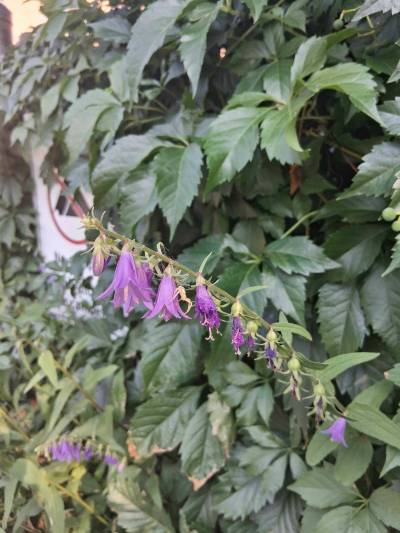
After noticing mysterious purple flowers popping up in little patches around the Wolseley neighbourhood last summer, Vic Penner didn’t give it too much thought.

However, this summer, the deceivingly beautiful flowers were impossible to ignore.

“They were just everywhere,” said Penner, 37.

Wolseley isn’t the only neighbourhood being overrun by the plant.

Read
Yesterday at 6:00 AM CDT

A bigger grid, and a tougher one

Stuart Williams 5 minute read Preview

A bigger grid, and a tougher one

Stuart Williams 5 minute read 2:00 AM CDT

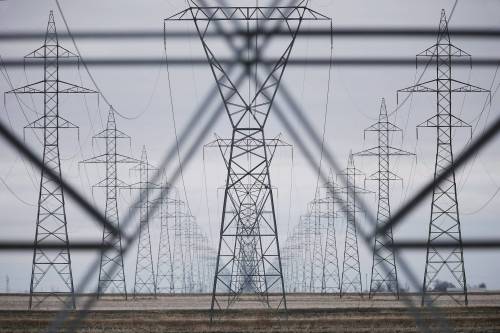
The Free Press editorial of Aug. 21, Time for a stronger Canadian grid, makes a case that should unsettle anyone who read it.

A co-ordinated attack on nine substations could bring down the American electrical grid.

The transformers needed to repair it carry lead times of 128 weeks and longer, from countries on the U.S. president’s tariff list.

And because the North American system is effectively one machine, a fault in Ohio once darkened Toronto.

Read
2:00 AM CDT

9/11 a lesson on identity in Canadian classrooms

Fakiha Baig, The Canadian Press 4 minute read Preview

9/11 a lesson on identity in Canadian classrooms

Fakiha Baig, The Canadian Press 4 minute read Wednesday, Sep. 8, 2021

Most undergraduate students sitting in a class about Canada's military history at the University of Calgary have never known or can't remember a world before Sept. 11, 2001.

David Bercuson, an associate professor in the university's history department, says educating successive generations about events leading up to the 9/11 terrorist attacks in the United States has been odd.

"They take it in stride. But I think they think, 'OK, well, you know, it's just like the invasion of Normandy," Bercuson says.

"The hardest thing about teaching students this kind of history is to get them to feel it. Books (are) something anybody could absorb. But what was it like for the people who were there?"

Read
Wednesday, Sep. 8, 2021

Tough to stomach date’s lack of compassion

Maureen Scurfield 5 minute read 2:00 AM CDT

DEAR MISS LONELYHEARTS: I had dinner with my new guy at a fancy restaurant — his treat — and ate something that didn’t agree with me. I ended up in the restaurant bathroom, throwing the expensive dinner up. My date was actually vulgar about it — not sympathetic or taking things with a sense of humour at all.

He was so disgusted he called a taxi to take me home so I wouldn’t end up throwing up in his precious car. I cancelled the taxi and called my family, and my father and brother came right away. They wanted to ring his neck!

I’d never have reacted so cruelly if my date had gotten sick at a restaurant.

This guy has since called to see if I’m “back to normal.” He casually asked if I wanted to give it another try. I just didn’t have the desire to talk with him anymore, so I hung up. Is this my problem? Am I “over-reacting” as he has told other people I know?

Ukraine — does it need an election now?

Gwynne Dyer 5 minute read 2:00 AM CDT

“Democracy cannot be held hostage by Russia,” said Mihaylo Fedorov, who was, until recently, Ukraine’s defence minister. “We must find a legal, safe and realistic mechanism which will allow Ukraine to renew its full democratic process even in the conditions of a long war.”

Seven years after the last election, some Ukrainians are demanding a new one.

The protesters who have been outside President Volodymyr Zelenskyy’s office on Ivan Franko Square since Fedorov was fired last month were still there the day after his nine-minute video went out on Aug. 18. However, they were not more numerous than the day before.

It has been seven years since the election that brought Zelenskyy to power in a landslide powered by widespread revulsion at the rampant corruption in the government. His popularity soared after the Russian invasion (90 per cent) and four-and-a-half years into the war, it’s still at 65 per cent. That’s why Fedorov’s bid to mobilize the people against him has failed.

Community rallies around family devastated by fire

Tiago Resko 4 minute read Preview

Community rallies around family devastated by fire

Tiago Resko 4 minute read Yesterday at 6:00 AM CDT

Dennis Lafreniere and his wife didn’t expect to celebrate 27 years of marriage Thursday in a Selkirk hotel room while reeling from a recent house fire.

The couple and their two daughters lost their home last Sunday in a raging fire that left nothing behind, but overwhelming support from multiple communities has kept them afloat.

“It’s devastating when you don’t have any clothes, any medication, all of that stuff, and it’s just so overwhelming the next morning. It’s just nasty,” Lafreniere said.

Investigators suspect the fire was caused by a fridge, freezer and battery charger that were all plugged into the same electrical line that got overheated. The house, located on Highway 59 between Selkirk and Libau, is a farmhouse built in 1943, and investigators think worn-out electrical lines also contributed to the fire, said Lafreniere.

Read
Yesterday at 6:00 AM CDT