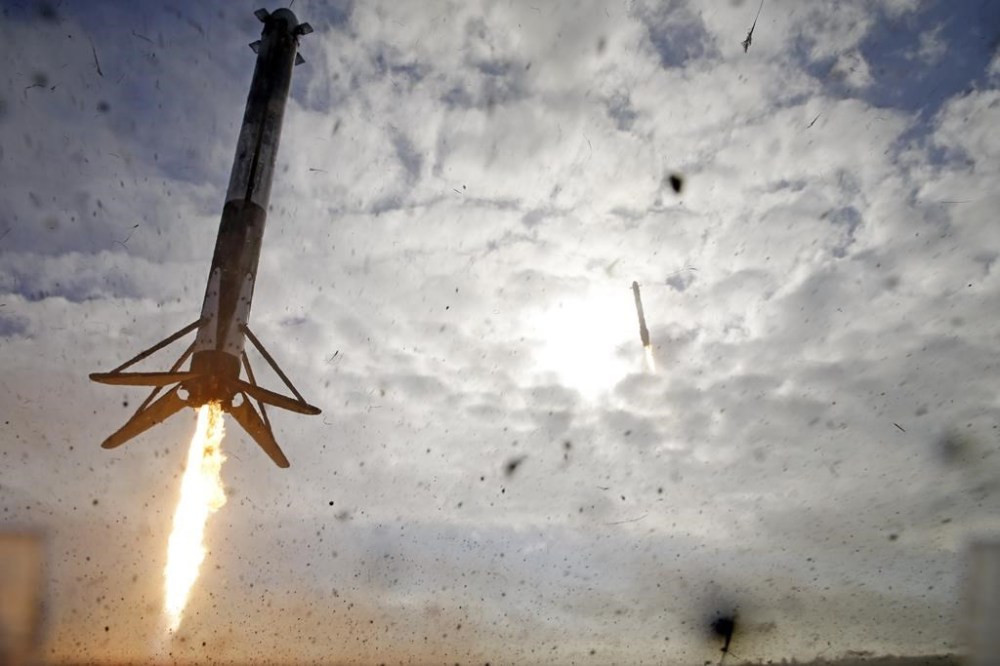
SpaceX nails booster landings after foggy military launch
Advertisement
Read this article for free:
or
Already have an account? Log in here »
To continue reading, please subscribe:

Digital Subscription
One year of digital access for only $205*
- Enjoy unlimited reading on winnipegfreepress.com
- Read the E-Edition, our digital replica newspaper
- Access News Break, our award-winning app
- Play interactive puzzles
*First annual payment billed as $205.00 + GST for one year. This annual subscription will automatically renew at $233.00 + GST every 52 weeks (10% off the regular annual price of $259.35). Offer available to new and qualified returning subscribers only. Cancel any time.
To continue reading, please subscribe:
Add Free Press access to your Brandon Sun subscription for only an additional
$1 for the first 4 weeks*
- Enjoy unlimited reading on winnipegfreepress.com
- Read the E-Edition, our digital replica newspaper
- Access News Break, our award-winning app
- Play interactive puzzles
*Your next Brandon Sun subscription payment will increase by $1.00 and you will be charged $17.95 plus GST for four weeks. After four weeks, your payment will increase to $24.95 plus GST every four weeks.
Read unlimited articles for free today:
or
Already have an account? Log in here »
Hey there, time traveller!
This article was published 01/11/2022 (1435 days ago), so information in it may no longer be current.
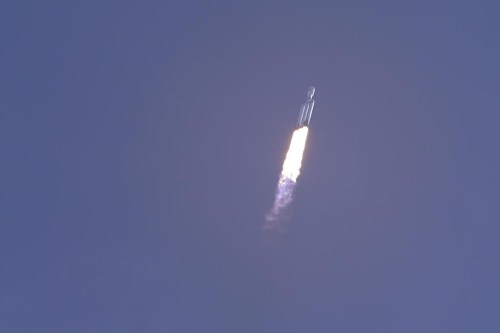
CAPE CANAVERAL, Fla. (AP) — SpaceX launched its mega Falcon Heavy rocket for the first time in more than three years Tuesday, hoisting satellites for the military and then nailing side-by-side booster landings back near the pad.
Thick fog shrouded NASA’s Kennedy Space Center as the rocket blasted off at midmorning. The crowd at the launch site couldn’t even see the pad three miles (5 kilometers) away, but heard the roar of the 27 first-stage engines.
Both side boosters peeled away two minutes after liftoff, flew back to Cape Canaveral, and landed alongside one another, just a few seconds apart. The core stage was discarded at sea, its entire energy needed to get the Space Force’s satellites to their intended extra-high orbit.
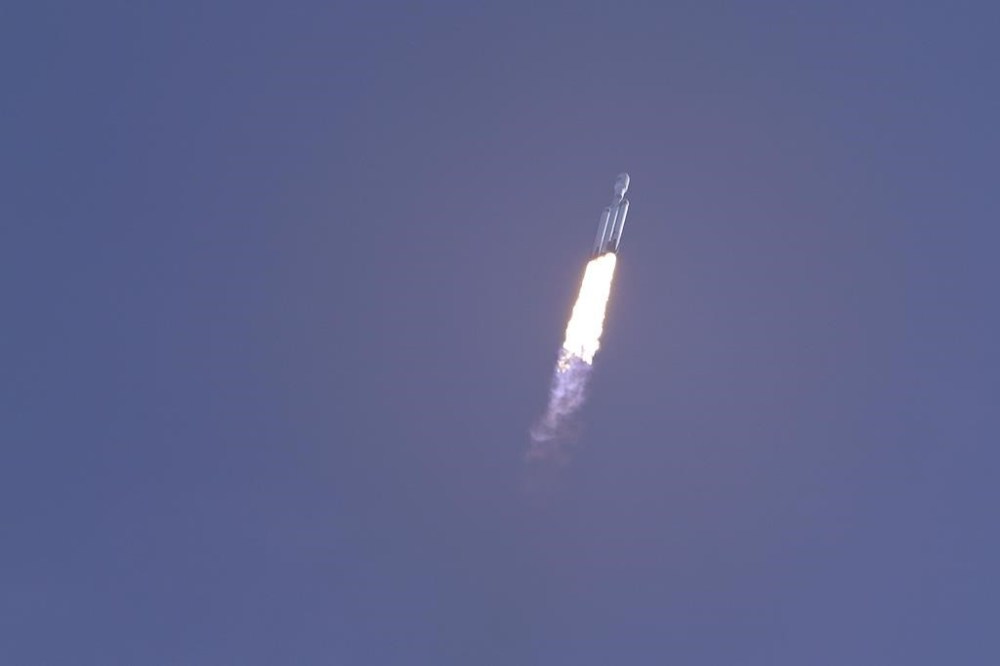
This was SpaceX’s fourth flight of a Falcon Heavy, currently the most powerful rocket in use. The first, in 2018, launched SpaceX chief Elon Musk’s red Tesla convertible; the next two Heavy launches followed in 2019, lifting satellites.

___
The Associated Press Health and Science Department receives support from the Howard Hughes Medical Institute’s Department of Science Education. The AP is solely responsible for all content.