Justice Dept. sues Google over digital advertising dominance

Advertisement

Advertise with us

WASHINGTON (AP) — The Justice Department and eight states filed an antitrust suit against Google on Tuesday, seeking to shatter its alleged monopoly on the entire ecosystem of online advertising as a hurtful burden to advertisers, consumers and even the U.S. government.

Read this article for free:

or

Already have an account? Log in here »

To continue reading, please subscribe:

Subscribe and receive a limited-edition Free Press branded hat or tote.

Digital Subscription

One year of digital access for only $205*

  • Enjoy unlimited reading on winnipegfreepress.com
  • Read the E-Edition, our digital replica newspaper
  • Access News Break, our award-winning app
  • Play interactive puzzles

*First annual payment billed as $205.00 + GST for one year. This annual subscription will automatically renew at $233.00 + GST every 52 weeks (10% off the regular annual price of $259.35). Offer available to new and qualified returning subscribers only. Cancel any time.

To continue reading, please subscribe:

Add Free Press access to your Brandon Sun subscription for only an additional

$1 for the first 4 weeks*

  • Enjoy unlimited reading on winnipegfreepress.com
  • Read the E-Edition, our digital replica newspaper
  • Access News Break, our award-winning app
  • Play interactive puzzles
Start now

*Your next Brandon Sun subscription payment will increase by $1.00 and you will be charged $17.95 plus GST for four weeks. After four weeks, your payment will increase to $24.95 plus GST every four weeks.

Hey there, time traveller!
This article was published 24/01/2023 (1287 days ago), so information in it may no longer be current.

WASHINGTON (AP) — The Justice Department and eight states filed an antitrust suit against Google on Tuesday, seeking to shatter its alleged monopoly on the entire ecosystem of online advertising as a hurtful burden to advertisers, consumers and even the U.S. government.

The government alleged in the complaint that Google is looking to “neutralize or eliminate” rivals in the online ad marketplace through acquisitions and to force advertisers to use its products by making it difficult to use competitors’ offerings. It’s part of a new, if slow and halting, push by the U.S. to rein in big tech companies that have enjoyed largely unbridled growth in the past decade and a half.

“Monopolies threaten the free and fair markets upon which our economy is based. They stifle innovation, they hurt producers and workers, and they increase costs for consumers,” Attorney General Merrick Garland said at a news conference Tuesday.

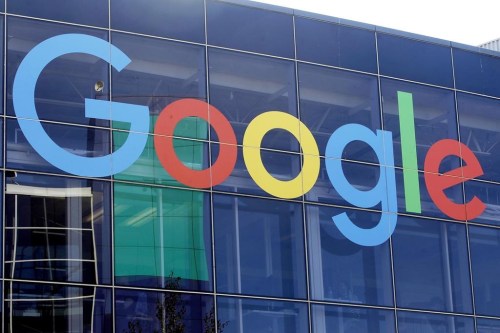
FILE - A sign is shown on a Google building at their campus in Mountain View, Calif., on Sept. 24, 2019. The Justice Department and several states sued Google on Tuesday, Jan. 24, 2023, alleging that its dominance in digital advertising harms competition. (AP Photo/Jeff Chiu, File)

For 15 years, Garland said, Google has “pursued a course of anti-competitive conduct” that has stalled the rise of rival technologies and manipulated the mechanics of online ad auctions to force advertisers and publishers to use its tools. In so doing, he added, Google ”engaged in exclusionary conduct” that has “severely weakened,” if not destroyed, competition in the ad tech industry.

The suit, the latest legal action brought by the government against Google, accuses the company of unlawfully monopolizing the way ads are served online by excluding competitors. Google’s ad manager lets large publishers who have significant direct sales manage their advertisements. The ad exchange, meanwhile, is a real-time marketplace to buy and sell online display ads.

Garland said Google controls the technology used by most major website publishers to offer advertising space for sale, as well as the largest ad exchange that matches publishers and advertisers together when ad space is sold. The result, he added, is that “website creators earn less and advertisers pay more.”

The lawsuit, filed in federal court in Alexandria, Virginia, demands that Google divest itself of the businesses of controlling the technical tools that manage the buying, selling and auctioning of digital display advertising, remaining with search — its core business — and other products and services including YouTube, Gmail and cloud services.

Alphabet Inc., Google’s parent company, said in a statement that the suit “doubles down on a flawed argument that would slow innovation, raise advertising fees, and make it harder for thousands of small businesses and publishers to grow.” Digital ads currently account for about 80% of Google’s revenue, and by and large support its other, less lucrative endeavors.

Tuesday’s lawsuit comes as the U.S. government is increasingly looking to rein in Big Tech’s dominance, although such legal action can take years to complete and Congress has not passed any recent legislation seeking to curb the influence of the tech industry’s largest players.

The European Union has been more active. It launched an antitrust investigation into Google’s digital ad dominance in 2021. British and European regulators are also looking into whether an agreement for online display advertising services between Google and Meta breached rules on fair competition.

An internet services trade group that includes Google as a member described the lawsuit and its “radical structural remedies” as unjustified.

Matt Schruers, president of the Computer & Communications Industry Association, said competition for advertising is fierce and the “governments’ contention that digital ads aren’t in competition with print, broadcast, and outdoor advertising defies reason.”

Attorney General Merrick Garland arrives for a news conference at the Department of Justice in Washington, Tuesday, Jan. 24, 2023. The Justice Department and several states have sued Google, alleging that its dominance in digital advertising harms competition. (AP Photo/Carolyn Kaster)

Dina Srinivasan, a Yale University fellow and adtech expert, said the lawsuit is “huge” because it aligns the entire nation — state and federal governments — in a bipartisan legal offensive against Google. In December 2020, 16 states and Puerto Rico sued Google over the exact same issues.

The current online ad market, Srinivasan said, “is broken and totally inefficient.” The fact that intermediaries are getting 30% to 50% of the take on each ad trade is “an insane inefficiency to have baked into the U.S. economy.” She called it “a massive tax on the free internet and consumers at large. It directly affects the viability of a free press” as well.

As with many highly complex technical markets, it has taken time for federal and state regulators and policymakers to catch up with and understand the online ad market. Srinivasan noted that it took a decade before they woke up to the perils of high-speed trading in financial markets and began adopting measures to discourage it.

This lawsuit seeks to apply to the digital ad market the same rules that apply to the financial markets, she said. Brokers, banks and other companies that have sometimes competing interests aren’t permitted to own the New York Stock Exchange.

Google held nearly 29% of the U.S. digital advertising market — it includes all the ads people see on computers. phones, tablets and other internet-connected devices — in 2022, according to research firm Insider Intelligence. Facebook parent company Meta is second, with nearly 20% of the market. Amazon is a distant, but growing, third.

But that’s not the lawsuit’s concern. It is focused on the technical market mechanisms that Google controls, including the ad server it developed building on the 2008 purchase of market-dominating DoubleClick. DOJ says Google has a more than 90% share of the business that serves ads to websites and controls about 80% of the “buy-side” Google Ads network where advertisers compete to place ads.

Google, the lawsuit states, has over the past 15 years “used acquisitions and market power across adjacent ad tech markets to quash the rise of rivals, tighten its control over the manner and means through which digital advertising transactions occur, and prevent publishers and advertisers from working effectively with Google’s rivals.”

This is the latest legal action taken against Google by either the Justice Department or local state governments. In October 2020, for instance, the Trump administration and 11 state attorneys general sued Google for violating antitrust laws, alleging anticompetitive practices in the search and search advertising markets.

Asked why the Justice Department would bring the suit when a similar complaint has already been filed by states, Assistant Attorney General Jonathan Kanter, the department’s top antitrust official, said, “We conducted our own investigation, and that investigation occurred over many years.”

Attorney General Merrick Garland looks to Assistant Attorney General Jonathan Kanter of the Justice Department's Antitrust Division as he speaks at the Department of Justice in Washington, Tuesday, Jan. 24, 2023. The Justice Department and several states have sued Google, alleging that its dominance in digital advertising harms competition. (AP Photo/Carolyn Kaster)

The states taking part in Tuesday’s suit include California, Virginia, Connecticut, Colorado, New Jersey, New York, Rhode Island and Tennessee.

___

AP Technology Writer Ortutay reported from San Francisco and Bajak from Boston. AP Technology Writer Matt O’Brien contributed to this report.

___

This story was first published on January 25, 2023. It was updated on January 25, 2023 to correct the number of states involved in a 2020 lawsuit. It was 16, not 35.

Report Error Submit a Tip

More Stories

Justice Dept. sues Google over digital advertising dominance

Barbara Ortutay, Eric Tucker And Frank Bajak, The Associated Press 7 minute read Preview

Justice Dept. sues Google over digital advertising dominance

Barbara Ortutay, Eric Tucker And Frank Bajak, The Associated Press 7 minute read Wednesday, Jan. 25, 2023

WASHINGTON (AP) — The Justice Department and eight states filed an antitrust suit against Google on Tuesday, seeking to shatter its alleged monopoly on the entire ecosystem of online advertising as a hurtful burden to advertisers, consumers and even the U.S. government.

The government alleged in the complaint that Google is looking to “neutralize or eliminate” rivals in the online ad marketplace through acquisitions and to force advertisers to use its products by making it difficult to use competitors’ offerings. It's part of a new, if slow and halting, push by the U.S. to rein in big tech companies that have enjoyed largely unbridled growth in the past decade and a half.

“Monopolies threaten the free and fair markets upon which our economy is based. They stifle innovation, they hurt producers and workers, and they increase costs for consumers,” Attorney General Merrick Garland said at a news conference Tuesday.

For 15 years, Garland said, Google has “pursued a course of anti-competitive conduct” that has stalled the rise of rival technologies and manipulated the mechanics of online ad auctions to force advertisers and publishers to use its tools. In so doing, he added, Google ”engaged in exclusionary conduct” that has “severely weakened,” if not destroyed, competition in the ad tech industry.

Read
Wednesday, Jan. 25, 2023

Pimicikamak lockdown lifted after fatal shooting

Malak Abas 2 minute read Preview

Pimicikamak lockdown lifted after fatal shooting

Malak Abas 2 minute read Yesterday at 3:28 PM CDT

Pimicikamak Cree Nation Chief David Monias said an arrest has been made and the community-wide lockdown has now been lifted after a shooting Friday that left one person dead.

RCMP were called by local First Nations Safety Officers about a seriously injured person at around 9:30 p.m. Friday on Main Road in Pimicikamak Cree Nation. Officers found two men at the scene. A 42-year-old man with a gunshot wound died at the scene. The other person was not injured.

The community went into immediate lockdown as the RCMP sought the suspect. An advisory posted by Monias Saturday had asked residents to stay inside their homes, lock doors and windows, keep children inside and not to open their doors to anyone they did not know.

In a statement on social media Sunday afternoon, Monias said the RCMP had arrested one person.

Read
Yesterday at 3:28 PM CDT

240 WestJet flight attendants picket in Winnipeg

Malak Abas 6 minute read Preview

240 WestJet flight attendants picket in Winnipeg

Malak Abas 6 minute read Updated: Yesterday at 3:21 PM CDT

Winnipeg’s WestJet flight attendants took to the picket line outside of Richardson International Airport on the first day of nationwide strikes Sunday, while inside, frustrated flyers scrambled to re-route cancelled long-weekend flights.

The Canadian Union of Public Employees’ Ontario arm and the airline announced the strike would commence after the strike deadline was passed without a deal early Sunday morning. WestJet attendants have been without a contract since Dec. 31, 2025.

Hours later, the 240 WestJet flight attendants based in Winnipeg had walked off the job and were marching outside of the airport terminal, some carrying signs with slogans including “Tired with WestJet? So are We!” and “Unpaid Work Won’t Fly.”

Key issues causing the stalemate are wages and pay for work on the ground: the union says flight attendants are not being paid for some of that work, while the company says they pay for the work through a “credit hour” system rather than an hourly rate.

Read
Updated: Yesterday at 3:21 PM CDT

Brighter days ahead after Camp Arnes

Joshua Frey-Sam 5 minute read Preview

Brighter days ahead after Camp Arnes

Joshua Frey-Sam 5 minute read Saturday, Aug. 1, 2026

Keishna Abenstein remembers what it was like to be a teenager who was stuck in her shell.

She also recalls how much going to summer camp at Camp Arnes helped her spread her wings.

Abenstein has watched her middle child, Teagen, go through a similar roller-coaster as a teenager. Teagen, described as a social butterfly in his childhood, has become a bit more reserved in his adolescence after many of his closest elementary school friends went to a different middle school, forcing him to make new friends as he began the next chapter of his education.

Abenstein saw an opportunity for a similar experience at Camp Arnes that could impact her son the same way it did for her.

Read
Saturday, Aug. 1, 2026

Stampeding to Starlette’s

David Sanderson 7 minute read Preview

Stampeding to Starlette’s

David Sanderson 7 minute read Saturday, Aug. 1, 2026

ELMA — Build it and they will come.

Lee and Star Giesbrecht are the owners of Starlette’s Burger Saloon, a western-themed, outdoor eating spot situated on the married couple’s 40-acre spread, immediately north of Elma.

Seated at one of a half-dozen picnic tables that dot the grounds, Star recalls a conversation she and Lee had prior to the May 2025 grand opening of their locale, which, with its weathered-wood exterior and rustic swinging doors, wouldn’t look out of place in an episode of Yellowstone.

Because they are “literally in the middle of nowhere,” Star says Lee thought it would be advantageous to mount a TV in one corner of the kitchen, for those occasions when they’d be twiddling their thumbs for hours on end, with little to do.

Read
Saturday, Aug. 1, 2026

Downtown Keg closes… to reopen nearby

Free Press staff 2 minute read Preview

Downtown Keg closes… to reopen nearby

Free Press staff 2 minute read Friday, Jul. 31, 2026

Downtown Winnipeg is without a Keg restaurant — for a couple of months, anyways.

The Keg Steakhouse and Bar vacated 115 Garry St. on Wednesday, after more than five decades at the location. It will open in a new Donald Street apartment tower this fall.

Its move comes after years of waiting. The DSM, at 185 Donald St., sat as a partially started apartment block after its developer stopped operating and sought creditor protection in April 2023. The developer began the project in 2019.

Carrington Real Estate took over in 2024. Part of the 14-storey site’s initial plans — pre-Carrington — was for the Keg to occupy the main floor.

Read
Friday, Jul. 31, 2026