Fukushima plant head: Too early to predict decommissioning

Advertisement

Advertise with us

TOKYO (AP) — The head of Japan's wrecked Fukushima nuclear plant says details of the damage inside its reactors are only beginning to be known 12 years after it was hit by a massive earthquake and tsunami, making it difficult to foresee when or how its decommissioning will be completed.

Read this article for free:


or

Already have an account? Log in here »

To continue reading, please subscribe:

Subscribe and receive a limited-edition Free Press branded hat or tote.

Digital Subscription

One year of digital access for only $205*

  • Enjoy unlimited reading on winnipegfreepress.com
  • Read the E-Edition, our digital replica newspaper
  • Access News Break, our award-winning app
  • Play interactive puzzles

*First annual payment billed as $205.00 + GST for one year. This annual subscription will automatically renew at $233.00 + GST every 52 weeks (10% off the regular annual price of $259.35). Offer available to new and qualified returning subscribers only. Cancel any time.

To continue reading, please subscribe:

Add Free Press access to your Brandon Sun subscription for only an additional

$1 for the first 4 weeks*

  • Enjoy unlimited reading on winnipegfreepress.com
  • Read the E-Edition, our digital replica newspaper
  • Access News Break, our award-winning app
  • Play interactive puzzles
Start now

*Your next Brandon Sun subscription payment will increase by $1.00 and you will be charged $17.95 plus GST for four weeks. After four weeks, your payment will increase to $24.95 plus GST every four weeks.

Hey there, time traveller!
This article was published 02/03/2023 (1280 days ago), so information in it may no longer be current.

TOKYO (AP) — The head of Japan’s wrecked Fukushima nuclear plant says details of the damage inside its reactors are only beginning to be known 12 years after it was hit by a massive earthquake and tsunami, making it difficult to foresee when or how its decommissioning will be completed.

The most pressing immediate task is to safely start releasing large amounts of treated but still radioactive water from the plant into the sea, Akira Ono said in an interview with The Associated Press.

The March 2011 earthquake and tsunami damaged cooling systems at the Fukushima Daiichi plant, causing three reactors to melt and release large amounts of radiation. The operator, Tokyo Electric Power Company Holdings Inc., has been able to stabilize the plant to the point where the company can better plan a decommissioning strategy, expected to be lengthy and exceedingly challenging.
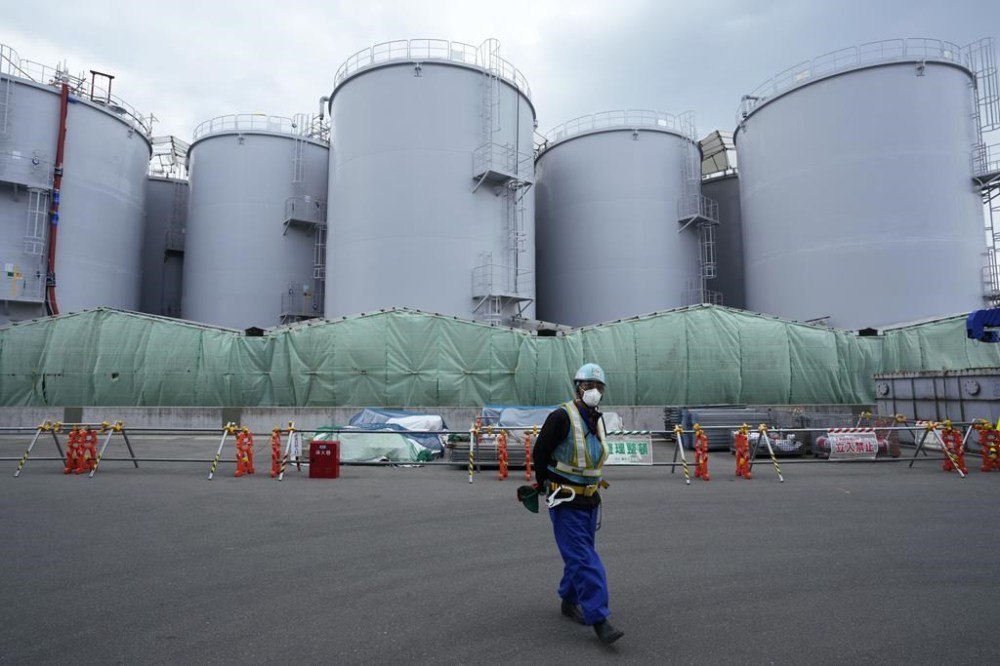
FILE - A worker helps direct a truck driver as he stands near tanks used to store treated radioactive water after it was used to cool down melted fuel at the Fukushima Daiichi nuclear power plant, run by Tokyo Electric Power Company Holdings (TEPCO), in Okuma town, northeastern Japan, on March 3, 2022. Head of Japan’s tsunami-wrecked Fukushima Daiichi nuclear power plant says details of the damages inside reactors are only beginning to unravel 12 years after the meltdowns, making it difficult to foresee what the place looks like even 30 years from now. (AP Photo/Hiro Komae, File)

“Going forward, we have to face unconceivably difficult work such as retrieving the melted debris” from inside the reactors, said Ono, who heads the plant and is president of Fukushima Daiichi Decontamination & Decommissioning Engineering Co.

Earlier this year, a remote-controlled underwater vehicle successfully collected a tiny sample from inside one of the three melted reactors — only a spoonful of about 880 tons of highly radioactive melted fuel and other debris that must be safely removed and stored.

The status of the debris in the primary containment chambers of the Unit 1, 2 and 3 reactors remains largely unknown, Ono said.

Removal of melted debris is set to start in Unit 2 sometime after September this year following a nearly two-year delay. The removal of spent fuel in the Unit 1 reactor’s cooling pool is set to begin in 2027 after a 10-year delay because of the need to dismantle parts of the building damaged by hydrogen explosions.

The plant should be ready for workers to finally concentrate on removing the melted debris from the reactors after all spent fuel is taken out of the cooling pools by 2031, Ono said.

The government is maintaining its original goal of completing the plant’s decommissioning by 2051. But some experts say removing all of the melted fuel debris by then is impossible and suggest a Chernobyl-style entombment of the plant, an option that could help reduce health risks while the plant’s radioactivity gradually decreases.

“I still consider this goal as a major guidepost,” Ono said. “We can’t say what will happen in 30 years. We can’t say, but roughly imagining the next 30 years, I believe that it is necessary to carefully and precisely build up the current plan in order to safely, steadily and quickly proceed with the decommissioning.”

Before that, however, the biggest issue is the disposal of large amounts of treated but still radioactive water from the plant, he said.

Water used to cool the three damaged reactors has leaked into the basements of the reactor buildings and has been collected and stored in about 1,000 tanks that cover much of the plant’s grounds.
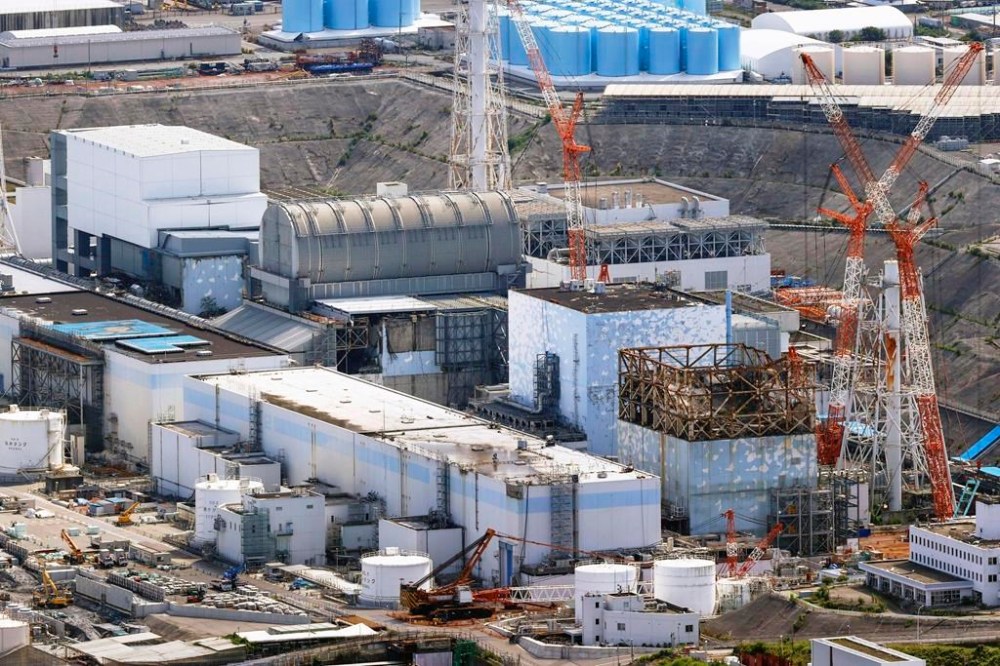
This aerial photo shows, from right to left, the Unit 1, 2, 3 and 4 reactor buildings of the Fukushima Daiichi nuclear power plant in Fukushima Prefecture on Aug. 21, 2022. Head of Japan’s tsunami-wrecked Fukushima Daiichi nuclear power plant says details of the damages inside reactors are only beginning to unravel 12 years after the meltdowns, making it difficult to foresee what the place looks like even 30 years from now. (Fumine Tsutabayashi/Kyodo News via AP)

The government and TEPCO say the tanks must be removed so facilities can be built for the plant’s decommissioning. The tanks are expected to reach their capacity of 1.37 million tons later this year.

Most of the radioactivity can be removed from the water during treatment, but tritium cannot be separated, and low levels of some other radionuclides also remain. The government and TEPCO say they will ensure the water’s radioactivity is far below legal limits and will dilute it with large amounts of seawater before its planned discharge into the ocean.

Local fishing communities have fiercely objected to the plan, saying their already damaged business will suffer more because of the negative image caused by the water release. Neighboring countries, including China and South Korea, and Pacific Island nations have also raised safety concerns.

TEPCO plans to finish construction of the facilities needed for the water discharge in the spring and then receive safety approval from nuclear regulators. A final inspection and report by an International Atomic Energy Agency mission are expected before the release begins.

The operator still needs to work on an “easy to understand” explanation and scientific evidence to help people understand the release, Ono said.

“The decommissioning of Fukushima Daiichi itself is based on the understanding and trust of everyone in society,” he said.
Report Error Submit a Tip

More Stories

Former abuser of alcohol, drugs who graduated from recovery program now helping others

Scott Billeck 6 minute read Preview

Former abuser of alcohol, drugs who graduated from recovery program now helping others

Scott Billeck 6 minute read Updated: Yesterday at 9:05 AM CDT

The second time Ray Ducharme overdosed, he was in a Winnipeg hotel room, waiting for a spot in Adult and Teen Challenge Central Canada’s live-in recovery program.

It was Oct. 30, 2024 — not long after his first overdose had landed him in a Red Deer, Alta., hospital for eight days. Ducharme had gone west, trying to outrun the baggage he carried in Winnipeg, before eventually returning home at the behest of an ATCCC employee who assured him there would be a bed available in seven to 10 days.

Then came the second OD.

Three days later, in early November, Ducharme woke up in a Winnipeg hospital with his family around him. Doctors weren’t sure he’d survive.

Read
Updated: Yesterday at 9:05 AM CDT

Port of Churchill celebrates first grain shipment in six years

Aaron Epp 6 minute read Preview

Port of Churchill celebrates first grain shipment in six years

Aaron Epp 6 minute read Yesterday at 6:02 PM CDT

Approximately 30,000 tonnes of Canadian durum wheat from Saskatchewan-based AGT Foods is being loaded at the northern Manitoba port and will be shipped to customers in Europe.

Read
Yesterday at 6:02 PM CDT

Love of the rink blossomed differently for mother-daughter figure skaters

Grace Penner 8 minute read Preview

Love of the rink blossomed differently for mother-daughter figure skaters

Grace Penner 8 minute read 6:20 PM CDT

It’s said that home is where the heart is, and for Dana and Marrin McKee that has always been the rink.

The mother-daughter duo of figure skating coaches always find comfort lacing up in chilly arenas.

Dana McKee’s origin story was very similar to her daughter’s, having a strong motherly push onto the ice. Much like learning to swim or drive a car, Dana’s mother believed that skating was an important life skill that needed to be honed.

Growing up in Morris, McKee spent the majority of her youth in the CanSkate program — a developmental learn-to-skate stage teaching the basics of standing upright.

Read
6:20 PM CDT

Naked man dies after jolt from police Taser

Scott Billeck 5 minute read Preview

Naked man dies after jolt from police Taser

Scott Billeck 5 minute read Updated: Yesterday at 6:49 PM CDT

A Transcona man says he was lucky to be awake early Sunday when, shortly after 4 a.m., a stranger smashed through his screen door and kicked in the front door of his home.

“It’s all I can think about, like what if I was sleeping?” said the man, whom the Free Press is not naming to protect his identity. “Being awake gave me just a couple of extra seconds to deal with him before he got his whole body in.”

He was sitting on his couch when he heard the glass shatter and saw someone trying to force his way inside.

“Glass flew in and this guy — he was a big guy — tried to climb through the screen door,” the man said. “I hopped off the couch and just remember screaming for help. Well, of course it’s four in the morning, so nobody’s going to help, right? I wasn’t thinking straight.”

Read
Updated: Yesterday at 6:49 PM CDT

At last, some good news on homelessness

Editorial 4 minute read Preview

At last, some good news on homelessness

Editorial 4 minute read 2:00 AM CDT

There is no shortage of reasons to be frustrated about homelessness in Winnipeg. But the latest numbers provide something that has been increasingly difficult to find — evidence that at least some things are getting better.

Read
2:00 AM CDT

Renewed spirit and life: Indigenous treatment centre expands with $21-M revamp

Scott Billeck 5 minute read Preview

Renewed spirit and life: Indigenous treatment centre expands with $21-M revamp

Scott Billeck 5 minute read 3:44 PM CDT

Don Robinson knows first-hand that many people don’t get sober by themselves.

In late June 1984, Robinson downed his last drink. His recovery began at Pritchard House in Winnipeg’s North End, a 22-bed treatment facility run by the Native Addictions Council of Manitoba.

“I didn’t get sober by myself,” said Robinson, a member of Bunibonibee Cree Nation who now works in grief and trauma counselling and traditional knowledge as an elder at Ka Ni Kanichihk Inc.

More than four decades later, Robinson was back at the council on Monday, crowded into a room at its newly renovated treatment centre at 160 Salter St. — a place he once turned to for help and where he helps others now.

Read
3:44 PM CDT