TikTok propaganda labels fall flat in ‘huge win’ for Russia
Advertisement
Read this article for free:
or
Already have an account? Log in here »
To continue reading, please subscribe:

Digital Subscription
One year of digital access for only $205*
- Enjoy unlimited reading on winnipegfreepress.com
- Read the E-Edition, our digital replica newspaper
- Access News Break, our award-winning app
- Play interactive puzzles
*First annual payment billed as $205.00 + GST for one year. This annual subscription will automatically renew at $233.00 + GST every 52 weeks (10% off the regular annual price of $259.35). Offer available to new and qualified returning subscribers only. Cancel any time.
To continue reading, please subscribe:
Add Free Press access to your Brandon Sun subscription for only an additional
$1 for the first 4 weeks*
- Enjoy unlimited reading on winnipegfreepress.com
- Read the E-Edition, our digital replica newspaper
- Access News Break, our award-winning app
- Play interactive puzzles
*Your next Brandon Sun subscription payment will increase by $1.00 and you will be charged $17.95 plus GST for four weeks. After four weeks, your payment will increase to $24.95 plus GST every four weeks.
Read unlimited articles for free today:
or
Already have an account? Log in here »
Hey there, time traveller!
This article was published 30/03/2023 (1242 days ago), so information in it may no longer be current.
WASHINGTON (AP) — A year ago, following Russia’s invasion of Ukraine, TikTok started labeling accounts operated by Russian state propaganda agencies as a way to tell users they were being exposed to Kremlin disinformation.
An analysis a year later shows the policy has been applied inconsistently. It ignores dozens of accounts with millions of followers. Even when used, labels have little impact on Russia’s ability to exploit TikTok’s powerful algorithms as part of its effort to shape public opinion about the war.
Researchers at the Alliance for Securing Democracy, a bipartisan, transatlantic nonprofit operated by the German Marshall Fund that studies authoritarian disinformation, on Thursday published a report that identified nearly 80 TikTok accounts operated by Russian state outlets like RT or Sputnik or by individuals linked to them, including RT’s editor-in-chief.
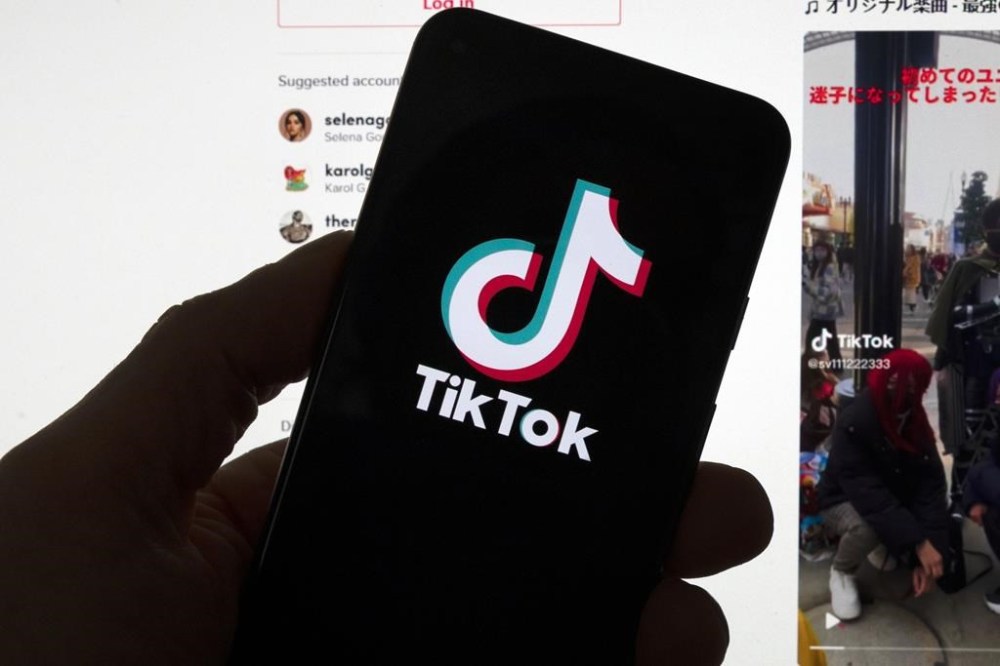
More than a third of the accounts were unlabeled, despite a labeling policy announced by TikTok a year ago. The labels, which appear in bold immediately below an account’s name, read “Russia state-controlled media.” Clicking on the label brings up more information, including a description that “the government has control over the account’s editorial content.”
The accounts have spread pro-Russian propaganda about the invasion of Ukraine as well as false and misleading claims about the U.S. and the international coalition that stands against Russia’s war.
“US to hold biggest satanic gathering in history,” claims one of the videos on Sputnik.Brasil, a Russian media account currently unlabeled on TikTok. Other videos posted by the account blame the U.S. for the war in Ukraine, claim the U.S. will start a nuclear war, and suggest the U.S. is working to make Brazil invade Iran.
RT Mexico, one of the most popular unlabeled accounts, has posted multiple videos playing up tension between the U.S. and Mexico over immigration and drugs.
“This is a huge win for Russian propaganda that they’re able to reach such large audiences on TikTok,” said Joe Bodnar, a research analyst at Alliance for Securing Democracy. “TikTok is not taking it as seriously as other platforms.”
That charge comes as the video sharing platform, owned by Chinese company ByteDance, faces questions in Washington about its ties to the government as well as concerns about privacy, surveillance and harmful content.
Britain, Canada, the U.S. federal government and a growing number of American states are among the governments that have already banned TikTok on government-issued devices. Some lawmakers in the U.S. have floated the idea of a complete ban on the app unless ByteDance agreed to sell its U.S. assets to another company.
TikTok has labeled more than 120 accounts, a spokesperson for the platform told The Associated Press on Tuesday. The platform’s policy covers outlets and organizations, not individuals, a loophole that allows RT’s editor-in-chief to remain unlabeled.
The platform said it would label many of the other accounts identified by researchers after being contacted by the AP.
“This is an ongoing process and we’ll continue to review new accounts and add labels as and when they join the platform,” the company said in an emailed statement.
Other tech companies have taken a more aggressive approach to Russian disinformation. Last year, Google blocked YouTube channels operated by Russian state media within Europe. The company also has initiated “pre-bunking” programs designed to blunt the effect of disinformation. Meta, which owns Facebook and Instagram, also labels foreign state media and has exposed and eliminated sprawling disinformation networks tied to Russia.
Once known largely for its popularity among teens, TikTok has emerged as a leading source of information — and misinformation. More than two-thirds of American teens are on the platform, which is among the world’s most popular websites.
Labels have become a common way for social media platforms to designate content from state-controlled media and alert users without removing the content. TikTok announced its labeling effort in March 2022, saying that “in response to the war in Ukraine, we’re expediting the rollout of our state media policy to bring viewers context to evaluate the content they consume on our platform.”
While the labels may provide more information about an account, they aren’t doing much to reduce overall engagement with Russian propaganda on TikTok, suggesting users either don’t see or don’t care about the labels.

RT, one of Russia’s top state-controlled outlets, has more followers on TikTok than The New York Times or The Wall Street Journal, despite a label classifying RT as “Russia state-controlled media.”
Another labeled TikTok account, RT en Espanol, has received more likes than other Spanish-language news outlets including Telemundo, Univision or El Pais.
TikTok’s use of labeling came up during a recent congressional hearing in which TikTok’s CEO was questioned about the platform’s ties to China and its record on safety and privacy. In his testimony, Shou Zi Chew said TikTok’s labeling policy would also extend to Chinese state media outlets.
Lawmakers were skeptical of his explanations.
“I worry that TikTok is the world’s most powerful and extensive propaganda machine,” U.S. Rep. Marc Veasey, D-Texas, said during last week’s hearing.