First wild koalas caught and vaccinated against chlamydia

Advertisement

Advertise with us

Australian scientists have begun vaccinating wild koalas against chlamydia in an ambitious field trial in New South Wales.

Read this article for free:


or

Already have an account? Log in here »

To continue reading, please subscribe:

Subscribe and receive a limited-edition Free Press branded hat or tote.

Digital Subscription

One year of digital access for only $205*

  • Enjoy unlimited reading on winnipegfreepress.com
  • Read the E-Edition, our digital replica newspaper
  • Access News Break, our award-winning app
  • Play interactive puzzles

*First annual payment billed as $205.00 + GST for one year. This annual subscription will automatically renew at $233.00 + GST every 52 weeks (10% off the regular annual price of $259.35). Offer available to new and qualified returning subscribers only. Cancel any time.

To continue reading, please subscribe:

Add Free Press access to your Brandon Sun subscription for only an additional

$1 for the first 4 weeks*

  • Enjoy unlimited reading on winnipegfreepress.com
  • Read the E-Edition, our digital replica newspaper
  • Access News Break, our award-winning app
  • Play interactive puzzles
Start now

*Your next Brandon Sun subscription payment will increase by $1.00 and you will be charged $17.95 plus GST for four weeks. After four weeks, your payment will increase to $24.95 plus GST every four weeks.

Hey there, time traveller!
This article was published 08/05/2023 (1222 days ago), so information in it may no longer be current.

Australian scientists have begun vaccinating wild koalas against chlamydia in an ambitious field trial in New South Wales.

The aim is to test a method for protecting the beloved marsupials against a widespread disease that causes blindness, infertility and death.

“It’s killing koalas because they become so sick they can’t climb trees to get food, or escape predators, and females can become infertile,” said Samuel Phillips, a microbiologist at the University of the Sunshine Coast who helped to develop the vaccine.
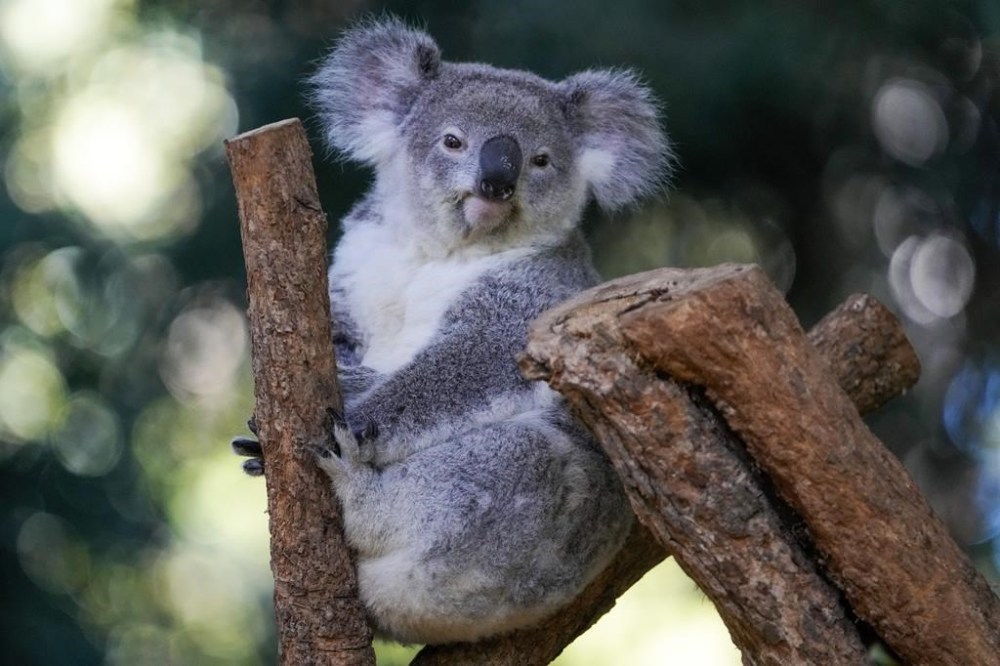
A koala sits in a tree at a koala park in Sydney, Australia, Friday, May 5, 2023. Australian scientists have begun vaccinating wild koalas against chlamydia in a pioneering field trial in New South Wales. The aim is to test a method for protecting the beloved marsupials against a widespread disease that causes blindness, infertility and death. (AP Photo/Mark Baker)

The scientists’ initial goal is to catch, vaccinate and monitor around half of the koala population in the Northern Rivers region of New South Wales — that means vaccinating around 50 animals.

The safety and effectiveness of the single-shot vaccine, which has been designed specifically for koalas, has previously been tested by vaccinating a few hundred koalas brought to wildlife rescue centers for other afflictions.

Now scientists want to understand the impact of vaccinating a population of wild koalas. “We want to evaluate what percentage of the koalas we need to vaccinate to meaningfully reduce infection and disease,” said Phillips.

The first koalas were caught and vaccinated in March, and the effort is expected to last about three months.

Researchers use binoculars to spot koalas in eucalyptus trees, then construct circular enclosures around the tree bases with doors leading into cages. After a few hours or days, the koalas will eventually climb down from one tree to seek tasty leaves on another, and wander into the harmless traps.

“It’s hard to confuse a koala with any other animals — they’re pretty easy to spot,” said Jodie Wakeman, veterinary care and clinical director at Friends of the Koala, a nonprofit that runs a wildlife hospital where the koalas are being brought for vaccination.

After a check-up to make sure the animals are in good condition, researchers administer anesthesia and shots of vaccine, then keep them under observation for 24 hours after they wake up, to confirm there are no unexpected side effects, said Wakeman.

The goal is to vaccinate healthy koalas to prevent them from becoming infected with chlamydia.

Before release, the researchers mark the koalas with a dab of pink dye on their backs, to ensure the same animals aren’t caught twice.

When the first vaccinated koala was returned to her habitat on March 9, the scientists placed her cage at the base of a tree and opened the door. She quickly emerged and bounded up the tree trunk.

Koalas are iconic Australian marsupials, like wombats and kangaroos. They spend most of their time eating and sleeping in eucalyptus trees, and their paws have two opposing thumbs to help them grasp and climb up trunks.

Australia’s wild koala populations have declined steeply in the past two decades.

Last February, Australia’s federal government declared koalas “endangered” in the eastern regions of New South Wales, Queensland and the Australian Capital Territory.

Facing compounded threats from disease, habitat loss and road collisions, koalas could become extinct by 2050, according to a 2020 assessment from the New South Wales government.

Around half of wild koalas in Queensland are already infected with chlamydia, scientists estimate.

In deciding to vaccinate, the scientists are balancing the risk of disturbing the animals against the danger of allowing the disease to spread. The trial was approved by multiple government bodies, including Australia’s agriculture department and New South Wales’ planning and environment department.

The origins of chlamydia in koalas aren’t confirmed, but scientists believe it’s likely the marsupials initially caught the disease from exposure to the feces of infected sheep and cattle. Then it’s spread sexually, or passed from mother to offspring.

While humans and livestock infected with the bacteria that causes chlamydia can be treated with antibiotics, it’s not so simple for koalas.
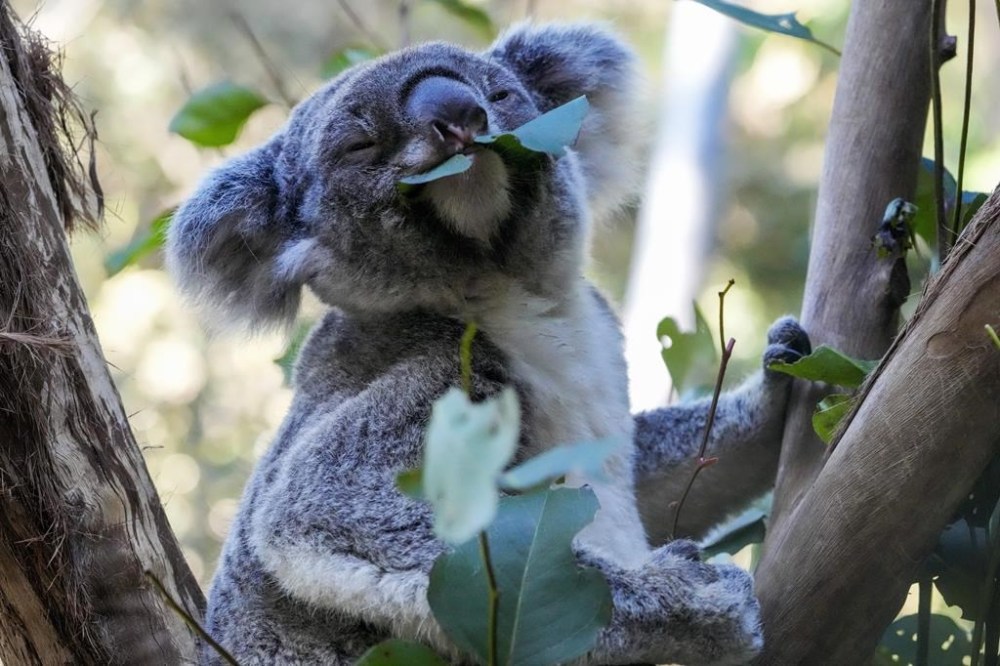
A koala eats gum leaves at a koala park in Sydney, Australia, Friday, May 5, 2023. Australian scientists have begun vaccinating wild koalas against chlamydia in a pioneering field trial in New South Wales. The aim is to test a method for protecting the beloved marsupials against a widespread disease that causes blindness, infertility and death. (AP Photo/Mark Baker)

The “complex” microbes inside the stomachs of koalas are designed to neutralize toxins in eucalyptus leaves that are their main food source, said Mathew Crowther, a conservation biologist at the University of Sydney. But their digestive systems can also neutralize some medicines so “that means they don’t respond well to antibiotics treatment,” he said.

Crowther has been monitoring a population of koalas in northern New South Wales for more than a decade. In 2008, 10% of animals tested there were infected with chlamydia. Today that rate is 80%.

“It’s been devastating — there’s very, very low fertility,” he said. “You hardly see any babies.”

The other threats koalas face — including habitat destruction from land clearing and climate-enhanced wildfires — may increase their stress levels, weakening their immune systems and making them more susceptible to diseases including chlamydia, said Crowther.

Rebecca Johnson, now chief scientist at the Smithsonian National Museum of Natural History in Washington, D.C., previously led the Koala Genome Consortium in Australia. She said that seeing the effects of the disease up close was heartbreaking.

A necropsy of one koala with advanced chlamydia that was euthanized revealed “ovaries completely encased in cysts” and “intestines full of hard lumps of food, evidence that she couldn’t properly digest food,” recalled Johnson. “She was obviously infertile and in pain.”

There are only a handful of other examples worldwide of scientists attempting to catch and inoculate endangered wildlife for conservation. In 2016, scientists began to vaccinate Hawaiian monk seals against a deadly strain of morbillivirus. Two and a half years ago, biologists in Brazil began to vaccinate golden lion tamarins against yellow fever.

“Vaccination for wildlife is certainly not routine yet,” said Jacob Negrey, a biologist at Wake Forest University School of Medicine. “But whether it should be used more often is a fundamental question that conservation biologists are really wrangling with right now.”

The Smithsonian’s Johnson said the benefits are likely to outweigh the risks for koalas. “Vaccination is an incredibly resource-intensive thing to do. Koalas live high up in trees,” she said.

“But because the effects of chlamydia are so debilitating, I think it’s totally worth it.”

___

Follow Christina Larson on Twitter: @larsonchristina

___

The Associated Press Health and Science Department receives support from the Howard Hughes Medical Institute’s Science and Educational Media Group. The AP is solely responsible for all content.

Report Error Submit a Tip

More Stories

U of M students call for ban on far-right group

Maggie Macintosh 4 minute read Preview

U of M students call for ban on far-right group

Maggie Macintosh 4 minute read 6:00 AM CDT

Some University of Manitoba students are calling on their school to ban a far-right group from campus after posters promoting mass deportations were found during the summer break.

More than 50 people rallied on Wednesday, the first day of classes, to make known their concerns about a group called the Dominion Society of Canada.

The protest was organized after a supporter of the self-described nationalist group posted a video over the Labour Day weekend that shows him putting up flyers in Fort Garry.

“Canada is a really beautiful country and I have been welcomed here by a lot of beautiful people and it’s been amazing, but when I see harmful rhetoric online and now, on campus, it gives me a lot of anxiety,” said Ela Ancheta, an arts major at U of M.

Read
6:00 AM CDT

Manitoba has recorded 15 tornadoes this year, roughly twice the annual average

Eva Wasney 8 minute read Preview

Manitoba has recorded 15 tornadoes this year, roughly twice the annual average

Eva Wasney 8 minute read 6:50 PM CDT

It’s been a whirlwind year for tornado researchers in Manitoba.

“It’s the busiest we’ve ever been, by far,” John Hanesiak, a professor in the department of environment and geography at the University of Manitoba, says.

Hanesiak is a collaborator with the Northern Tornadoes Project, a national research program based at Western University in London, Ont., that aims to better understand tornadoes in Canada.

Since late May, Hanesiak and his team have spent 43 days in the field surveying damage caused by tornadoes and severe weather events across Manitoba and Saskatchewan. Previous seasons have required a maximum of 19 days on the road.

Read
6:50 PM CDT

Flash, bang … oops: police raid leads to lawsuit

Erik Pindera 4 minute read Preview

Flash, bang … oops: police raid leads to lawsuit

Erik Pindera 4 minute read Yesterday at 6:00 AM CDT

A couple suing the city allege Winnipeg Police Service officers trying to execute a search warrant at their condominium complex rappelled down the side of the building, broke in their glass patio door and fired off a stun grenade before realizing they were in the wrong unit.

Saeid Ghavami and Shahla Shojaei, a married couple who are academics and scientific researchers at the University of Manitoba, filed the lawsuit in Court of King’s Bench last month over the Jan. 31, 2025 incident.

The claim names the City of Winnipeg and several officers involved in the operation, whose identities are, at this point, unknown to the couple, and are referred to as “John Does.”

Officers were attempting to execute the warrant on the third floor of the eight-storey Pembina Highway building, the court filing says. The couple lives on the fourth floor.

Read
Yesterday at 6:00 AM CDT

‘We’ll get there’: retired sportscaster Scott Oake determined as fundraising for women's addictions treatment facility enters home stretch

Melissa Martin 5 minute read Preview

‘We’ll get there’: retired sportscaster Scott Oake determined as fundraising for women's addictions treatment facility enters home stretch

Melissa Martin 5 minute read 7:08 PM CDT

For now, the patch of land just east of the Victoria Hospital doesn’t look like much: just a field of rocks, mounded dirt, and concrete piles driven into the earth. Yet when Scott Oake looks over the site, he can already imagine how it will look in just over a year’s time, when the new Anne Oake Family Recovery Centre is expected to open.

It’s easier to picture this time around. In 2020, when the recently-retired CBC sportscaster and his late wife, Anne, were building their first labour of intermingled grief and love, the Bruce Oake Recovery Centre for men, it was hard for him to wrap his mind around how a raw construction site could transform into a welcoming addictions treatment facility.

When that centre opened in 2021, Oake found it looked “almost identical” to the architect’s renderings. So it’s easy to hope the Anne Oake Centre will be the same. It will be the first facility of its kind, its founders believe, not only in Canada but in North America: a place where 50 to 70 women can pursue sobriety while staying with their children.

“At Bruce Oake there’s a culture of love, and most of all a culture of hope,” Oake said, speaking at the site Thursday after a media conference to announce the final push of the centre’s fundraising campaign. “I can feel it every time I walk into that building. And I know it will be the same here.”

Read
7:08 PM CDT

Denim-focused firm Duer sets up Winnipeg shop

Aaron Epp 5 minute read Preview

Denim-focused firm Duer sets up Winnipeg shop

Aaron Epp 5 minute read 8:16 PM CDT

A Canadian apparel brand known for its “performance jeanswear” is one of the newest tenants in Winnipeg’s largest mall.

Duer opened a retail shop in CF Polo Park at the end of August. It’s the first Manitoba storefront for the Vancouver-based company, which offers clothing for men and women, with a focus on denim.

Company founder Gary Lenett says Duer has built a demand in the province for its products through its wholesale and e-commerce channels, which drove the company’s decision to open a retail store in Winnipeg.

“We landed on Polo Park because it’s the busiest mall in the city and the best way to reach a wide group of people in one place,” Lenett said in an email.

Read
8:16 PM CDT

Childfree Winnipeg group gives women without kids a place to gather

AV Kitching 5 minute read Preview

Childfree Winnipeg group gives women without kids a place to gather

AV Kitching 5 minute read Yesterday at 4:48 PM CDT

Katelyn Sawatzky founded Childfree Winnipeg Women in 2021 to bring together women who don’t have kids — be it by choice or circumstance — and do not plan on raising children.

The group is designed to help them share experiences and build meaningful friendships.

The community welcomes cisgender, straight, transgender, bisexual and lesbian women. Parents, including empty nesters and men, are turned away.

“Our group is a safe space where women can hang out with other women without being asked when you’re going to have kids or why you don’t have kids … where you don’t feel like you have to validate or defend your choices in any way, because everyone gets it,” Sawatzky says.

Read
Yesterday at 4:48 PM CDT