Memphis ‘snake factory’ transplants slither into their new home in Louisiana
Advertisement
Read this article for free:
or
Already have an account? Log in here »
To continue reading, please subscribe:

Digital Subscription
One year of digital access for only $205*
- Enjoy unlimited reading on winnipegfreepress.com
- Read the E-Edition, our digital replica newspaper
- Access News Break, our award-winning app
- Play interactive puzzles
*First annual payment billed as $205.00 + GST for one year. This annual subscription will automatically renew at $233.00 + GST every 52 weeks (10% off the regular annual price of $259.35). Offer available to new and qualified returning subscribers only. Cancel any time.
To continue reading, please subscribe:
Add Free Press access to your Brandon Sun subscription for only an additional
$1 for the first 4 weeks*
- Enjoy unlimited reading on winnipegfreepress.com
- Read the E-Edition, our digital replica newspaper
- Access News Break, our award-winning app
- Play interactive puzzles
*Your next Brandon Sun subscription payment will increase by $1.00 and you will be charged $17.95 plus GST for four weeks. After four weeks, your payment will increase to $24.95 plus GST every four weeks.
Read unlimited articles for free today:
or
Already have an account? Log in here »
Hey there, time traveller!
This article was published 12/05/2023 (1241 days ago), so information in it may no longer be current.
BENTLEY, La. (AP) — They were born and raised in captivity, but as they slowly slithered away from their handlers and disappeared into gopher holes in the Kisatchie National Forest, the group of Louisiana pine snakes appeared to be right at home.
The five pine snakes bred at the Memphis Zoo in Tennessee were released into the Kisatchie in early May as part of an ongoing conservation effort involving zoos in Memphis, New Orleans and two Texas cities, Fort Worth and Lufkin. This year, more than 100 pine snakes — a species the federal government lists as threatened — will be released into the central Louisiana forest.
“We provide the snakes in our snake factories, which are funded by the U.S. Forest Service, into habitat that the Fish and Wildlife Service and Forest Service have developed,” said Steve Reichling, the Memphis Zoo’s Director of Conservation and Research. “It’s just a perfect marriage, really.”
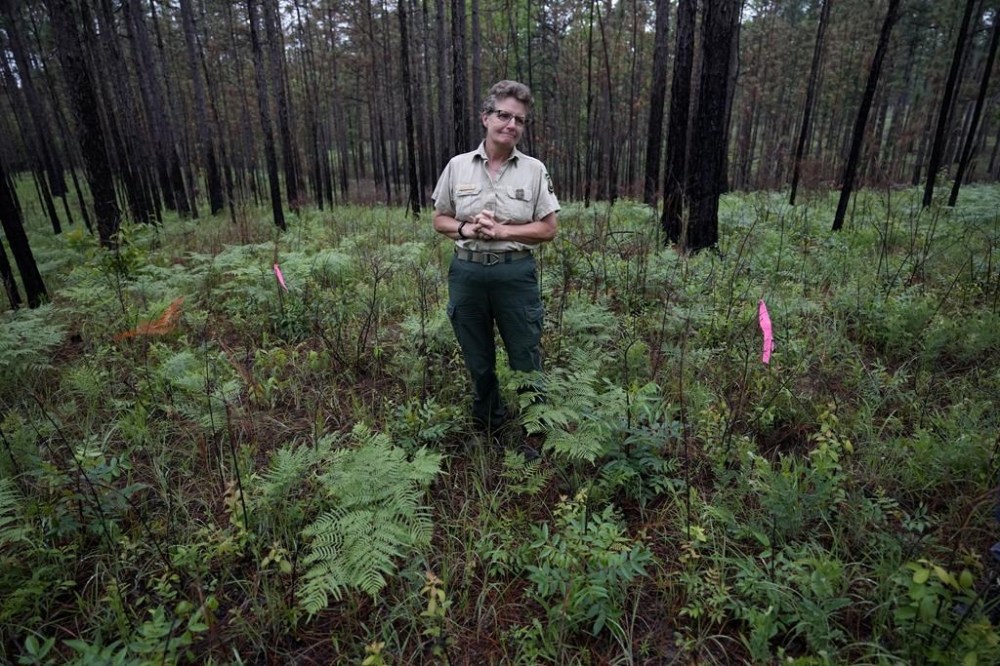
Reichling said the characteristics of the area where the snakes were released — a high tree canopy dominated by longleaf pine, little mid-level vegetation, grassy ground and sandy soil — are all vital to the snakes’ survival. The forest is also home to gophers that are both a food source for the snakes and the creators of the burrow system where the snakes live and hibernate.
“Unlike some of the other snakes that are here that can survive in different habitats, Louisiana pines, they cannot,” Reichling said as the snakes were being released.
Although they bear a resemblance to rattlesnakes, pine snakes are non-venomous constrictors and aren’t considered dangerous to humans.

“There is no other snake in the world like it,” Reichling said. “And to me, that’s the definition of precious, right?”
The release into the Kisatchie of juvenile pine snakes raised at the Memphis Zoo has become an annual event, one that Emlyn Smith, a biologist with the forest service, looks forward to.
“I love this,” she said. “This is why I haven’t retired yet, because I love this project and it’s just so exciting. Every time I come out here, there’s the potential to see a pine snake that we released and to see that it’s surviving and it’s thriving and it’s making babies and it’s getting bigger.”
___
McGill reported from New Orleans.