Philippines evacuates people near Mayon Volcano, where more unrest indicates eruption may be coming
Advertisement
Read this article for free:
or
Already have an account? Log in here »
To continue reading, please subscribe:

Digital Subscription
One year of digital access for only $205*
- Enjoy unlimited reading on winnipegfreepress.com
- Read the E-Edition, our digital replica newspaper
- Access News Break, our award-winning app
- Play interactive puzzles
*First annual payment billed as $205.00 + GST for one year. This annual subscription will automatically renew at $233.00 + GST every 52 weeks (10% off the regular annual price of $259.35). Offer available to new and qualified returning subscribers only. Cancel any time.
To continue reading, please subscribe:
Add Free Press access to your Brandon Sun subscription for only an additional
$1 for the first 4 weeks*
- Enjoy unlimited reading on winnipegfreepress.com
- Read the E-Edition, our digital replica newspaper
- Access News Break, our award-winning app
- Play interactive puzzles
*Your next Brandon Sun subscription payment will increase by $1.00 and you will be charged $17.95 plus GST for four weeks. After four weeks, your payment will increase to $24.95 plus GST every four weeks.
Read unlimited articles for free today:
or
Already have an account? Log in here »
Hey there, time traveller!
This article was published 09/06/2023 (1201 days ago), so information in it may no longer be current.
MANILA, Philippines (AP) — Philippine troops, police and rescue workers began forcibly evacuating residents near Mayon Volcano on Friday as its increasing unrest indicated a violent eruption of one of the country’s most active volcanoes is possible within weeks or days.
The area within a 6-kilometer (3.7-mile) radius of Mayon’s crater is supposed to be off-limits due to possible volcanic emissions, lava flows, rockfalls and other hazards. But many poor villagers have built houses and tended farms in Mayon’s danger zone over the years.
President Ferdinand Marcos Jr. said an evacuation of residents from the permanent danger zone was underway and promised to provide aid to the displaced until the crisis ended.
“Right now, what we are doing is preparing and moving people away from the area so that, should the time come, I hope it doesn’t happen…we’re ready,” Marcos told reporters. “But unfortunately science tells us that may happen because the lid or the cap on top of the lava is slowly rising.”
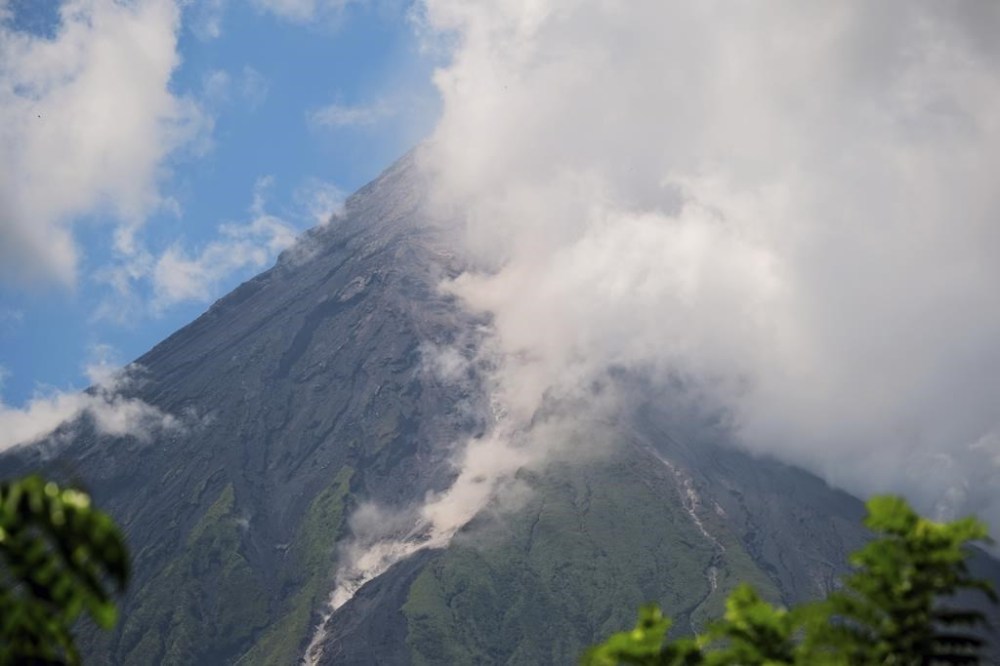
Authorities had raised the alert level for the volcano in northeastern Albay province Thursday after superheated streams of gas, debris and rocks cascaded down its upper slope, indicating activity below the surface that could precede a hazardous eruption.
Conditions have advanced a little bit more Friday, although lava hasn’t started to flow, Marcos said.
The numbers of residents being evacuated weren’t immediately available.
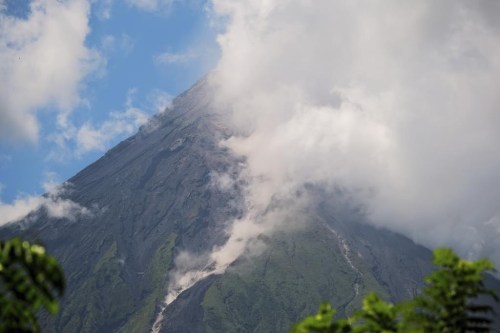
A tourist draw for its picturesque conical shape, 2,462-meter (8,077-feet) Mayon last erupted violently in 2018, displacing tens of thousands of villagers.
Government volcano experts raised the alert level around Mayon to the third of a five-step warning system Thursday after detecting an increasing number of rockfalls and at least two volcanic earthquakes in recent days.
Six brief volcanic gas and ash emissions streamed down the volcano’s southern gullies about 2 kilometers (1.2 miles) from the crater Friday. Numerous rockfalls and thin ash and steam plumes that drifted south were also observed, the government volcanology institute said.

Mayon is at “a relatively high level of unrest as magma is at the crater and hazardous eruption is possible within weeks or even days,” the institute said in its latest update Friday morning.
Mayon is one of the most restive of two dozen active volcanoes across the Philippines.
Officials also were closely monitoring Taal Volcano south of Manila and Mount Kanlaon on central Negros island due to renewed signs of restiveness.
A number of villages in three towns near Taal suspended classes Wednesday due to thick smog emanating from the volcano and residents were advised to limit outdoor activities and wear masks for protection.
The Philippines lies along the Pacific “Ring of Fire,” the area around the ocean rim where tectonic plates meet that is prone to earthquakes and volcanic eruptions. A long-dormant volcano, Mount Pinatubo, blew its top north of Manila in 1991 in one of the biggest volcanic eruptions of the 20th century, killing hundreds of people.