Germany sees opportunity in nuclear fusion, but funding for research remains uncertain
Advertisement
Read this article for free:
or
Already have an account? Log in here »
To continue reading, please subscribe:

Digital Subscription
One year of digital access for only $205*
- Enjoy unlimited reading on winnipegfreepress.com
- Read the E-Edition, our digital replica newspaper
- Access News Break, our award-winning app
- Play interactive puzzles
*First annual payment billed as $205.00 + GST for one year. This annual subscription will automatically renew at $233.00 + GST every 52 weeks (10% off the regular annual price of $259.35). Offer available to new and qualified returning subscribers only. Cancel any time.
To continue reading, please subscribe:
Add Free Press access to your Brandon Sun subscription for only an additional
$1 for the first 4 weeks*
- Enjoy unlimited reading on winnipegfreepress.com
- Read the E-Edition, our digital replica newspaper
- Access News Break, our award-winning app
- Play interactive puzzles
*Your next Brandon Sun subscription payment will increase by $1.00 and you will be charged $17.95 plus GST for four weeks. After four weeks, your payment will increase to $24.95 plus GST every four weeks.
Read unlimited articles for free today:
or
Already have an account? Log in here »
Hey there, time traveller!
This article was published 22/06/2023 (1201 days ago), so information in it may no longer be current.
BERLIN (AP) — The German government announced draft plans Thursday to boost domestic research into development of nuclear fusion, a technology some hope will provide abundant clean energy in the future, but left open how those efforts will be funded.
Science Minister Bettina Stark-Watzinger said that under the proposal, Germany will support all promising fusion technologies now being developed, including laser-based methods that achieved recent breakthroughs in the United States but aren’t widely researched in Europe.
Another method, using powerful magnets, has already received significant support from Germany at both its own Wendelstein 7-X research reactor in the northern town of Greifswald, and at the International Thermonuclear Experimental Reactor, or ITER, in southern France.
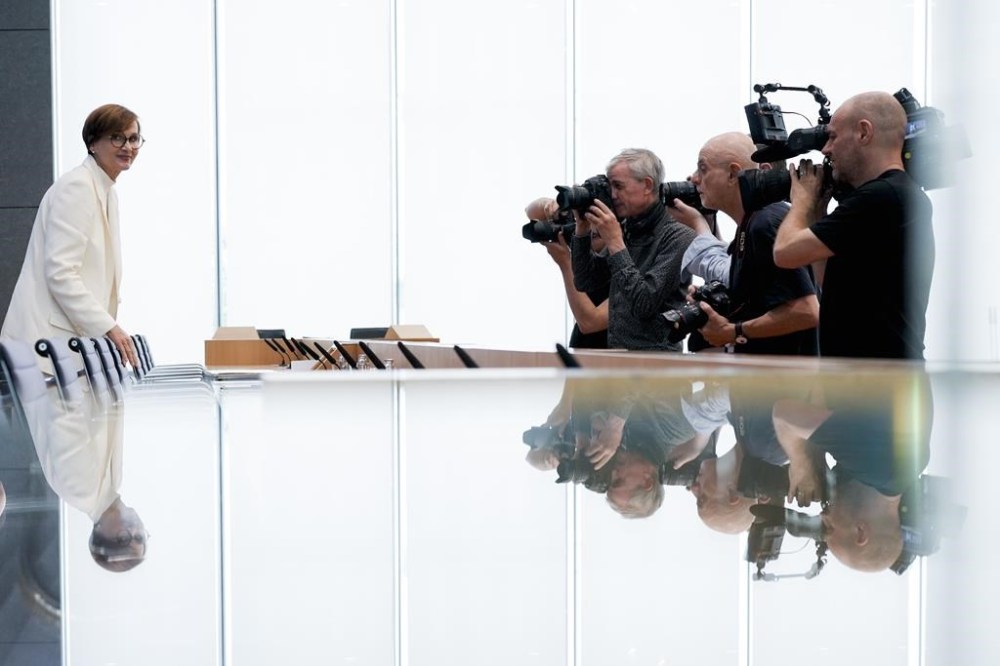
“We want to address both magnet and laser fusion,” Stark-Watzinger told reporters in Berlin, adding that the plan is to “substantially” increase the 149 million euros ($163 million) that Germany currently provides annually for such research. She declined to be more specific.
“We don’t yet know today which power plant concept will succeed,” she said. “In the end it will be scientists and industry, which will build the fusion power plant, that decide.”
Stark-Watzinger declined to say whether it could result in funding cuts for ITER, which has been plagued by delays and cost overruns, but said Germany would stand by its contractual obligations. The project is also under pressure because of the involvement of Russia, one of the few places of continued cooperation between Moscow and the West since the Russian attack on Ukraine.
Sibylle Günter, scientific director of the Max Planck Institute for Plasma Physics, acknowledged that a commercial fusion reactor may not begin operation in Germany until the second half of the century, but insisted that the investment would be worthwhile for future generations.
Germany aims to phase out the use of fossil fuels by 2045 and switched off its last three nuclear power plants, which used conventional fission, in April after years of lobbying by environmentalists.
Stark-Watzinger made clear that she doesn’t want a return of the old-style nuclear reactors, despite calls for that from some within her libertarian Free Democratic Party.
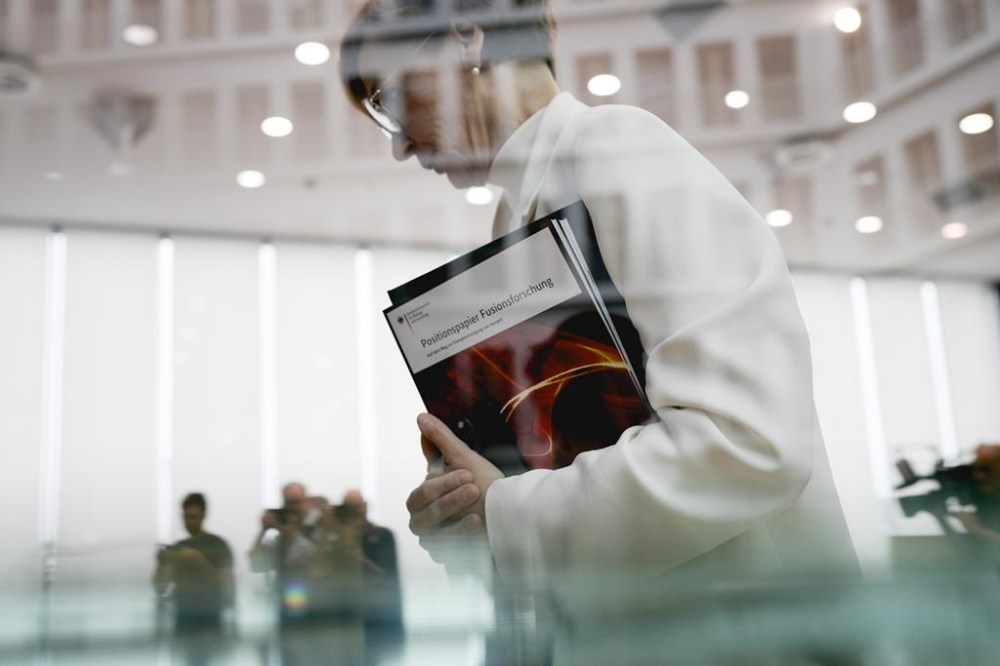
“I wouldn’t advocate building any reactor that uses this technology again,” she said, adding that nuclear fusion — which works by merging atoms to release energy — wouldn’t pose the same risks of uncontrolled meltdowns and long-lived radioactive waste that come from splitting atoms.
“The advantages are clear and we have good conditions here,” she said.