‘Something’s changed’: Summer 2023 is screaming climate change, scientists say
Advertisement
Read this article for free:
or
Already have an account? Log in here »
To continue reading, please subscribe:

Digital Subscription
One year of digital access for only $205*
- Enjoy unlimited reading on winnipegfreepress.com
- Read the E-Edition, our digital replica newspaper
- Access News Break, our award-winning app
- Play interactive puzzles
*First annual payment billed as $205.00 + GST for one year. This annual subscription will automatically renew at $233.00 + GST every 52 weeks (10% off the regular annual price of $259.35). Offer available to new and qualified returning subscribers only. Cancel any time.
To continue reading, please subscribe:
Add Free Press access to your Brandon Sun subscription for only an additional
$1 for the first 4 weeks*
- Enjoy unlimited reading on winnipegfreepress.com
- Read the E-Edition, our digital replica newspaper
- Access News Break, our award-winning app
- Play interactive puzzles
*Your next Brandon Sun subscription payment will increase by $1.00 and you will be charged $17.95 plus GST for four weeks. After four weeks, your payment will increase to $24.95 plus GST every four weeks.
Read unlimited articles for free today:
or
Already have an account? Log in here »
Hey there, time traveller!
This article was published 05/08/2023 (1113 days ago), so information in it may no longer be current.
Earlier this summer, two Canadians walked into a party in rural Germany.
“Canadians?” joked the host. “I thought you’d smell more like smoke.”
It’s been that kind of season. Floods, drought, warm waters lapping three coasts — but mostly wildfire smoke from sea to sea and overseas. Yes, this is climate change, scientists say, and expect more weather weirdness to come.
“It’s been a wild ride,” said Danny Blair, co-director of the Prairie Climate Centre at the University of Winnipeg. “It’s been a season and a year of extremes.”
Drought is one example. Canada’s a big place and it’s always dry somewhere, but not like this.
Agriculture Canada’s June 30 drought map shows most of the country was abnormally dry. Large stretches of the Prairies were under at least a moderate drought, pushing to extreme in southern Alberta.
In British Columbia, once the “wet coast,” 28 out of 34 river basins were at the province’s top two drought levels. Ranchers were selling cattle that they couldn’t grow enough hay to feed, and low streamflows were threatening salmon runs.
And it’s been hot. Although the east was generally normal, the west wasn’t.
From May through July, Kelowna, B.C., experienced 36 days of weather more than 30 C. The normal count is 16 C. Norman Wells, not far from the Arctic Circle in the Northwest Territories, set a new record of 38 C on July 8.
Environment Canada senior climatologist Dave Phillips toted up the number of warm temperature records set this summer versus the number of cold records.
“If the climate was balanced, you’d have as many cold records as warm records,” he said.
Nope. There were 372 new hot-temperature marks and 55 cold ones.
Nor is the heat restricted to the land. Phillips said waters off all three Canadian coasts have never been warmer.
Hudson Bay is up to 3 C warmer. The Pacific coast is between 2 C and 4 C warmer. Both the Atlantic and Arctic coasts are up 5 C from average.
Then there were the floods — “so many floods,” said Phillips.
On July 21, Halifax got three months worth of rain in 24 hours. At least three people died in the floods, up to 600 had to evacuate their homes, and power cuts affected 80,000. Roads washed away and at least seven bridges were left needing major repair or replacement.
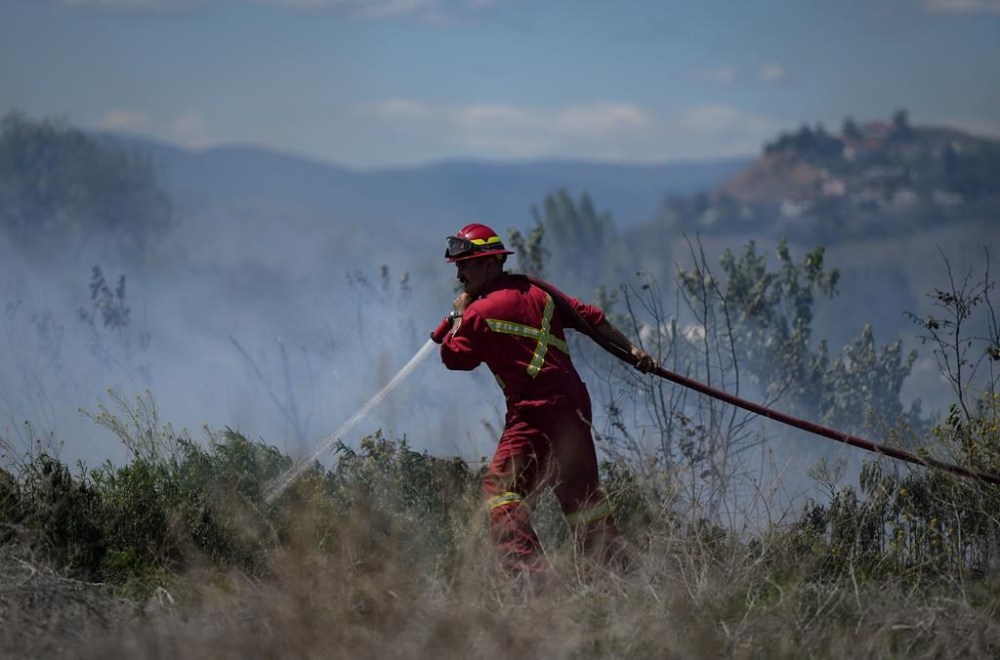
There were also fires that spread smoke across the continent and into Europe, where “Canadian wildfires” made headlines from the New York Times to Germany’s nightly news.
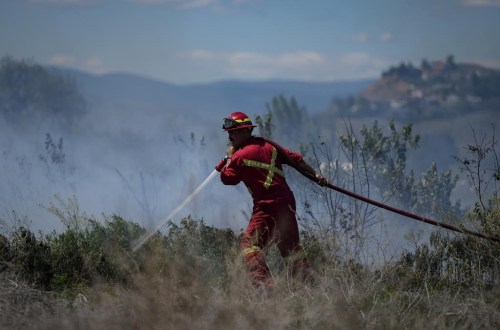
With more than 13 million blackened hectares, it has been the worst wildfire season in North American history. All 13 provinces and territories have been affected, often at the same time. Tens of thousands of people were forced from their homes, hundreds of houses were destroyed and four firefighters have been killed.
Over the years, cities such as Calgary and Edmonton have grown used to “smoke days.” This year, that unhappy club grew to include Ottawa (171 smoke hours), Montreal (100 smoke hours) and Toronto, which, on June 30, had the second-worst air quality in the world.
Wikipedia already has an entry for “2023 Canadian Wildfires.” The fire season is barely half over.
It’s not just a year of particularly wild natural variability, Blair said.
“Canada experiences a remarkable amount of variability from year to year,” he said. “It’s not unusual for us to have dry weather or hot weather.
“But the frequency of it and the severity of it and the coinciding of it with enormous extremes of weather in the U.S. and across the world is suggesting to a lot of people that something’s changed.”
World Weather Attribution, a group in the United Kingdom that estimates the contribution of climate change to individual weather events, has already said the U.S. and European heat waves this summer would have been “virtually impossible” without it. Its analysis of Canada’s wildfires is expected later this fall.
“I have no doubt the conclusion is going to be that these events are way outside the line of natural variability,” Blair said.
“This is screaming climate change. It’s the very thing we’ve been talking about for years.”
Get used to it, at least for the next few months.
“Our models for August are showing no areas of Canada that are cooler than normal,” said Phillips.
If cooler is what you want, you’ll have to go to the east coast of Baffin Island. Everywhere else is showing at least normal heat, which is expected to stick around.
It’ll last well into September, for better or worse, Phillips said.
“What you see is what you’re going to continue to get.”
This report by The Canadian Press was first published Aug. 5, 2023.
Related Articles
Grocery prices will sting worse yet
Advertisement Advertise With Us
Advertisement Advertise With Us