Scientists look beyond climate change and El Nino for other factors that heat up Earth
Advertisement
Read this article for free:
or
Already have an account? Log in here »
To continue reading, please subscribe:

Digital Subscription
One year of digital access for only $205*
- Enjoy unlimited reading on winnipegfreepress.com
- Read the E-Edition, our digital replica newspaper
- Access News Break, our award-winning app
- Play interactive puzzles
*First annual payment billed as $205.00 + GST for one year. This annual subscription will automatically renew at $233.00 + GST every 52 weeks (10% off the regular annual price of $259.35). Offer available to new and qualified returning subscribers only. Cancel any time.
To continue reading, please subscribe:
Add Free Press access to your Brandon Sun subscription for only an additional
$1 for the first 4 weeks*
- Enjoy unlimited reading on winnipegfreepress.com
- Read the E-Edition, our digital replica newspaper
- Access News Break, our award-winning app
- Play interactive puzzles
*Your next Brandon Sun subscription payment will increase by $1.00 and you will be charged $17.95 plus GST for four weeks. After four weeks, your payment will increase to $24.95 plus GST every four weeks.
Read unlimited articles for free today:
or
Already have an account? Log in here »
Hey there, time traveller!
This article was published 08/08/2023 (1136 days ago), so information in it may no longer be current.
Scientists are wondering if global warming and El Nino have an accomplice in fueling this summer’s record-shattering heat.
The European climate agency Copernicus reported that July was one-third of a degree Celsius (six-tenths of a degree Fahrenheit) hotter than the old record. That’s a bump in heat that is so recent and so big, especially in the oceans and even more so in the North Atlantic, that scientists are split on whether something else could be at work.
Scientists agree that by far the biggest cause of the recent extreme warming is climate change from the burning of coal, oil and natural gas that has triggered a long upward trend in temperatures. A natural El Nino, a temporary warming of parts of the Pacific that changes weather worldwide, adds a smaller boost. But some researchers say another factor must be present.

“What we are seeing is more than just El Nino on top of climate change,” Copernicus Director Carlo Buontempo said.
One surprising source of added warmth could be cleaner air resulting from new shipping rules. Another possible cause is 165 million tons (150 million metric tons) of water spewed into the atmosphere by a volcano. Both ideas are under investigation.
THE CLEANER AIR POSSIBILITY
Florida State University climate scientist Michael Diamond says shipping is “probably the prime suspect.”
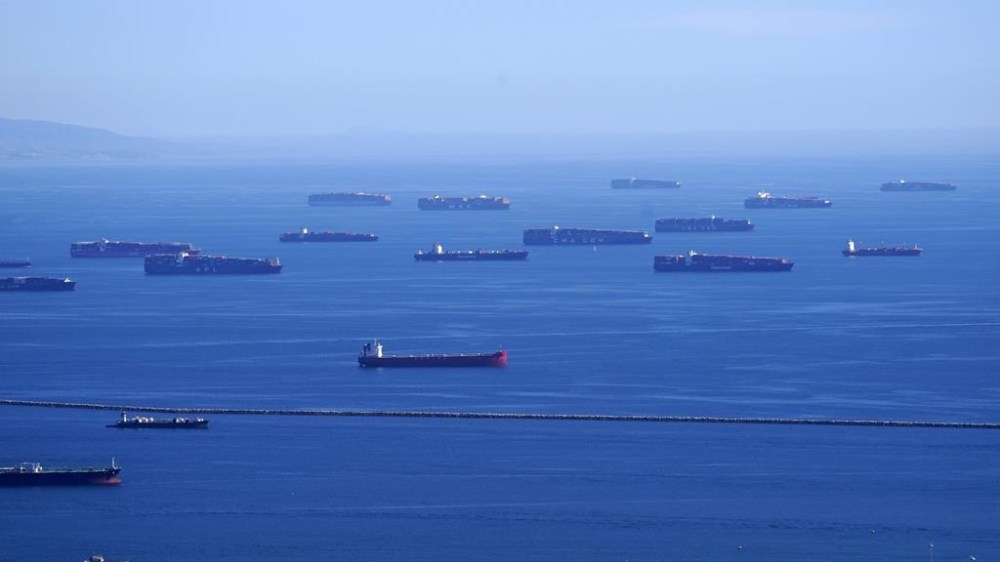
Maritime shipping has for decades used dirty fuel that gives off particles that reflect sunlight in a process that actually cools the climate and masks some of global warming.
In 2020, international shipping rules took effect that cut as much as 80% of those cooling particles, which was a “kind of shock to the system,” said atmospheric scientist Tianle Yuan of NASA and the University of Maryland Baltimore County.
The sulfur pollution used to interact with low clouds, making them brighter and more reflective, but that’s not happening as much now, Yuan said. He tracked changes in clouds that were associated with shipping routes in the North Atlantic and North Pacific, both hot spots this summer.
In those spots, and to a lesser extent globally, Yuan’s studies show a possible warming from the loss of sulfur pollution. And the trend is in places where it really can’t be explained as easily by El Nino, he said.
“There was a cooling effect that was persistent year after year, and suddenly you remove that,” Yuan said.
Diamond calculates a warming of about 0.1 degrees Celsius (0.18 degrees Fahrenheit) by midcentury from shipping regulations. The level of warming could be five to 10 times stronger in high shipping areas such as the North Atlantic.
A separate analysis by climate scientists Zeke Hausfather of Berkeley Earth and Piers Forster of the University of Leeds projected half of Diamond’s estimate.
DID THE VOLCANO DO IT?
In January 2022, the Hunga Tonga-Hunga Ha’apai undersea volcano in the South Pacific blew, sending more than 165 million tons of water, which is a heat-trapping greenhouse gas as vapor, according to University of Colorado climate researcher Margot Clyne, who coordinates international computer simulations for climate impacts of the eruption.
The volcano also blasted 550,000 tons (500,000 metric tons) of sulfur dioxide into the upper atmosphere.
The amount of water “is so absolutely crazy, absolutely ginormous,” said Holger Vomel, a stratospheric water vapor scientist at the National Center for Atmospheric Research who published a study on the potential climate effects of the eruption.
Volmer said the water vapor went too high in the atmosphere to have a noticeable effect yet, but that effects could emerge later.
A couple of studies use computer models to show a warming effect from all that water vapor. One study, which has not yet undergone the scientific gold standard of peer review, reported this week that the warming could range from as much as 1.5 degrees Celsius (2.7 degrees Fahrenheit) of added warming in some places to 1 degree Celsius (1.8 degrees Fahrenheit) of cooling elsewhere.
But NASA atmospheric scientist Paul Newman and former NASA atmospheric scientist Mark Schoeberl said those climate models are missing a key ingredient: the cooling effect of the sulfur.
Normally huge volcanic eruptions, like 1991’s Mount Pinatubo, can cool Earth temporarily with sulfur and other particles reflecting sunlight. However, Hunga Tonga spouted an unusually high amount of water and low amount of cooling sulfur.
The studies that showed warming from Hunga Tonga didn’t incorporate sulfur cooling, which is hard to do, Schoeberl and Newman said. Schoeberl, now chief scientist at Science and Technology Corp. of Maryland, published a study that calculated a slight overall cooling — 0.04 degrees Celsius (0.07 degrees Fahrenheit).
Just because different computer simulations conflict with each other “that doesn’t mean science is wrong,” University of Colorado’s Clyne said. “It just means that we haven’t reached a consensus yet. We’re still just figuring it out.”
LESSER SUSPECTS
Lesser suspects in the search include a dearth of African dust, which cools like sulfur pollution, as well as changes in the jet stream and a slowdown in ocean currents.
Some nonscientists have looked at recent solar storms and increased sunspot activity in the sun’s 11-year cycle and speculated that Earth’s nearest star may be a culprit. For decades, scientists have tracked sunspots and solar storms, and they don’t match warming temperatures, Berkeley Earth chief scientist Robert Rohde said.
Solar storms were stronger 20 and 30 years ago, but there is more warming now, he said.
LOOK NO FURTHER
Still, other scientists said there’s no need to look so hard. They say human-caused climate change, with an extra boost from El Nino, is enough to explain recent temperatures.
University of Pennsylvania climate scientist Michael Mann estimates that about five-sixths of the recent warming is from human burning of fossil fuels, with about one-sixth due to a strong El Nino.
The fact that the world is coming out of a three-year La Nina, which suppressed global temperatures a bit, and going into a strong El Nino, which adds to them, makes the effect bigger, he said.
“Climate change and El Nino can explain it all,” Imperial College of London climate scientist Friederike Otto said. “That doesn’t mean other factors didn’t play a role. But we should definitely expect to see this again without the other factors being present.”
___
Follow AP’s climate and environment coverage at https://apnews.com/hub/climate-and-environment
___
Follow Seth Borenstein on Twitter at @borenbears
___
Associated Press climate and environmental coverage receives support from several private foundations. See more about AP’s climate initiative here. The AP is solely responsible for all content.