Mohawk Mothers worry evidence of human remains at McGill work site will be destroyed

Advertisement

Advertise with us

MONTREAL - After losing their bid to halt construction at the site of a former Montreal hospital, a group of Indigenous women who believe there may be unmarked graves at that location say they’re worried evidence could be jeopardized if work continues.

Read this article for free:


or

Already have an account? Log in here »

To continue reading, please subscribe:

Subscribe and receive a limited-edition Free Press branded hat or tote.

Digital Subscription

One year of digital access for only $205*

  • Enjoy unlimited reading on winnipegfreepress.com
  • Read the E-Edition, our digital replica newspaper
  • Access News Break, our award-winning app
  • Play interactive puzzles

*First annual payment billed as $205.00 + GST for one year. This annual subscription will automatically renew at $233.00 + GST every 52 weeks (10% off the regular annual price of $259.35). Offer available to new and qualified returning subscribers only. Cancel any time.

To continue reading, please subscribe:

Add Free Press access to your Brandon Sun subscription for only an additional

$1 for the first 4 weeks*

  • Enjoy unlimited reading on winnipegfreepress.com
  • Read the E-Edition, our digital replica newspaper
  • Access News Break, our award-winning app
  • Play interactive puzzles
Start now

*Your next Brandon Sun subscription payment will increase by $1.00 and you will be charged $17.95 plus GST for four weeks. After four weeks, your payment will increase to $24.95 plus GST every four weeks.

Hey there, time traveller!
This article was published 02/10/2023 (1094 days ago), so information in it may no longer be current.

MONTREAL – After losing their bid to halt construction at the site of a former Montreal hospital, a group of Indigenous women who believe there may be unmarked graves at that location say they’re worried evidence could be jeopardized if work continues.

Workers want to move piles of material — without sifting through them — that were excavated from an area where sniffer dogs have indicated remains could be located, a spokeswoman for the group known as the Mohawk Mothers told reporters Monday.

Moving that material without analyzing it first risks making the search for potential bodies more difficult at the site, where McGill University is expanding its downtown campus, said Kwetiio, who uses one name.
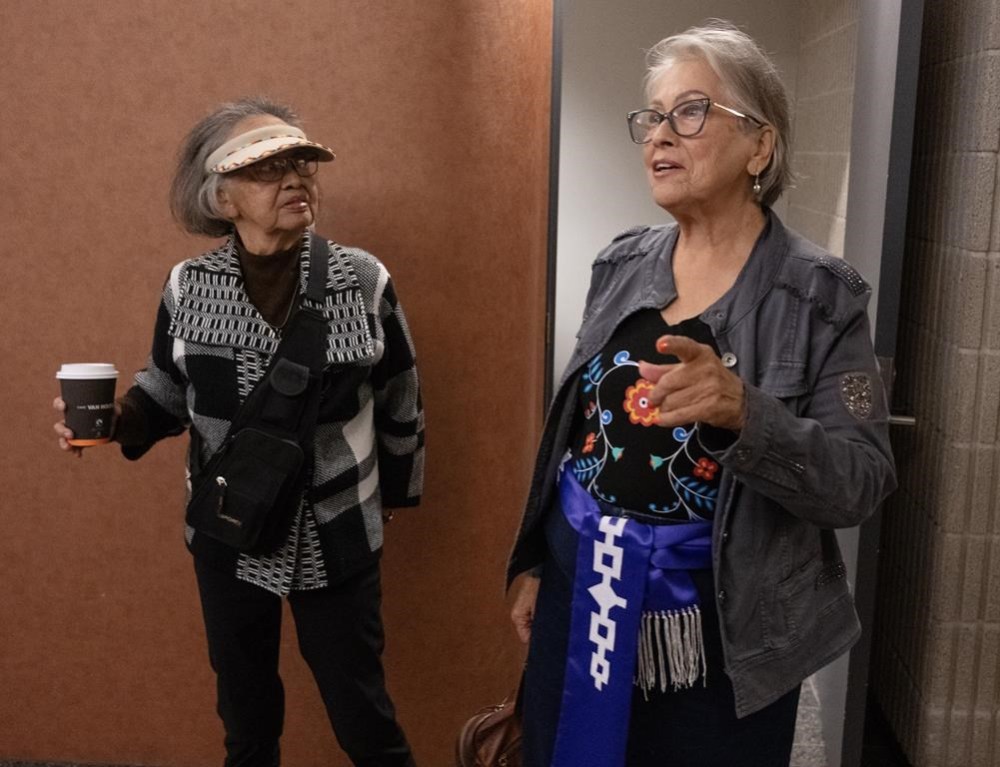
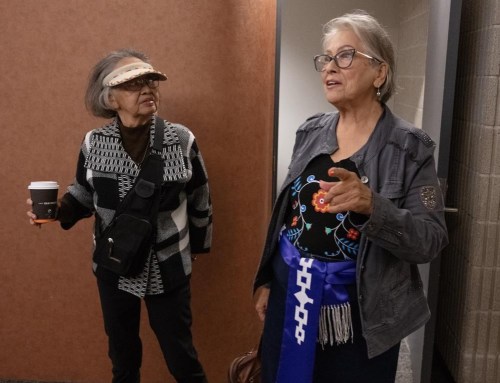
Kanesatake elders with the Mohawk Mothers group arrive at Superior Court Thursday, Sept. 14, 2023, in Montreal. THE CANADIAN PRESS/Ryan Remiorz

“You want to take remains that need to be sifted, need to be investigated and you just want to pick them up and throw them in a truck and move them somewhere else,” she said. “Well, what happens when you find something in that pile somewhere else? You will have already started your construction down here, jeopardizing the evidence that lays there.”

Last month, the Mothers failed in their attempt to obtain an emergency court order to stop excavation on part of the site of the former Royal Victoria hospital, where a psychiatric institute used to operate. The government of Canada is named in a 2019 class-action lawsuit application that alleges the state funded abusive psychological experiments — part of the infamous MK-ULTRA program — on vulnerable patients at the institute in the 1950s and 1960s.

Kwetiio said people who were at the psychiatric hospital saw children strapped to beds and chairs and that the remains of those children may have been buried on the site.

Quebec’s infrastructure agency, the Société québécoise des infrastructures, which is overseeing the campus expansion project, said the piles are being moved at the request of archeologists, who want to sift through the material at a safer, quieter location away from the ongoing work.

“The soil is moved one pile at a time, to avoid mixing. One archeologist supervises the loading of the truck, while another supervises the unloading. Each pile is clearly identified and a sifting priority procedure is developed,” spokeswoman Anne-Marie Gagnon wrote in an email Monday, adding that the piles are covered with weatherproof material to protect them from the elements.

Both the SQI and McGill University say they’re honouring an agreement they entered into with the Mothers.

“Cultural monitors appointed by the Mohawk Mothers have been given access to the site for all phases of work,” McGill spokesman Michel Proulx wrote in an email Monday. “To date, no evidence has been found to substantiate the presence of unmarked graves.”

Kwetiio says McGill and Quebec’s infrastructure agency are not acting in good faith. She says McGill and the province committed to thoroughly searching, within a 10-metre radius, areas where sniffer dogs signalled that human remains might be found — but that isn’t happening.

“We’re being stopped from doing a proper investigation,” she said.

Kwetiio said her group also wants to search a building that is located within the 10-metre radius, because of the possibility that remains will be found in the basement.

An observer affiliated with the Mothers recently found what appears to be the leather sole of a child’s shoe, Kwetiio said. When the shoe was handed over, the Mothers were told — to their surprise — that bones had also been discovered, she said.

“We’re not being told when things are found,” she said, adding that she has received no details about where the bones were located or whether they are human or animal.

McGill says that according to a bio-archeologist who has searched the site, the remains found were animal bones.

“The archeological firm also confirms it does not consider that any of the articles uncovered during the excavation constitute significant discoveries, or that they constitute evidence of human remains or graves,” Proulx said.

Proulx said archeological excavations have been conducted in the area where dogs identified the potential for human remains, as well as in nine other areas where ground-penetrating radar suggested the possible presence of unmarked graves. No further evidence of remains or graves were found, he said.

The Mothers’ legal proceedings against McGill and the province began in March 2022, when they filed a civil suit to stop construction. Last October they obtained an injunction ordering a pause on excavation work, with a judge ruling the renovations would cause irreparable harm. After several mediation sessions, the Mothers and McGill reached a deal on April 6. Cultural monitors are also permitted on site to observe.

The agreement stipulates that if no graves are immediately found then excavation work can begin on a rolling basis and in a sensitive manner in case there is an unexpected discovery.

This report by The Canadian Press was first published Oct. 2, 2023.

Report Error Submit a Tip

More Stories

Mohawk Mothers lose in court over McGill work site

Jacob Serebrin, The Canadian Press 5 minute read Preview

Mohawk Mothers lose in court over McGill work site

Jacob Serebrin, The Canadian Press 5 minute read Monday, Oct. 2, 2023

MONTREAL - After losing their bid to halt construction at the site of a former Montreal hospital, a group of Indigenous women who believe there may be unmarked graves at that location say they’re worried evidence could be jeopardized if work continues.

Workers want to move piles of material — without sifting through them — that were excavated from an area where sniffer dogs have indicated remains could be located, a spokeswoman for the group known as the Mohawk Mothers told reporters Monday.

Moving that material without analyzing it first risks making the search for potential bodies more difficult at the site, where McGill University is expanding its downtown campus, said Kwetiio, who uses one name.

"You want to take remains that need to be sifted, need to be investigated and you just want to pick them up and throw them in a truck and move them somewhere else," she said. "Well, what happens when you find something in that pile somewhere else? You will have already started your construction down here, jeopardizing the evidence that lays there."

Read
Monday, Oct. 2, 2023

Woman took ‘meaningful’ responsibility after disposing of body: lawyer

Dean Pritchard 5 minute read Preview

Woman took ‘meaningful’ responsibility after disposing of body: lawyer

Dean Pritchard 5 minute read 6:00 AM CDT

A woman who was threatened with death if she didn’t help dispose the body of a Mexican man murdered in the basement of a North End home should serve no more jail time, a judge has been told.

Devlin Langlois, 25, has pleaded guilty to accessory after the fact to murder in the March 2025 killing of 28-year-old Diego Moscoza.

“By pleading guilty, Ms. Langlois has already taken meaningful accountability for her actions,” defence lawyer Joshua Rogala told King’s Bench Justice Candace Grammond at a sentencing hearing Monday.

He urged the judge to sentence Langlois to the equivalent of 14 months already served, plus two years supervised probation.

Read
6:00 AM CDT

Now-independent ex-Tory leader skips legislature’s first question period in four months

Chris Kitching 5 minute read Preview

Now-independent ex-Tory leader skips legislature’s first question period in four months

Chris Kitching 5 minute read Yesterday at 6:03 PM CDT

Crime rates, the cost of living and the state of health care were on the agenda Tuesday when the legislature’s fall sitting began a day after Obby Khan’s abrupt resignation from the Tory caucus.

Read
Yesterday at 6:03 PM CDT

Acquisition of former residential school grounds will help educate future generations: premier

Connor McDowell and Morgan Modjeski 6 minute read Preview

Acquisition of former residential school grounds will help educate future generations: premier

Connor McDowell and Morgan Modjeski 6 minute read Yesterday at 8:31 PM CDT

Premier Wab Kinew says a former Brandon-area campground acquired by the province will help educate future generations about the horrors of residential schools.

“We live in an era where people are trying to deny what happened in residential schools,” Kinew said during a Tuesday afternoon visit to Turtle Crossing Campground, near the former Brandon Indian Residential School. “It’s an important part of our national history, and keeping that truth alive.”

Kinew officially announced the province’s plan Tuesday, in partnership with the City of Brandon, to acquire and protect the site where the bodies of more than 50 Indigenous children are located.

The premier said the property has “huge national significance” for education about residential school history because it is one of the “most documented” in the country. He carried photographs, and some 20th century newspaper clippings from the Brandon Sun around the site Tuesday.

Read
Yesterday at 8:31 PM CDT

Port of Churchill signs agreement with Dutch port

Aaron Epp 2 minute read Preview

Port of Churchill signs agreement with Dutch port

Aaron Epp 2 minute read Yesterday at 4:40 PM CDT

Arctic Gateway Group, operator of the Port of Churchill, has signed an agreement with the Port of Rotterdam in the Netherlands to attract business and strengthen supply chains linking Western Canada and Europe.

The agreement enables the two ports to work together to develop new trade in critical minerals and energy products, connect Canadian producers with European buyers, and identify opportunities to improve the supply chain from Western Canadian resource projects through Churchill and into European markets.

The Port of Rotterdam is Europe’s largest port and home to more than 3,000 businesses across its industrial complex, serving as a major gateway for critical raw materials and energy.

Meanwhile, the Port of Churchill has been identified as a transformative national strategy for Canada and is emerging as a northern trade corridor connecting Western Canada’s resources to global markets.

Read
Yesterday at 4:40 PM CDT

Hydro reports $446-M loss in 2025-26, points to fourth drought year in past five

Scott Billeck 3 minute read Preview

Hydro reports $446-M loss in 2025-26, points to fourth drought year in past five

Scott Billeck 3 minute read Yesterday at 6:38 PM CDT

Manitoba Hydro posted a $446-million loss in 2025-26, as drought conditions slashed hydroelectric generation, forcing the Crown corporation to buy more power while leaving it with less electricity to sell outside the province.

The loss was $666 million worse than the $220-million profit Hydro had budgeted. The utility posted a $63-million loss the previous year, according to the utility’s annual report released Tuesday.

Hydro said the 2025-26 fiscal year, which ended on March 31, marked its fourth low-water year in the past five years, among the worst stretches of water-flow conditions in its recorded history.

Hydroelectric generation fell 23 per cent to 24 billion kilowatt-hours from 31 billion the previous year, leaving Hydro a net importer of electricity.

Read
Yesterday at 6:38 PM CDT