It’s not just Elon Musk: ChatGPT-maker OpenAI confronting a mountain of legal challenges

Advertisement

Advertise with us

After a year of basking in global fame, the San Francisco company OpenAI is now confronting a multitude of challenges that could threaten its position at the vanguard of artificial intelligence research.

Read this article for free:


or

Already have an account? Log in here »

To continue reading, please subscribe:

Subscribe and receive a limited-edition Free Press branded hat or tote.

Digital Subscription

One year of digital access for only $205*

  • Enjoy unlimited reading on winnipegfreepress.com
  • Read the E-Edition, our digital replica newspaper
  • Access News Break, our award-winning app
  • Play interactive puzzles

*First annual payment billed as $205.00 + GST for one year. This annual subscription will automatically renew at $233.00 + GST every 52 weeks (10% off the regular annual price of $259.35). Offer available to new and qualified returning subscribers only. Cancel any time.

To continue reading, please subscribe:

Add Free Press access to your Brandon Sun subscription for only an additional

$1 for the first 4 weeks*

  • Enjoy unlimited reading on winnipegfreepress.com
  • Read the E-Edition, our digital replica newspaper
  • Access News Break, our award-winning app
  • Play interactive puzzles
Start now

*Your next Brandon Sun subscription payment will increase by $1.00 and you will be charged $17.95 plus GST for four weeks. After four weeks, your payment will increase to $24.95 plus GST every four weeks.

Hey there, time traveller!
This article was published 06/03/2024 (925 days ago), so information in it may no longer be current.

After a year of basking in global fame, the San Francisco company OpenAI is now confronting a multitude of challenges that could threaten its position at the vanguard of artificial intelligence research.

Some of its conflicts stem from decisions made well before the debut of ChatGPT, particularly its unusual shift from an idealistic nonprofit to a big business backed by billions of dollars in investments.

It’s too early to tell if OpenAI and its attorneys will beat back a barrage of lawsuits from Elon Musk, The New York Times and bestselling novelists such as John Grisham, not to mention escalating scrutiny from government regulators, or if any of it will stick.

FILE - The OpenAI logo is seen on a mobile phone in front of a computer screen displaying output from ChatGPT, March 21, 2023, in Boston. Digital news outlets The Intercept, Raw Story and AlterNet are joining the fight against unauthorized use of their journalism in artificial intelligence, filing a copyright-infringement lawsuit Wednesday, Feb. 28, 2024, against ChatGPT owner OpenAI. (AP Photo/Michael Dwyer, File)

Feud with Elon Musk

OpenAI isn’t waiting for the court process to unfold before publicly defending itself against legal claims made by billionaire Elon Musk, an early funder of OpenAI who now alleges it has betrayed its founding nonprofit mission to benefit humanity as it pursued profits instead.

In its first response since the Tesla CEO sued last week, OpenAI vowed to get the claim thrown out and released emails from Musk that purport to show he supported making OpenAI a for-profit company and even suggested merging it with the electric vehicle maker.

Legal experts have expressed doubt about whether Musk’s arguments, centered around an alleged breach of contract, will hold up in court. But it has already forced open the company’s internal conflicts about its unusual governance structure, how “open” it should be about its research and how to pursue what’s known as artificial general intelligence, or AI systems that can perform just as well as — or even better than — humans in a wide variety of tasks.

Its own internal investigation

There’s still a lot of mystery about what led OpenAI to abruptly fire its co-founder and CEO Sam Altman in November, only to have him return days later with a new board that replaced the one that ousted him. OpenAI tapped the law firm WilmerHale to investigate what happened, but it’s unclear how broad its scope will be and to what extent OpenAI will publicly release its findings.

Among the big questions is what OpenAI — under its previous board of directors — meant in November when it said Altman was “not consistently candid in his communications” in a way that hindered the board’s ability to exercise its responsibilities. While now primarily a for-profit business, OpenAI is still governed by a nonprofit board of directors whose duty is to advance its mission.

The investigators are probably looking more closely at that structure as well as the internal conflicts that led to communication breakdowns, said Diane Rulke, a professor of organizational behavior and theory at Carnegie Mellon University.
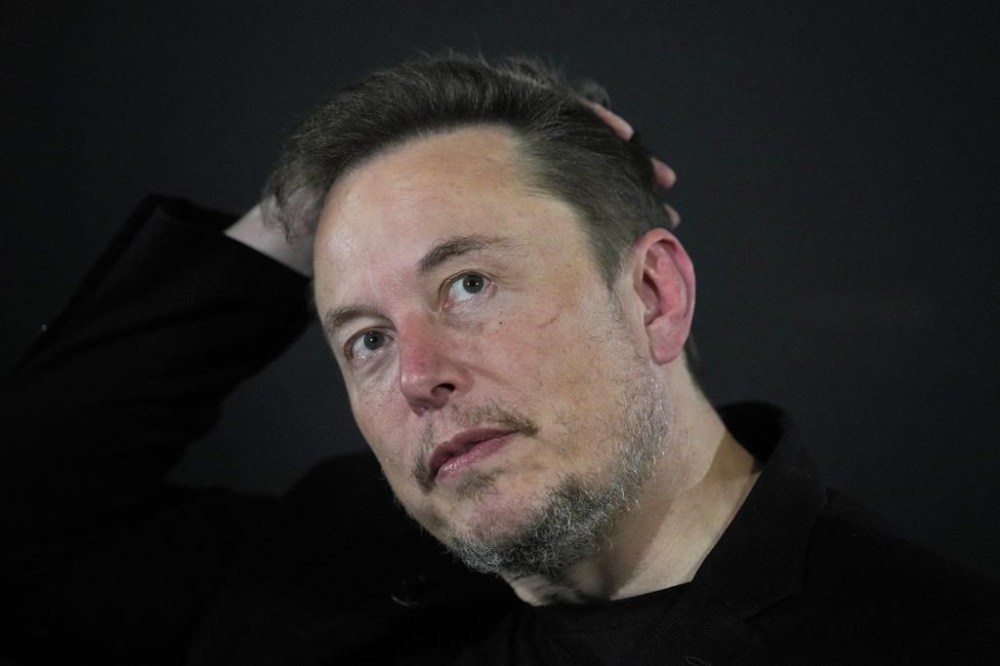
FILE - Elon Musk appears at an event with Britain's Prime Minister Rishi Sunak in London, on Nov. 2, 2023. Musk is suing OpenAI and its CEO Sam Altman over what he says is a betrayal of the ChatGPT maker's founding aims of benefiting humanity rather than pursuing profits. In a lawsuit filed Thursday Feb. 29, 2024 at San Francisco Superior Court, billionaire Musk said that when he bankrolled OpenAI's creation, he secured an agreement with Altman and Greg Brockman, the president, to keep the AI company as a non-profit that would develop technology for the benefit of the public. (AP Photo/Kirsty Wigglesworth, Pool, File)

Rulke said it would be “useful and very good practice” for OpenAI to publicly release at least part of the findings, especially given the underlying concerns about how future AI technology will affect society.

“Not only because it was a major event, but because OpenAI works with a lot of businesses, a lot of companies and their impact is widespread,” Rulke said. “Even though they’re a privately held company, it’s very much in the public interest to know what happened at OpenAI.”

Government scrutiny

OpenAI’s close business ties to Microsoft have invited scrutiny from antitrust regulators in the U.S. and Europe. Microsoft has invested billions of dollars into OpenAI and switched on its vast computing power to help build the smaller company’s AI models. The software giant has also secured exclusive rights to infuse much of the technology into Microsoft products.

Unlike a big business merger, such partnerships don’t automatically trigger a government review. But the Federal Trade Commission wants to know if such arrangements “enable dominant firms to exert undue influence or gain privileged access in ways that could undermine fair competition,” FTC Chair Lina Khan said in January.

FTC is awaiting responses to “compulsory orders” it sent to both companies — as well as OpenAI rival Anthropic and its own cloud computing backers, Amazon and Google — requiring them to provide information about the partnerships and the decision-making around them. The companies’ responses are due as soon as next week. Similar scrutiny is happening in the European Union and the United Kingdom.

Copyright lawsuits

Bestselling novelists, nonfiction authors, The New York Times and other media outlets have sued OpenAI over allegations that the company violated copyright laws in building the AI large language models that power ChatGPT. Several of the lawsuits also target Microsoft. (The Associated Press took a different approach in securing a deal last year that gives OpenAI access to the AP’s text archive for an undisclosed fee).
FILE - OpenAI CEO Sam Altman participates in the
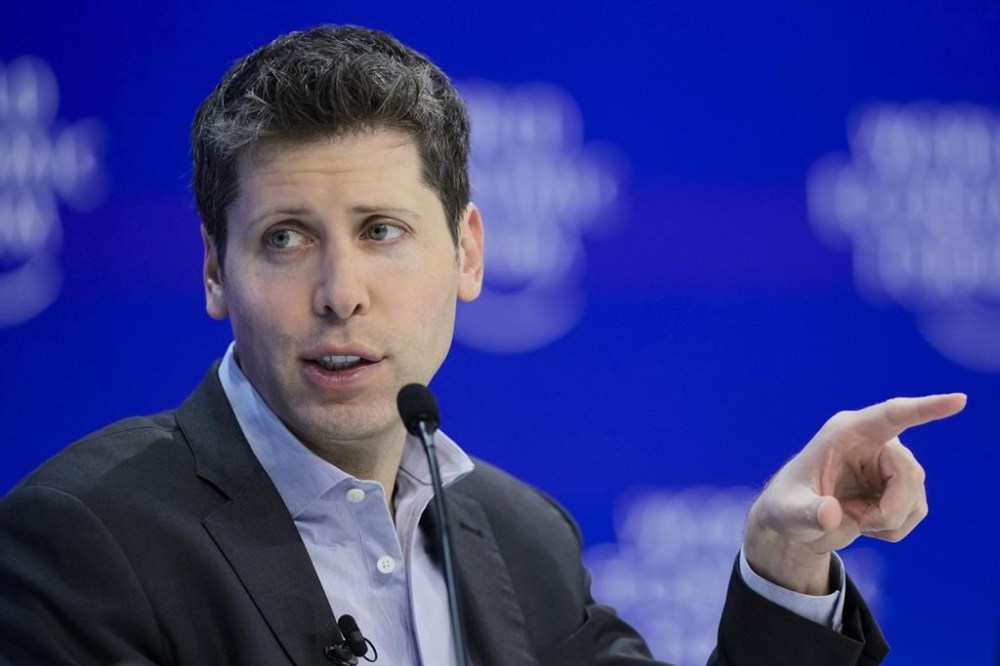
FILE - OpenAI CEO Sam Altman participates in the "Technology in a turbulent world" panel discussion during the annual meeting of the World Economic Forum in Davos, Switzerland, on Jan. 18, 2024. Elon Musk is suing OpenAI and its CEO Sam Altman over what he says is a betrayal of the ChatGPT maker's founding aims of benefiting humanity rather than pursuing profits. In a lawsuit filed Thursday Feb. 29, 2024 at San Francisco Superior Court, billionaire Musk said that when he bankrolled OpenAI's creation, he secured an agreement with Altman and Greg Brockman, the president, to keep the AI company as a non-profit that would develop technology for the benefit of the public. (AP Photo/Markus Schreiber, File)

OpenAI has argued that its practice of training AI models on huge troves of writings found on the internet is protected by the “fair use” doctrine of copyright law. Federal judges in New York and San Francisco must now sort through evidence of harm brought by numerous plaintiffs, including Grisham, comedian Sarah Silverman and “Game of Thrones” author George R. R. Martin.

The stakes are high. The Times, for instance, is asking a judge to order the “destruction” of all of OpenAI’s GPT large language models — the foundation of ChatGPT and most of OpenAI’s business — if they were trained on its news articles.

————-

Associated Press business writer Kelvin Chan contributed to this report.

Report Error Submit a Tip

More Stories

Man gets 18 year sentence for sex assault that impregnated teen girl

Tessa Adamski 4 minute read Yesterday at 2:01 AM CDT

BRANDON — A 29-year-old man has been sentenced to 18 years in prison for sexually abusing and impregnating a 14-year-old girl in 2024.

“Sexual abuse of a child is inherently a grave violation of the child’s bodily integrity, dignity, and security, and in this case, the consequences were compounded by the victim’s pregnancy and the need to undergo a termination,” Brandon provincial court Judge Patrick Sullivan said on Tuesday.

The accused had pleaded guilty to two counts of sexual interference and two counts of breaching a court order banning him from contacting anyone under 18.

A publication ban prohibits the publication of information that could identify the 14-year-old, who is from a western Manitoba First Nation, and two other minors with whom he communicated.

Sex sounds in stereo a sad score for singleton

Maureen Scurfield 5 minute read 2:00 AM CDT

DEAR MISS LONELYHEARTS: I just moved into a big old house with two buddies who curl and play hockey with me. They have girlfriends, but I don’t.

I thought they’d be staying at their girlfriends’ places on nights they were “sleeping” together, but oh no!

So now I get to listen to the duelling sex noises of two couples, on weekends and some weeknights as well.

Do I have any rights here? I really don’t want to admit defeat and move back in with my parents, when feels like I just moved out. But it’s really uncomfortable to be the only guy with no sex life in this household, and then having to hear it, while it’s happening.

‘Hellebuyck’s part of our family until he isn’t part of our family’

Mike McIntyre 6 minute read Preview

‘Hellebuyck’s part of our family until he isn’t part of our family’

Mike McIntyre 6 minute read 12:02 PM CDT

Connor Hellebuyck and his family were subject to so much post-Olympic vitriol that both the Winnipeg Jets security team and even police had to get involved.

General manager Kevin Cheveldayoff revealed new details about the situation when asked about it Thursday by the Free Press, acknowledging it may have played a role in the star goaltender now refusing to report to training camp while he awaits word of a trade he’s demanded.

“That’s the dangers of being on social media today,” said Cheveldayoff, who took aim at the trolls.

“You open yourself up, obviously to the fans and you want to make that connection, but some of the fans aren’t true blue fans. There’s a lot of things that probably get said that have nothing to do with anybody in our market. They might not even be from a Canadian market.”

Read
12:02 PM CDT

Teenage e-scooter driver in critical condition after crash

Chris Kitching 6 minute read Preview

Teenage e-scooter driver in critical condition after crash

Chris Kitching 6 minute read Updated: Yesterday at 5:50 PM CDT

A teenager riding an e-scooter suffered life-threatening injuries when he was struck by an SUV in southwest Winnipeg on Monday night.

Witnesses provided first aid to the injured rider, who police said is under 18, after the collision happened at Waverley Street and Arbour Meadow Gate/Lake Crest Road at about 9:30 p.m.

“It feels like it happened in slow motion,” said driver Audrey Vanderspek, who was waiting at a red light when she witnessed the incident. “Maybe it’s because you’re helpless, that it just feels like everything slows down in the moment.”

Police said the electric scooter rider was crossing Waverley and was hit by a southbound 2010 Honda CR-V. The posted speed limit on that stretch of Waverley is 70 kilometres per hour.

Read
Updated: Yesterday at 5:50 PM CDT

Winnipeg, police and downtown crime

Editorial 4 minute read Preview

Winnipeg, police and downtown crime

Editorial 4 minute read Yesterday at 2:01 AM CDT

A safer downtown is not much use if people are still afraid to walk there.

That is the uncomfortable message from Winnipeg’s latest police citizen survey, and one city council should take seriously.

Downtown crime has fallen this year, according to the most recent police statistics. Violent crime is down even more. But for most Winnipeggers, the downtown still feels like a place to avoid, particularly after dark.

Only 44 per cent of survey respondents said they feel very or reasonably safe walking alone downtown during the day. At night, that number plunges to just eight per cent. Among women, it is an appalling three per cent, compared with 14 per cent of men.

Read
Yesterday at 2:01 AM CDT

Wind and batteries the best bet

James Wilt 5 minute read Preview

Wind and batteries the best bet

James Wilt 5 minute read Yesterday at 2:01 AM CDT

For years, Manitoba Hydro has claimed that we can’t rely on wind turbines during multi-day or even multi-week cold snaps.

Read
Yesterday at 2:01 AM CDT