‘Old MacDonald went broke’: Technology helps grain farmers confront weather woes
Advertisement
Read this article for free:
or
Already have an account? Log in here »
To continue reading, please subscribe:

Digital Subscription
One year of digital access for only $205*
- Enjoy unlimited reading on winnipegfreepress.com
- Read the E-Edition, our digital replica newspaper
- Access News Break, our award-winning app
- Play interactive puzzles
*First annual payment billed as $205.00 + GST for one year. This annual subscription will automatically renew at $233.00 + GST every 52 weeks (10% off the regular annual price of $259.35). Offer available to new and qualified returning subscribers only. Cancel any time.
To continue reading, please subscribe:
Add Free Press access to your Brandon Sun subscription for only an additional
$1 for the first 4 weeks*
- Enjoy unlimited reading on winnipegfreepress.com
- Read the E-Edition, our digital replica newspaper
- Access News Break, our award-winning app
- Play interactive puzzles
*Your next Brandon Sun subscription payment will increase by $1.00 and you will be charged $17.95 plus GST for four weeks. After four weeks, your payment will increase to $24.95 plus GST every four weeks.
Read unlimited articles for free today:
or
Already have an account? Log in here »
Hey there, time traveller!
This article was published 13/03/2024 (931 days ago), so information in it may no longer be current.
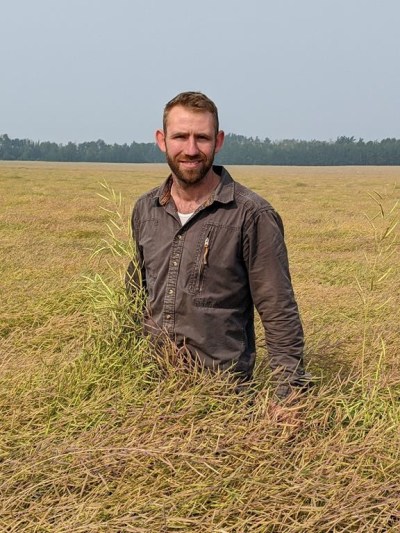
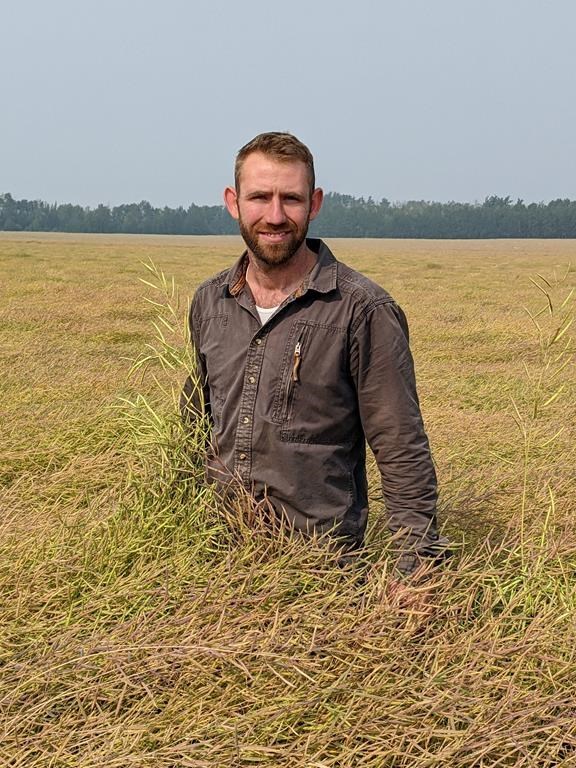
British Columbia grain farmer Malcolm Odermatt says all he can do is pray for rain this spring after repeated droughts sabotaged his harvest last year.
Odermatt, who is also the president of the BC Grain Growers Association, has been working with his father since 2012 to farm about 2,000 acres of land in the Peace region of B.C.’s northeast. He said seeding typically begins in May and although he’s worried, he hasn’t yet lost hope the weather will turn around.
“We’re in a Class 5 drought, the highest classification you can get actually, and we’ve had low rainfall and not a lot of snow,” said Odermatt, who grows wheat, barley, oats, canola and grasses for seed production. “We rely on runoff in the springtime, like the snowmelt, to actually replenish our soil moisture and we just haven’t had that for a couple of years.”
Farmers in B.C. and beyond and industry analysts say dramatic swings in weather are hampering grain and other crop yieldsat a time when farmers are leaving the sector, and the only way forward is to adapt with technology.
Lenore Newman, director of the Food and Agriculture Institute at the University of the Fraser Valley, said many in Western Canada have an “Old MacDonald image” of farming that is no longer realistic or sustainable.
“It’s a giant, technologically advanced industry and it needs to be treated as such … because the truth is Old MacDonald doesn’t have a farm. He went broke in the ’80s,” she said.
“If farmers are going to beat constant climate disruptions to grow food, they’re going to need all the technology available and a lot more that hasn’t been invented yet.”
In Saskatchewan, Kristjan Hebert operates a 40,000-acre grain and oilseed farm near Moosomin. Despite weather challenges, he said, he managed to grow about 80 per cent of his average yields last season.
“Farmers have had to deal with volatile weather forever and we continually get better with it,” he said, crediting technological advancements, including seed genetics, modern equipment and climate-risk management programs.
Hebert said crop insurance, both public and private, helps keep farmers afloat during poor yield years.
“This has allowed farmers to have kind of a more consistent income even on those poorer years, which then allows them to continue to invest in technology and genetics,” he said.
But Newman said research and funding into such agricultural advancements should fall to the government.
“The one area of technology that doesn’t have a national funding body for universities is agriculture,” she said.
The federal Ministry of Agriculture said in a statement that it “is investing in climate change research and targeted initiatives to support farmers and the agricultural sector.”
Among such investments is Agriculture and Agri-Food Canada’s Strategic Plan for Science, which allocated $855.7 million to go toward science, research and development in 2024-25.
It also highlighted the Living Laboratories Initiative, which is a $185-million, 10-year program that allows “farmers, scientists, and other collaborators to co-develop and test innovative practices and technologies to address agri-environmental issues, including mitigating and adapting to climate change, protecting soil and water quality, and maximizing biodiversity in agricultural landscapes.”
“The Government of Canada recognizes the importance of supporting collaborative approaches to build a resilient agriculture and agri-food sector that adapts efficiently to climate change,” the ministry said.
However, Newman said the programs are a “patchwork quilt” of resources that don’t meet all research and development needs.
“The AAFC runs amazing programs but a lot of it is organized toward industries, not core research and development the way the funding bodies are (in other sectors),” she said.
“If you’re a researcher, there’s nowhere you can apply to get that core funding to develop a deep, long-term set of research.”
She said the government should continue investing in those programs, while also supporting cutting-edge “base research.”
“Sometimes you want to push the envelope and do something that’s too early for industry and other countries just simply have an advantage if they can tap that kind of money and we can’t.”
Newman said disruptive weather may be a main reason about one per cent of B.C. farmers are throwing in the towel each year, something she called a “quiet crisis.”
“B.C. is really vulnerable because the farms are so small, and the farmers tend to be smaller producers,” she said, comparing B.C. and Prairie operations. “If they lose three or four years, they tend to not be able to make it.”
Statistics Canada’s latest Agriculture Census from 2021 found a similar national trend, saying the number of farms across the country had decreased 1.9 per cent since 2016.
Swinging weather conditions have already devastated the wine crop in the Okanagan as well as cherries, peaches and other stone fruit.
Newman said that luckily for grain farmers, their product isn’t as vulnerable as fruit and vegetables.
“We’re a grain and pulse powerhouse, so if we started having problems there, that’s terrible for us,” she said.
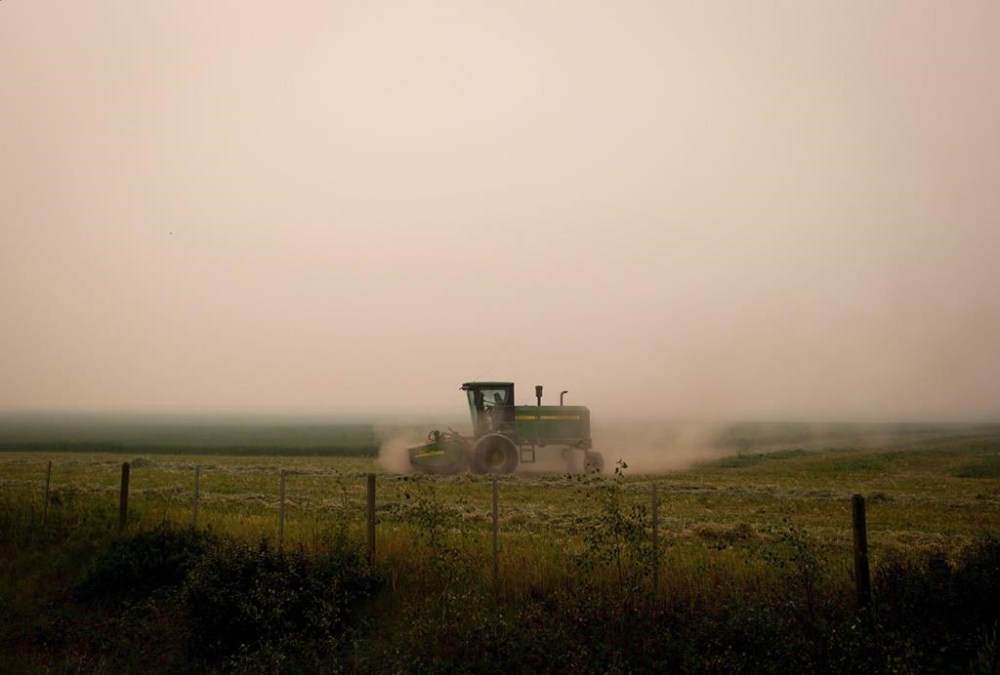
Odermatt said the Peace region, which hosts more than 90 per cent of grain farmers in the province, has experienced “a whole pile of terrible weather events” in recent years.
“It’s been a bit of a roller-coaster,” he said.
He said in 2021, B.C.’s historic heat dome caused crops to go into survival mode. Then, a wet spring in 2022 made it difficult to plant seeds, though the yield recovered. That was followed by last year’s drought, which killed much of his harvest.
“We have to work with the weather. The sun has to shine, the rain has to fall and the wind has to blow,” he said.
As for this year, he remains optimistic despite the current drought drying out his soil.
“A lot of farmers are concerned, but we’re optimistic that everything will average out. Maybe suddenly the taps will turn on and we’ll get caught up on all the moisture we’ve missed out on for the past year, but no one knows what the weather will be doing.”
Evan Fraser, director of Arrell Food Institute at the University of Guelph in Ontario, said the other good news is that consumers are less affected by poor grain yields than they are with fresh produce.
A main buffer for grain is that it needs to be processed before being sold; it needs to be turned into flour or bread “before anyone really notices” the effects, he said.
“There’s a long path between a drought in Alberta, say, and the price somebody pays for their bread.”
Fraser said grain is sold in the international commodity market, which “spreads out the risk of crop failure.”
“The likelihood of a simultaneous crop failure in Canada and in Australia and in Ukraine, and in the U.S. is low, even under climate change,” he said.
“All of those things have the effect of buffering to the consumer — not the farmer, but to the consumer — from the effects of bad weather.”
Vancouver Island grain farmer Bryce Rashleigh is a fourth-generation farmer at Saanichton Farm, where he farms around 1,000 acres on 90 properties in Greater Victoria.
Unlike Odermatt, who sends his grain to Vancouver for export, Rashleigh sells his products locally for animal feed as well as to breweries and bakeries.
Rashleigh said last year’s harvest of grain including wheat and barley was one of his smallest — but that has only just started to affect his customers. That’s because grain has a long shelf life and 2022 was a bumper year whose yield could be stretched out until now, he said.
“I have a choice of whether to favour some (customers) or treat them all equal and they all run out at the same time,” he said. “That’s what I chose to do so they’ve all run out now and they’re looking for other sources.”
Now, Rashleigh said he’s looking ahead.

A recent snowfall along B.C.’s west coast aided soil moisture, which is promising, but he said the next six weeks will determine whether his grain harvest will be plentiful or his customers will have to continue going elsewhere.
“For right now, there’s hope for a good harvest.”
—
This is the final story in a three-part series, “B.C.’s bitter harvest,” examining the consequences of weather and climate crises for agriculture, and how farmers and others are charting a path forward.
This report by The Canadian Press was first published March 13, 2024.