Climate change expected to drive shifts in urban birds, animals, bugs

Advertisement

Advertise with us

The mix of urban birds, bugs and other critters that humans have grown familiar with is due for a big shift because of climate change, a new study says.

Read this article for free:


or

Already have an account? Log in here »

To continue reading, please subscribe:

Subscribe and receive a limited-edition Free Press branded hat or tote.

Digital Subscription

One year of digital access for only $205*

  • Enjoy unlimited reading on winnipegfreepress.com
  • Read the E-Edition, our digital replica newspaper
  • Access News Break, our award-winning app
  • Play interactive puzzles

*First annual payment billed as $205.00 + GST for one year. This annual subscription will automatically renew at $233.00 + GST every 52 weeks (10% off the regular annual price of $259.35). Offer available to new and qualified returning subscribers only. Cancel any time.

To continue reading, please subscribe:

Add Free Press access to your Brandon Sun subscription for only an additional

$1 for the first 4 weeks*

  • Enjoy unlimited reading on winnipegfreepress.com
  • Read the E-Edition, our digital replica newspaper
  • Access News Break, our award-winning app
  • Play interactive puzzles
Start now

*Your next Brandon Sun subscription payment will increase by $1.00 and you will be charged $17.95 plus GST for four weeks. After four weeks, your payment will increase to $24.95 plus GST every four weeks.

Hey there, time traveller!
This article was published 27/03/2024 (914 days ago), so information in it may no longer be current.

The mix of urban birds, bugs and other critters that humans have grown familiar with is due for a big shift because of climate change, a new study says.

“The nature that people interact with isn’t what’s in Banff or some provincial park,” said Alessandro Filazzola, lead author of a paper published Wednesday in the journal PLOS One. “It’s in their backyard.

“Cities don’t move. If you’re staying still while the world is moving around you, what’s going to happen to all the wildlife that you’re familiar with?”
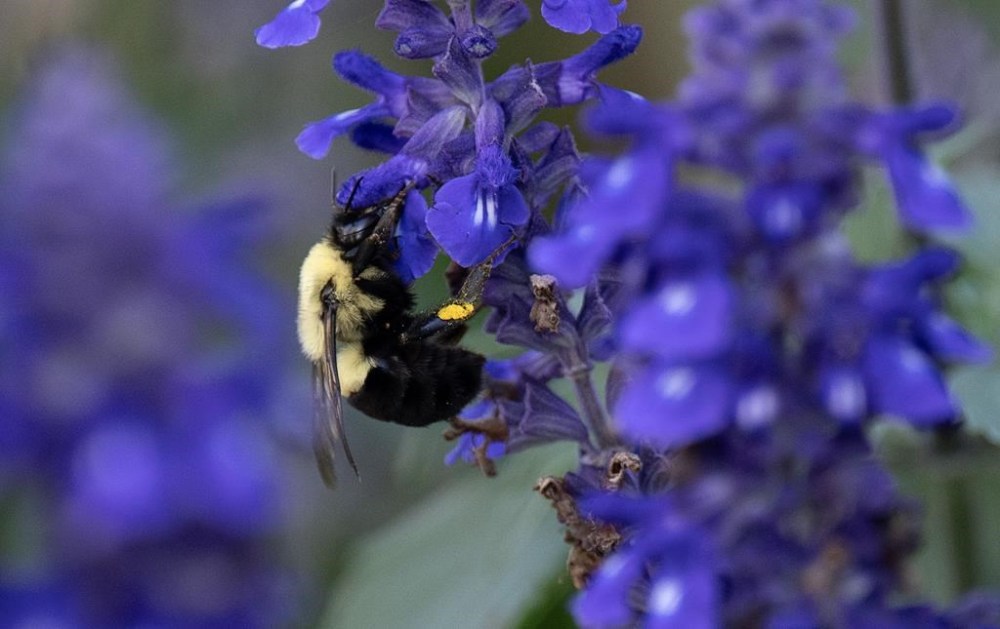
A bee is seen on a flower in downtown Ottawa onTuesday, Sept. 5, 2023. A study suggests climate change will drive a massive shift in the the birds, bugs and other critters that live alongside humans in 60 cities across North America. THE CANADIAN PRESS/Adrian Wyld

To answer that, Filazzola, from the University of Toronto’s Centre for Urban Environments, conducted a simulation combining eight different climate models with an enormous data set that detailed sightings of 2,019 different species from 60 cities around North America.

That combination allowed him and his colleagues to estimate how common each animal is in its current environment, how widely it’s distributed and how climate changes such as temperature and precipitation could affect its future.

On the one hand, cities with temperate climates such as those in Canada could welcome new animals.

By the end of the century, cities such as Ottawa and Edmonton could become hospitable for hundreds of new species while losing habitat for a couple dozen.

Quebec City is the champion. Filazzola’s simulation suggests the Quebec capital could support more than 500 new species.

“When we get these slightly warmer temperatures and changes in precipitation patterns, a lot more species are coming in than they are leaving,” he said.

On the other hand, the animals most likely to take advantage are the ones already widespread. Local specialists are likely to lose out.

“If a species is widely distributed, like raccoons, the likelihood of climate change making them leave a city is really low. It’s in the localized species — the ones you only see in a couple cities — that you see the change.”

And many of those new arrivals are likely to be insects. Varieties of centipedes, butterflies, spiders and cockroaches are all likely to pop up in places they’ve never been before, Filazzola suggests.

Songbird distribution is likely to drop. Foxes, too. But if you like pelicans, you may be in for a treat. Same with various kinds of lizards.

The cities most likely to be net losers of species, the study suggests, tend to be in the southeast United States. Atlanta is set to suffer the most.

Filazzola cautions that the projections in his study won’t necessarily come to pass. Climate isn’t the only factor that influences where a species is able to live.

“There’s lots of reasons why or why not a species would live in a city. There could be no food when it gets there, there could be a predator that eats it.”

But change is coming, he says, and not just to the large landscapes we tend to think of when we talk about nature.

“We take for granted what’s going on in our backyard. But there’s a lot going on there other than a few common species.”

The wholesale shift that could be on its way has implications for pest control and other services that rely on the environment. And it could change how we feel about our own habitat.

“Imagine hearing different birds in the morning when you go out to have your coffee,” Filazzola said. “It means a lot.”

This report by The Canadian Press was first published March 27, 2024.

Report Error Submit a Tip

More Stories

Prost! Raise a glass to Oktoberfest

Ben Sigurdson 4 minute read Preview

Prost! Raise a glass to Oktoberfest

Ben Sigurdson 4 minute read Yesterday at 2:01 AM CDT

As September comes to a close, a pair of local breweries are bringing some serious gemütlichkeit.

For the uninitiated, gemütlichkeit’s a word that doesn’t translate neatly from German to English, but which roughly means friendliness and good cheer.

Both Devil May Care Brewing Co. (155 Fort St.) and Kilter Brewing Co. (450 Rue Deschambault) are hosting Oktoberfest parties this weekend featuring food, music, games and, of course, plenty of beer.

Both breweries are rolling out special releases to coincide with their respective Oktoberfests — expect malty festbiers, marzens, rauchbiers and other German-inspired brews, served up in hefty steins alongside Bavarian-inspired fare. Devil May Care’s festivities run through to Sunday and feature eats by Freebird Kitchen, while Kilter keeps the party going through to Saturday, Oct. 3, and is offering pretzels and Oktoberfest-themed hot dogs. Lederhosen is encouraged.

Read
Yesterday at 2:01 AM CDT

Blue Bombers whiff on their opportunities to put game away

Taylor Allen 6 minute read Preview

Blue Bombers whiff on their opportunities to put game away

Taylor Allen 6 minute read Friday, Sep. 25, 2026

In theory, Bryce Perkins has a simple job.

When it’s third and short, the Winnipeg Blue Bombers trot out the short-yardage quarterback, and all he has to do is plunge forward for a yard or two to make everyone on his sideline happy.

But on Friday night against the visiting Toronto Argonauts, he went above and beyond his job description.

The Bombers, down 24-21 with six minutes left, faced a third-and-one from their own end when Perkins found a hole and burst through it for a 76-yard touchdown to put the home team in front 28-24 late.

Read
Friday, Sep. 25, 2026

‘Scared to Snitch’ could take subtler approach

Maureen Scurfield 3 minute read Yesterday at 2:01 AM CDT

DEAR MISS LONELYHEARTS: I just read the letter from “Scared to Snitch” and have some comments. The mother-in-law who gambles is an adult with a decent income. Nowhere does the letter say her gambling is causing her problems.

If that is the way she wants to spend her time, using her money, and it’s not impacting her life, what about letting it be? She’s an adult making her own decisions.

Options? Have a conversation with her, and ask, “Why those tears at the thought of others knowing?” That may be an opening to explore things more deeply. Why is she fearful?

I’m speaking from experience, having had a loved one deep into the addiction, which caused obvious and big consequences.

Restaurants ‘under pressure’

Gabrielle Piché 5 minute read Preview

Restaurants ‘under pressure’

Gabrielle Piché 5 minute read Friday, Sep. 25, 2026

Happy hour outings are on Jackie Piggott’s calendar — but even those are fewer.

She and her husband might visit a restaurant once a month. It’s a change over the past year: earlier, they may go twice, thrice or weekly.

“It’s something that we’ve talked about, my husband and myself, just because the pricing is so expensive,” Piggott said, stopping during a grocery run in St. Vital. “It’s also better for our health.”

She’s in the majority: a new Restaurants Canada report found 80 per cent of Canadians are eating out less frequently because of higher living costs, up from 75 per cent in 2025.

Read
Friday, Sep. 25, 2026

Tenants slam Alta.-based landlord, protest rent increases

Scott Billeck 6 minute read Preview

Tenants slam Alta.-based landlord, protest rent increases

Scott Billeck 6 minute read Friday, Sep. 25, 2026

Charlie Medd wasn’t ready for another adventure last October, when she moved out of the Wolseley Avenue apartment she had called home for 15 years.

Medd said life at Lincoln Apartments began to change after Wingspan Properties, an Alberta-based landlord, bought the building, made minor cosmetic changes and increased rent. She felt the changes were intended to push renters — many of them on fixed incomes — out the door.

“At some point, I got scared. I’d been there 15 years,” Medd said about the threat of rent increases. “I’d just painted my whole apartment. But when I heard that there’s going to be that many people homeless, I thought, ‘I’m too old for another adventure.’

“It felt like you were getting a nudge out the door. Like, ‘Yeah, we’re going to be doing this, and your rent is going to go up every year.’”

Read
Friday, Sep. 25, 2026

Gillingham outlines big plan for Seine River in a second-term as mayor

Joyanne Pursaga 5 minute read Preview

Gillingham outlines big plan for Seine River in a second-term as mayor

Joyanne Pursaga 5 minute read Friday, Sep. 25, 2026

Scott Gillingham promises to turn the Seine River into a permanent recreation and nature attraction, if re-elected as mayor.

At a riverside campaign announcement Friday, Gillingham said a long-term plan would be to create Rivière-Seine Historic Municipal Riverway encompassing the entire Winnipeg section of the Seine, building on past volunteer efforts to clean up the river and make it a paddle-friendly attraction.

The Seine, which winds through St. Boniface and St. Vital, originates in the Sandilands Provincial Forest, passes through southeastern Manitoba, crosses the Red River Floodway and joins the Red River in St. Boniface just north of The Forks.

“What we want to do, really, is to establish the permanence of this river and allow its beauty and the opportunity to enjoy it, to be something that we don’t just leave to volunteers alone, but come together and focus on establishing it as, really, a place that gets focused attention and investment,” said Gillingham.

Read
Friday, Sep. 25, 2026