The Perseids are here. Here’s how to see the ‘fireballs’ of summer’s brightest meteor shower
Advertisement
Read this article for free:
or
Already have an account? Log in here »
To continue reading, please subscribe:

Digital Subscription
One year of digital access for only $205*
- Enjoy unlimited reading on winnipegfreepress.com
- Read the E-Edition, our digital replica newspaper
- Access News Break, our award-winning app
- Play interactive puzzles
*First annual payment billed as $205.00 + GST for one year. This annual subscription will automatically renew at $233.00 + GST every 52 weeks (10% off the regular annual price of $259.35). Offer available to new and qualified returning subscribers only. Cancel any time.
To continue reading, please subscribe:
Add Free Press access to your Brandon Sun subscription for only an additional
$1 for the first 4 weeks*
- Enjoy unlimited reading on winnipegfreepress.com
- Read the E-Edition, our digital replica newspaper
- Access News Break, our award-winning app
- Play interactive puzzles
*Your next Brandon Sun subscription payment will increase by $1.00 and you will be charged $17.95 plus GST for four weeks. After four weeks, your payment will increase to $24.95 plus GST every four weeks.
Read unlimited articles for free today:
or
Already have an account? Log in here »
Hey there, time traveller!
This article was published 08/08/2024 (787 days ago), so information in it may no longer be current.
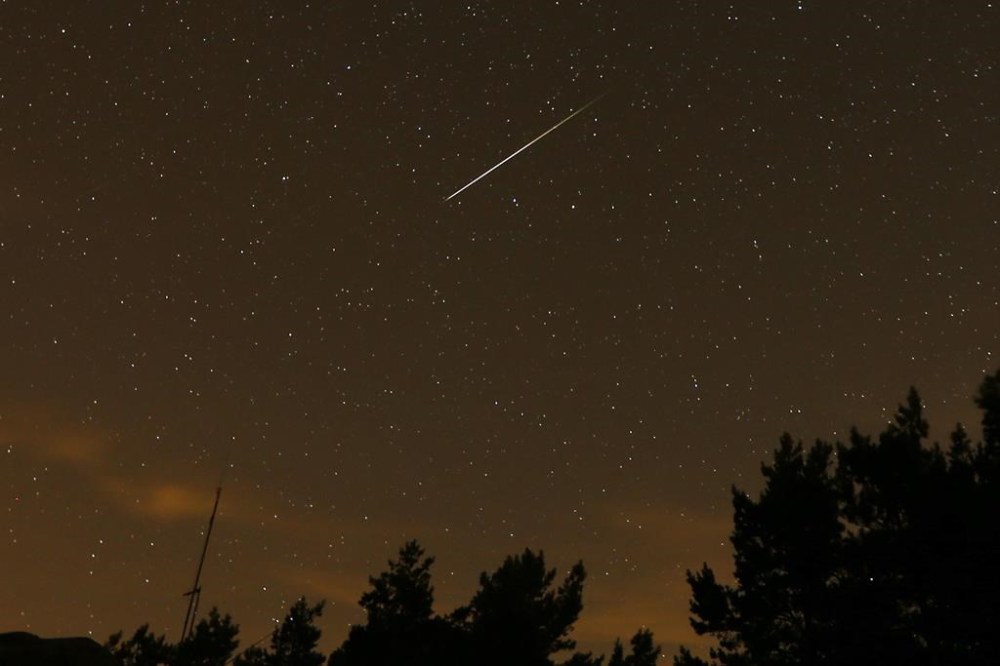
WASHINGTON (AP) — The Perseids are back to dazzle the sky with bursts of light and color.
The annual meteor shower, active since July, peaks before dawn Monday. It’s one of the brightest and most easily viewed showers of the year, producing “bright blue meteors — and lots of them,” said University of Warwick astronomer Don Pollacco.
More than 50 meteors per hour are expected, according to the American Meteor Society. The shower lasts through Sept. 1.
Here’s what to know about the Perseids and other meteor showers.
What is a meteor shower?
Multiple meteor showers occur annually and you don’t need special equipment to see them.
Most meteor showers originate from the debris of comets. The source of the Perseids is the comet 109P/Swift-Tuttle.
When rocks from space enter Earth’s atmosphere, the resistance from the air makes them very hot. This causes the air to glow around them and briefly leaves a fiery tail behind them — the end of a “shooting star.”
The glowing pockets of air around fast-moving space rocks, ranging from the size of a dust particle to a boulder, may be visible in the night sky.
The Perseids result from “bigger particles than a lot of other showers,” said NASA’s Bill Cooke, giving them the appearance of “bright fireballs” — easier to spot than many others.
How to view a meteor shower
Meteor showers are usually most visible between midnight and predawn hours.
It’s easier to see shooting stars under dark skies, away from city lights. Meteor showers also appear brightest on cloudless nights when the moon wanes smallest.
The Northern Hemisphere will have the best view of the Perseids. This year’s peak coincides with a moon around 44% full.
When is the next meteor shower?
The meteor society keeps a list of upcoming large meteor showers, including the peak viewing days and moonlight conditions.
The next major meteor shower will be the Orionids, peaking in mid-October.
___
The Associated Press Health and Science Department receives support from the Howard Hughes Medical Institute’s Science and Educational Media Group. The AP is solely responsible for all content.