Scientists detect traces of an ancient Mayan city in southern Mexico using laser-sensor technology

Advertisement

Advertise with us

NEW ORLEANS (AP) — Archaeologists using laser-sensing technology have detected what may be an ancient Mayan city cloaked by jungle in southern Mexico, authorities said Wednesday.

Read this article for free:


or

Already have an account? Log in here »

To continue reading, please subscribe:

Subscribe and receive a limited-edition Free Press branded hat or tote.

Digital Subscription

One year of digital access for only $205*

  • Enjoy unlimited reading on winnipegfreepress.com
  • Read the E-Edition, our digital replica newspaper
  • Access News Break, our award-winning app
  • Play interactive puzzles

*First annual payment billed as $205.00 + GST for one year. This annual subscription will automatically renew at $233.00 + GST every 52 weeks (10% off the regular annual price of $259.35). Offer available to new and qualified returning subscribers only. Cancel any time.

To continue reading, please subscribe:

Add Free Press access to your Brandon Sun subscription for only an additional

$1 for the first 4 weeks*

  • Enjoy unlimited reading on winnipegfreepress.com
  • Read the E-Edition, our digital replica newspaper
  • Access News Break, our award-winning app
  • Play interactive puzzles
Start now

*Your next Brandon Sun subscription payment will increase by $1.00 and you will be charged $17.95 plus GST for four weeks. After four weeks, your payment will increase to $24.95 plus GST every four weeks.

Hey there, time traveller!
This article was published 30/10/2024 (699 days ago), so information in it may no longer be current.

NEW ORLEANS (AP) — Archaeologists using laser-sensing technology have detected what may be an ancient Mayan city cloaked by jungle in southern Mexico, authorities said Wednesday.

The lost city, dubbed Valeriana by researchers after the name of a nearby lagoon, may have been as densely settled as the better-known pre-Hispanic metropolis of Calakmul, in the south part of the Yucatan peninsula.

What the study, published this week in the journal Antiquity, suggest is that much of the seemingly empty, jungle-clad space between known Maya sites may once have been very heavily populated.

“Previous research has shown that a large part of the present-day state of Campeche is a landscape that was transformed by its ancient inhabitants,” said Adriana Velázquez Morlet of Mexico’s National Institute of Anthropology and History, a co-author of the report. “Now, this study shows that a little-known region was a urbanized landscape.”

Mexico’s National Institute said about 6,479 structures have been detected in LiDAR images covering an area of about 47 square miles (122 square kilometers). The technique maps landscapes using thousands of lasers pulses sent from a plane, which can detect variations in topography that were not evident to the naked eye.

Those images revealed structures that include what appear to be temple platforms, ceremonial ball courts, housing platforms, agricultural terraces and even what appears to be a dam. The Institute said the structures may date to between 250 and 900 A.D., but the settlement could have been started 100 years earlier.

A consortium of researchers made the discovery by using software to re-examine a 2013 LIDAR survey originally carried out to measures deforestation. While re-examining the data, Luke Auld-Thomas, then a graduate student at Tulane University, noticed strange formations in the survey of the jungle.

Auld-Thomas’s advisor, Tulane professor Marcello Canuto, said the extensive data they’ve collected will “allow us to tell better stories of the ancient Mayan people,” marrying what scientists already know – political and religious histories – with new details about how ancient civilizations were run.

“We have always been able to talk about the ancient Maya especially in the lowland regions because of their hieroglyphic texts, because they left us such interesting record,” he said. “What we are now able to do is match that information with their settlement and the population and what they were fighting over, what they were ruling over, what they were trading.”

Susan D. Gillespie, an anthropology professor at the University of Florida who was not connected to the study, said that while LiDAR is a valuable tool, some of the features would have to be confirmed by researchers on the ground.

“They realize that small natural rock piles (chich in the local parlance) were likely misinterpreted as house mounds, being the same size and shape. Thus, they recognize that their feature counts are preliminary,” Gillespie wrote.

“The final caveat, which I think must always kept in mind, is contemporaneity of use of mapped features,” Gillespie said. “LiDAR maps what’s on the surface, but not when it was used. So, a large region might be dense with structures, but the size of an occupation at any one time cannot known with aerial survey data alone.”

History

Updated on Friday, November 1, 2024 8:26 AM CDT: Corrects typo

Report Error Submit a Tip

More Stories

Wab Kinew as ‘communicator in chief’

Paul G. Thomas 6 minute read Preview

Wab Kinew as ‘communicator in chief’

Paul G. Thomas 6 minute read Yesterday at 2:00 AM CDT

Premier Wab Kinew and his party have been riding high in the polls longer than normal for a government one year or less away from its first re-election contest. One reason is his ubiquitous, dominating communications presence as NDP leader and premier.

The argument here is that Kinew has supplemented his prerogatives as premier and party leader (such as appointing cabinet ministers and approving party nominations) with the skilful use of communications to advance his policy agenda, boost his personal popularity and maintain the competitive advantage of his party over the opposition Progressive Conservatives.

Communications has always been a significant part of politics and policy making. However, in the contemporary political and media environments, communications considerations have moved from the background to the foreground of decision-making by political parties, including when they are performing in the role of government. Campaigning and governing now overlap in what has been described as a permanent election campaign.

Political parties use communications strategies for several purposes: to establish an image of the leader which makes a positive emotional connection with voters; to promote a coherent message and to keep party members on message; and to gain favourable media coverage for its policies and other actions on almost a daily basis.

Read
Yesterday at 2:00 AM CDT

Uncaring hubby fell flat at first hurdle

Maureen Scurfield 4 minute read Yesterday at 2:00 AM CDT

DEAR MISS LONELYHEARTS: I re-rented my favourite summer cabin this fall because I’m trying to finish my thesis. My husband of just over a year was very annoyed with me for going on my own, but didn’t say much about it because I paid.

I thought we were both OK with this arrangement, until I got the flu up at the lake very badly and couldn’t keep anything down. I felt faint. I phoned him and he said he was at a party with the guys. I could hear music and girls laughing.

He wouldn’t come for me, so at 4 a.m. when I was getting even more sick and scared, I drove back to the city unannounced.

I went straight to my parents’ house and pretty much fell through the door. Mom said to me when she grabbed me: “This is not right. You could have died in the ditch. Where is your husband?”

Today’s horoscope

Georgia Nicols 4 minute read Preview

Today’s horoscope

Georgia Nicols 4 minute read 2:00 AM CDT

MOON ALERT: Avoid shopping (except food and gas) and important decisions after 6 p.m. The moon is in Taurus.

ARIES (March 21-April 19)

You might find you identify with your possessions more than usual. In fact, this could be why you might be tempted to be a bit extravagant or go overboard buying something. This same sense of largesse might creep into your financial negotiations. Be aware of this.

TAURUS (April 20-May 20)

Read
2:00 AM CDT

Scientists detect traces of an ancient Mayan city in southern Mexico using laser-sensor technology

Stephen Smith, The Associated Press 3 minute read Friday, Nov. 1, 2024

NEW ORLEANS (AP) — Archaeologists using laser-sensing technology have detected what may be an ancient Mayan city cloaked by jungle in southern Mexico, authorities said Wednesday.

The lost city, dubbed Valeriana by researchers after the name of a nearby lagoon, may have been as densely settled as the better-known pre-Hispanic metropolis of Calakmul, in the south part of the Yucatan peninsula.

What the study, published this week in the journal Antiquity, suggest is that much of the seemingly empty, jungle-clad space between known Maya sites may once have been very heavily populated.

“Previous research has shown that a large part of the present-day state of Campeche is a landscape that was transformed by its ancient inhabitants,” said Adriana Velázquez Morlet of Mexico’s National Institute of Anthropology and History, a co-author of the report. “Now, this study shows that a little-known region was a urbanized landscape.”

Bathhouse owner upset after judge grants bail to man accused in foiled bombing

Dean Pritchard and Morgan Modjeski 4 minute read Preview

Bathhouse owner upset after judge grants bail to man accused in foiled bombing

Dean Pritchard and Morgan Modjeski 4 minute read Updated: Yesterday at 5:00 PM CDT

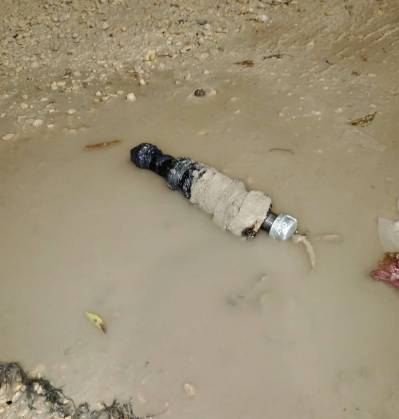
The owner of a Notre Dame Avenue bathhouse is troubled after a man accused of planting a pipe bomb outside his club was granted bail.

Erik Lymen Olson, 59, was granted release following a contested bail hearing last Monday.

“I don’t think he should have got out with something like this — at all,” said Christopher Gregoire, owner of AQ Sauna.

Olson was arrested Sept. 12, one day after allegedly planting a pipe bomb outside the sex and lifestyle club.

Read
Updated: Yesterday at 5:00 PM CDT

First Manitoba-U.K. Defence Summit begins

Free Press staff 1 minute read 2:00 AM CDT

United Kingdom delegates from the aerospace and defence sector are visiting Winnipeg this week for the first Manitoba-U.K. Defence Summit.

Industry executives will discuss trade, investment and collaboration with their Manitoba counterparts, according to a Manitoba Aerospace & Defence news release.

The group started with a conference at the Manitoba Club on Monday. Today, United Kingdom leaders will visit Boeing Winnipeg, StandardAero and Magellan Aerospace, the news release says.

The summit is being led by the Canada-Manitoba Defence Alliance, which the provincial government launched earlier this month.