Fossilized dinosaur feces and vomit help scientists reconstruct the creatures’ rise
Advertisement
Read this article for free:
or
Already have an account? Log in here »
To continue reading, please subscribe:

Digital Subscription
One year of digital access for only $205*
- Enjoy unlimited reading on winnipegfreepress.com
- Read the E-Edition, our digital replica newspaper
- Access News Break, our award-winning app
- Play interactive puzzles
*First annual payment billed as $205.00 + GST for one year. This annual subscription will automatically renew at $233.00 + GST every 52 weeks (10% off the regular annual price of $259.35). Offer available to new and qualified returning subscribers only. Cancel any time.
To continue reading, please subscribe:
Add Free Press access to your Brandon Sun subscription for only an additional
$1 for the first 4 weeks*
- Enjoy unlimited reading on winnipegfreepress.com
- Read the E-Edition, our digital replica newspaper
- Access News Break, our award-winning app
- Play interactive puzzles
*Your next Brandon Sun subscription payment will increase by $1.00 and you will be charged $17.95 plus GST for four weeks. After four weeks, your payment will increase to $24.95 plus GST every four weeks.
Read unlimited articles for free today:
or
Already have an account? Log in here »
Hey there, time traveller!
This article was published 27/11/2024 (660 days ago), so information in it may no longer be current.
NEW YORK (AP) — Using fossilized feces and vomit samples from Poland, scientists have reconstructed how dinosaurs came to dominate the Earth millions of years ago.
Researchers aren’t sure whether dinosaurs’ rise over the course of 30 million years happened because of luck, skill, climate or some combination. But they came away knowing this: “It was not a sudden thing,” said study co-author Martin Qvarnström from Uppsala University.
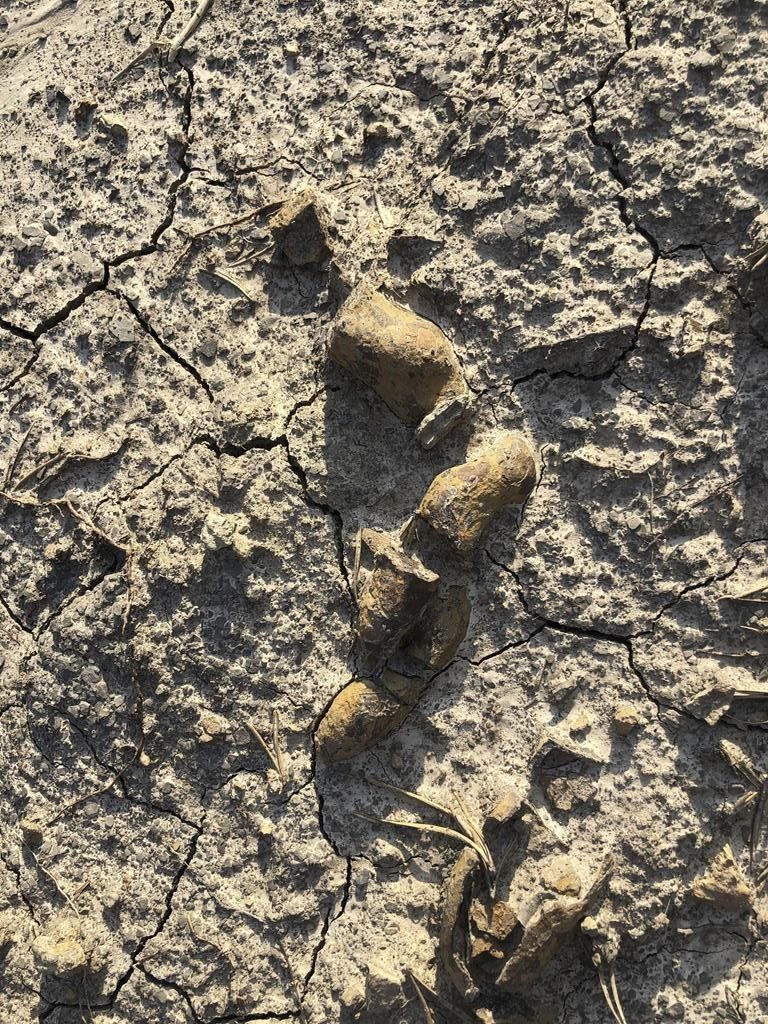
The new study, published Wednesday in the journal Nature, analyzed hundreds of dino droppings to reconstruct who was eating whom 200 million years ago.
The first dinosaurs were go-getters, Qvarnström said, eating whatever they could — including insects, fish and plants.
When climate conditions changed, they were quick to adapt. Plant-eating dinosaurs, for example, ate a greater variety of greens than other vegetarians of the time, so it was easier to expand their palates when wetter conditions gave rise to new plant species.
Since the study’s findings were limited to Polish fossils, Qvarnström said he’d like to see if their ideas hold steady against fossil records from around the world.
It’s not uncommon for scientists to study ancient fecal matter to understand creatures of the past, said Emma Dunne, a paleobiologist at the University of Erlangen-Nuremberg. But fossilized feces can resemble blobs or chunks of rock, and they are not always found near fossils of the animal that made them — which makes it hard for scientists to know where they came from.
In this study, researchers found fish scales, insect bits and bone shards nestled within the droppings.
“They are a really unassuming, quite plain part of the background,” said Dunne, who was not involved with the new research. “But they hold so much delicate, fine information.”
___
The Associated Press Health and Science Department receives support from the Howard Hughes Medical Institute’s Science and Educational Media Group. The AP is solely responsible for all content.