IAEA chief: Iran is poised to ‘quite dramatically’ increase stockpile of near weapons-grade uranium
Advertisement
Read this article for free:
or
Already have an account? Log in here »
To continue reading, please subscribe:

Digital Subscription
One year of digital access for only $205*
- Enjoy unlimited reading on winnipegfreepress.com
- Read the E-Edition, our digital replica newspaper
- Access News Break, our award-winning app
- Play interactive puzzles
*First annual payment billed as $205.00 + GST for one year. This annual subscription will automatically renew at $233.00 + GST every 52 weeks (10% off the regular annual price of $259.35). Offer available to new and qualified returning subscribers only. Cancel any time.
To continue reading, please subscribe:
Add Free Press access to your Brandon Sun subscription for only an additional
$1 for the first 4 weeks*
- Enjoy unlimited reading on winnipegfreepress.com
- Read the E-Edition, our digital replica newspaper
- Access News Break, our award-winning app
- Play interactive puzzles
*Your next Brandon Sun subscription payment will increase by $1.00 and you will be charged $17.95 plus GST for four weeks. After four weeks, your payment will increase to $24.95 plus GST every four weeks.
Read unlimited articles for free today:
or
Already have an account? Log in here »
Hey there, time traveller!
This article was published 06/12/2024 (619 days ago), so information in it may no longer be current.
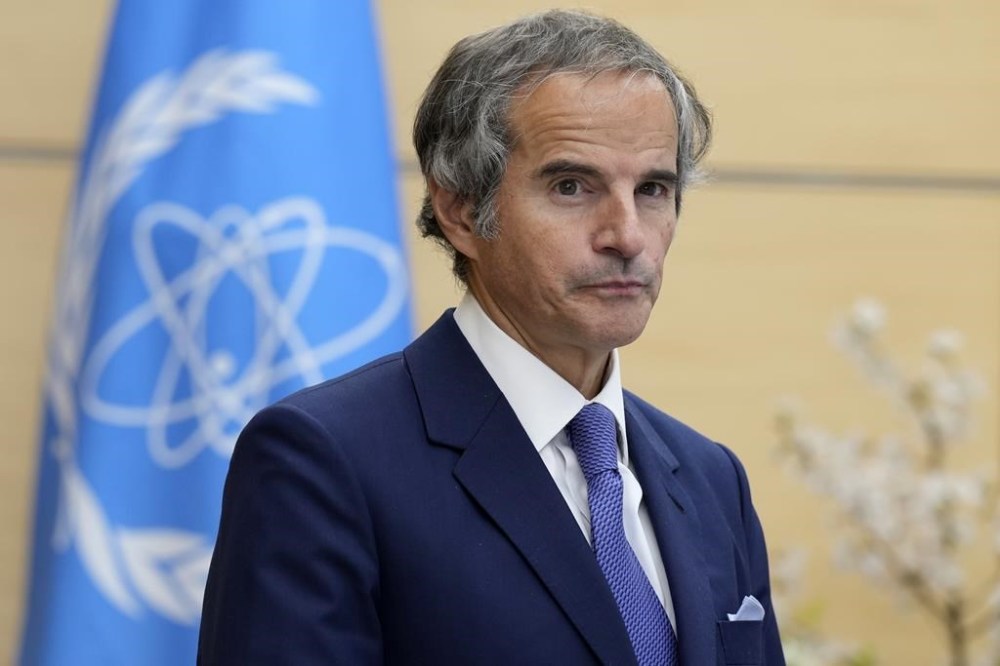
MANAMA, Bahrain (AP) — Iran is poised to “quite dramatically” increase its stockpile of near weapons-grade uranium as it has started cascades of advanced centrifuges, the head of the International Atomic Energy Agency warned Friday.
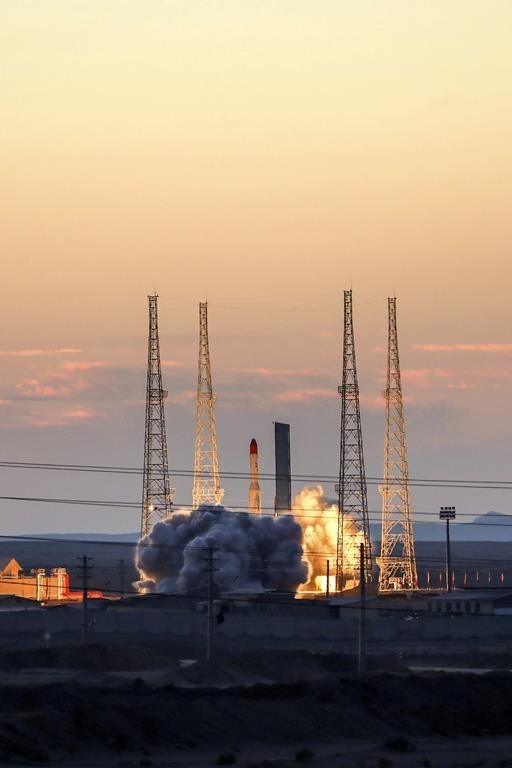
The comments from Rafael Mariano Grossi came just hours after Iran said it conducted a successful space launch with its heaviest payload ever, the latest for its program that the West alleges improves Tehran’s ballistic missile program.
The launch of the Simorgh rocket comes as Iran’s nuclear program now enriches uranium at 60%, a short, technical step from weapons-grade levels of 90%. While Iran maintains its program is peaceful, officials in the Islamic Republic increasingly threaten to potentially seek the bomb and an intercontinental ballistic missile that would allow Tehran to use the weapon against distant foes like the United States.
The moves are likely to further raise tensions gripping the wider Middle East over Israel’s continued war on Hamas in the Gaza Strip and as an uneasy ceasefire holds in Lebanon. However, Iran may as well be preparing the ground for possible talks with the incoming administration of President-elect Donald Trump, who in his first term unilaterally withdrew America from Tehran’s nuclear deal with world powers.
The U.S. intelligence community in a report released Thursday said that while “Iran is not building a nuclear weapon” it has “undertaken activities that better position it to produce one, if it so chooses.”
The Iranian debate over seeking the bomb “risks emboldening nuclear weapons advocates within Iran’s decision-making apparatus and shifting the thinking of current and future Iranian elites about the utility of nuclear weapons,” the report added.
Grossi, speaking to journalists in Bahrain, on the sidelines of the International Institute of Strategic Studies’ Manama Dialogue, said his inspectors planned to see just how many centrifuges Iran would be spinning after Tehran informed his agency of its plans.
“I think it is very concerning,” Grossi said. “They were preparing and they have all of these facilities sort of in abeyance and now they are activating that. So we are going to see.”
He added: “If they really make them turn — all of them — it’s going to be a huge jump.”
An IAEA statement issued shortly after Grossi’s remarks said Iran had begun feeding two cascades of advanced IR-6 centrifuges with uranium previously enriched up to 20% at its underground Fordo facility. That site is located under a mountain, protecting it from airstrikes.
Cascades are a group of centrifuges that spin uranium gas together to more quickly enrich the uranium. The IR-6 centrifuges enrich uranium faster than Iran’s baseline IR-1 centrifuges, which have been the workhorse of the country’s atomic program. Adding 20% uranium, as opposed to 5% uranium previously planned, further speeds up that process.
“The facility’s updated design information showed that the effect of this change would be to significantly increase the rate of production,” the IAEA statement said. Iran separately will start feeding natural uranium into eight other IR-6 cascades at Fordo as well to produce 5%-enriched uranium, it added.
The IAEA warned in late November that Iran was preparing to begin enriching uranium with thousands of advanced centrifuges. That came as a response to the Board of Governors at the IAEA condemning Iran for failing to cooperate fully with the agency.
Iran did not acknowledge the preparations. The Iranian mission to the United Nations did not respond to a request for comment.
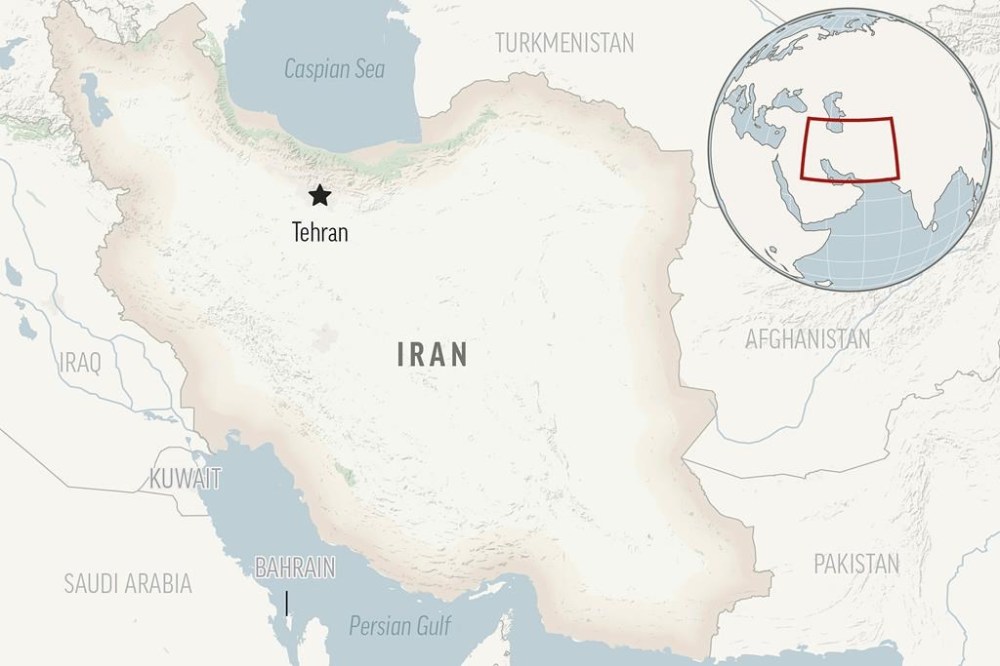
Meanwhile, the launch Friday took place at Iran’s Imam Khomeini Spaceport in rural Semnan province, some 220 kilometers (135 miles) east of Tehran. That’s the site of Iran’s civilian space program, which has suffered a series of failed Simorgh launches in the past.
The Simorgh carried what Iran described as an “orbital propulsion system,” as well as two research systems to a 400-kilometer (250-mile) orbit above the Earth. A system that could change the orbit of a spacecraft would allow Iran to geo-synchronize the orbits of its satellites, a capability Tehran has long sought.
It also carried the Fakhr-1 satellite for Iran’s military, the first time Iran’s civilian program is known to have carried a military payload.
Iran also put the payload of the Simorgh at 300 kilograms (660 pounds), heavier than all its previous successful launches within the country. State television carried footage of a correspondent discussing the payload just as the Simorgh lifted off into the sky, as people called out: “God is the greatest!”
The U.S. military referred questions about the launch to the country’s Space Command, which did not respond. Space experts said tracking data appeared to show the launch successfully put objects in orbit.
The United States has previously said Iran’s satellite launches defy a U.N. Security Council resolution and called on Tehran to undertake no activity involving ballistic missiles capable of delivering nuclear weapons. U.N. sanctions related to Iran’s ballistic missile program expired in October 2023.
“Iran’s work on space-launch vehicles — including its Simorgh — probably would shorten the timeline to produce an intercontinental ballistic missile, if it decided to develop one, because the systems use similar technologies,” a U.S. intelligence community report released in July said.
Iran has always denied seeking nuclear weapons and says its space program, like its nuclear activities, is for purely civilian purposes. However, U.S. intelligence agencies and the IAEA say Iran had an organized military nuclear program up until 2003.
Under Iran’s relatively moderate former President Hassan Rouhani, the Islamic Republic slowed its space program for fear of raising tensions with the West. The late hard-line President Ebrahim Raisi, a protégé of Supreme Leader Ayatollah Ali Khamenei who came to power in 2021, pushed the program forward. Raisi died in a helicopter crash in May.
Iran’s reformist President Masoud Pezeshkian, who has been signaling he wants to negotiate with the West over sanctions, has yet to offer a strategy when it comes to Iran’s ambitions in space. The Simorgh launch represented the first for his administration from the country’s civil space program. Iran’s paramilitary Revolutionary Guard conducted a successful launch of its parallel program in September.
___

Associated Press writers Nasser Karimi in Tehran, Iran, and Stephanie Liechtenstein in Vienna contributed to this report.
___
The Associated Press receives support for nuclear security coverage from the Carnegie Corporation of New York and the Outrider Foundation. The AP is solely responsible for all content.
—-
Additional AP coverage of the nuclear landscape: https://apnews.com/projects/the-new-nuclear-landscape/