Ireland embraced data centers that the AI boom needs. Now they’re consuming too much of its energy
Advertisement
Read this article for free:
or
Already have an account? Log in here »
To continue reading, please subscribe:
Digital Subscription
One year of digital access for only $1.44 a week*
- Enjoy unlimited reading on winnipegfreepress.com
- Read the E-Edition, our digital replica newspaper
- Access News Break, our award-winning app
- Play interactive puzzles
*Billed as $5.77 plus GST every four weeks. After 52 weeks, price increases to the regular rate of $19.95 plus GST every four weeks. Offer available to new and qualified returning subscribers only. Cancel any time.
To continue reading, please subscribe:
Add Free Press access to your Brandon Sun subscription for only an additional
$1 for the first 4 weeks*
- Enjoy unlimited reading on winnipegfreepress.com
- Read the E-Edition, our digital replica newspaper
- Access News Break, our award-winning app
- Play interactive puzzles
*Your next Brandon Sun subscription payment will increase by $1.00 and you will be charged $17.95 plus GST for four weeks. After four weeks, your payment will increase to $24.95 plus GST every four weeks.
Read unlimited articles for free today:
or
Already have an account? Log in here »
Hey there, time traveller!
This article was published 19/12/2024 (673 days ago), so information in it may no longer be current.
CLONDALKIN, Ireland (AP) — Dozens of massive data centers humming at the outskirts of Dublin are consuming more electricity than all of the urban homes in Ireland and starting to wear out the warm welcome that brought them here.
Now, a country that made itself a computing factory for Amazon, Google, Meta, Microsoft and TikTok is wondering whether it was all worth it as tech giants look around the world to build even more data centers to fuel the next wave of artificial intelligence.
Fears of rolling blackouts led Ireland’s grid operator to halt new data centers near Dublin until 2028. These huge buildings and their powerful computers last year consumed 21% of the nation’s electricity, according to official records. No other country has reported a higher burden to the International Energy Agency.
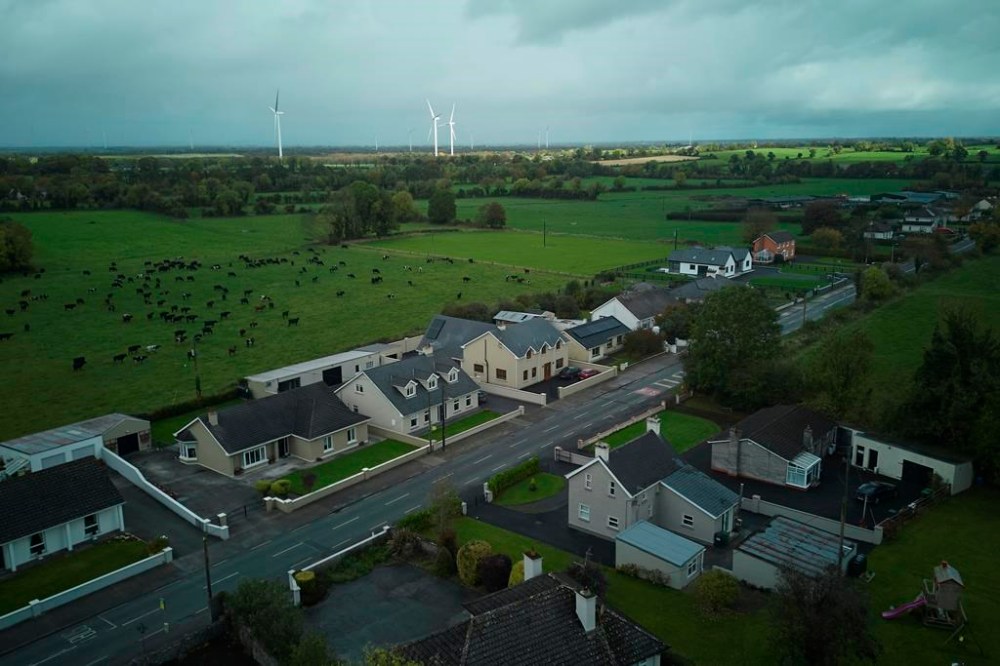
Not only that, but Ireland is still heavily reliant on burning fossil fuels to generate electricity, despite a growing number of wind farms sprouting across the countryside. Further data center expansion threatens Ireland’s goals to sharply cut planet-warming emissions.
Ireland is a “microcosm of what many countries could be facing over the next decade, particularly with the growth of AI,” said energy researcher Paul Deane of University College Cork.
Dublin’s data center limits
Twenty-six-year-old activist Darragh Adelaide lives in a working-class Dublin suburb just across a busy motorway from Grange Castle Business Park, one of Ireland’s biggest data center clusters. It could get even bigger were Adelaide not a thorn in the side of Google’s expansion plans.
“It’s kind of an outrageous number of data centers,” Adelaide said. “People have started to make the connection between the amount of electricity they’re using and electricity prices going up.”
Ireland has attracted global tech companies since the “Celtic Tiger” boom at the turn of the 21st century. Tax incentives, a highly skilled, English-speaking workforce and the country’s membership in the European Union have all contributed to making the tech sector a central part of the Irish economy. The island is also a node for undersea cables that extend to the U.S., Britain, Iceland and mainland Europe.
Nearly all of the data centers sit on the edge of Dublin, where their proximity to the capital city facilitates online financial transactions and other activities that require fast connections. Data center computers run hot, but compared to other parts of the world, Ireland’s cool temperatures make it easier to keep them from overheating without drawing in as much water.
Still, buildings that for years went mostly unnoticed have attracted unwanted attention as their power demands surged while Irish householders pay some of Europe’s highest electricity bills. Ireland’s Environmental Protection Agency has also flagged concerns about nitrogen oxide pollution from data centers’ on-site generators — typically gas or diesel turbines — affecting areas near Dublin.
A crackdown began in 2021, spurred by projections that data centers are on pace to take up one third of Ireland’s electricity in this decade. Regulators declared that Dublin had hit its limits and could no longer plug more data centers into its grid. The government urged tech companies to look outside the capital and find ways to supply their own power.
“What’s happening in Ireland is the politics of basically what happens when you build too many of these things,” said University College Dublin researcher Patrick Brodie. “Even though people have recognized for a while that data centers are energy hogs, there hasn’t really been so many of these moments where, effectively, Ireland issued a red alert.”
Adelaide was a child when Microsoft opened Grange Castle’s first data center in 2009, but enormous complexes built by Amazon, Google, Microsoft and other companies have since expanded around the ruined castle that anchors the business park. They have their own modern fortifications of high fences, surveillance cameras and guard houses, and don’t display their corporate logos.
In June, Adelaide’s campaign against data centers helped get him elected to a seat on the South Dublin County Council for the leftist People Not Profits Party. The council soon after rejected Google’s plan to build another data center. Google appealed the decision in September.
“It was only going to employ around 50 people,” Adelaide said. “It would have been a massive cost to the local area and to Ireland in general with very little benefit, which is kind of how the tax haven system works.”
The backlash from Dublin-area local planning authorities — combined with stricter, if sometimes contradictory, guidance from the national government — has frustrated data center developers.
One fully-built data center from Texas-based Digital Realty is sitting idle at Grange Castle while it awaits permission to connect to the electricity grid. The company sells space within its data centers for clients such as banks, email providers and social media platforms. It says it lacks a grid connection despite contracting for enough renewable energy to power all of its Irish data centers.
“When we look at artificial intelligence, when we look at new technologies coming along the line, the basic requirement for all of those is power infrastructure,” said Dermot Lahey, who directs Digital Realty’s data center implementation in Ireland, speaking inside a cavernous empty data hall. Ireland has all the elements to make it a “great home for AI expansion,” he said.
“What’s preventing us from being able to leverage that is the fact that the power constraints that we have, or the power moratorium that we have, is greatly impacting our ability to provide space for customers,” Lahey said.
Moving to the boglands?
Once colder weather sets in, the smoky fragrance of fireplaces burning briquettes of peat lingers over County Offaly, just over an hour’s drive west of Dublin in a region known as the Midlands. It’s places like this where some data center developers, thwarted by Dublin’s constraints, now see opportunity.
A report commissioned by County Offaly’s government pitches the bog-dotted region as a place to “create thousands of green jobs” and rival “Dublin, Frankfurt, London, Amsterdam and Paris in being an anchor for data centres powered by renewable energy.”
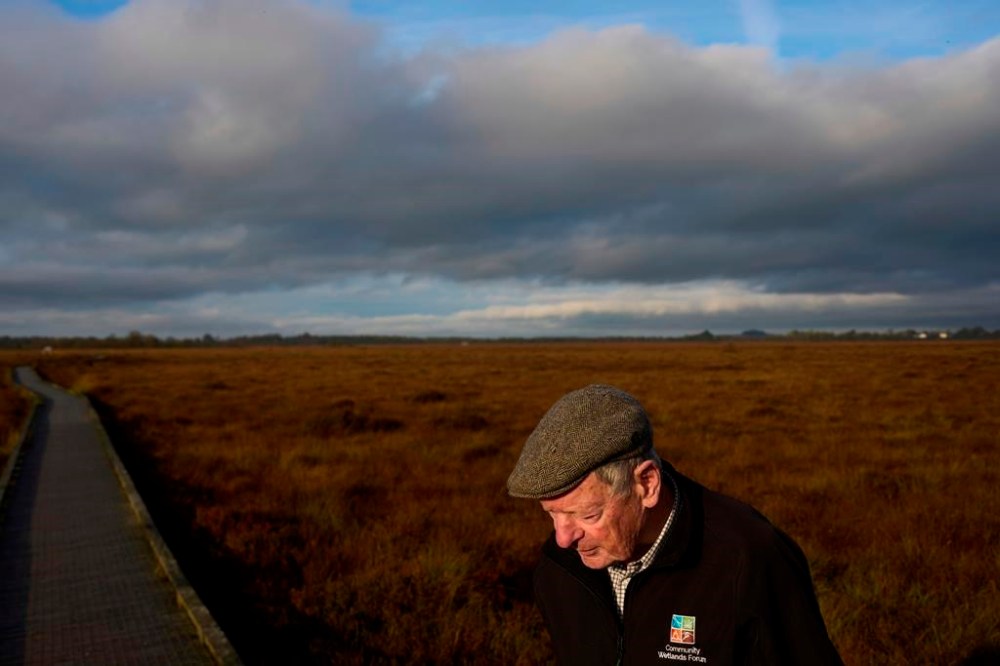
Farmer and conservationist Brian Sheridan, 83, is doubtful. He’s seen this region transformed once before, from a vast wetland known as the Bog of Allen to barren pockets of brownfields as people cut away trenches of dense peat soil, or turf – first with spades and later with tractors at an industrial scale to create homegrown fuel.
“The bog started disappearing and it wasn’t being replaced,” said Sheridan, walking along a boardwalk over carpets of moss and sedges in the now-protected Clara Bog Nature Reserve.
Decades of rapid extraction fostered Ireland’s energy independence and employed scores of workers in turf-cutting, briquette factories and power plants. But it also polluted the air and devastated a delicate environment. Bogs that naturally trapped large amounts of carbon dioxide were stripped down to the bedrock, contributing to global warming. When burned, peat is dirtier than coal.
Ireland has largely banned the sale of peat and shuttered the last remaining peat-fired power plants. But the state-supported company at the helm of peat extraction, Bord na Móna, still controls vast tracts of former bogland. It has refashioned itself as a renewable energy provider, laying down wind turbines and solar farms and partnering with Amazon to build a data center near the village of Rhode.
Bord na Móna declined multiple interview requests about its plans, and some residents feel left in the dark.
“Bord na Móna, as far as I’m concerned, are a law unto themselves,” Sheridan said. “Now that the turf-cutting is all finished, they should be gone. But it’s still the same Bord Na Móna and they won’t answer questions.”
Amazon declined to talk about specific projects and has repeatedly signaled it may shift its new data center investments away from Ireland. But an executive said the company is still working closely with the Irish government and characterized Ireland’s challenges as mostly about transmission — building the infrastructure to get new clean energy where it needs to go.
“Ireland has tremendous opportunity for additional renewable energy,” said Kevin Miller, Amazon Web Services’ vice president of global data centers. “However, they also need quite a bit more capacity on the grid to tap into that generation.”
Could wind save Ireland’s data centers?
A tech-driven race is on to harness the region’s wind. Backed by a power purchase agreement with Microsoft, the Norwegian wind energy company Statkraft is building nine towering wind turbines in remote former boglands along County Offaly’s eastern edge. Statkraft’s managing director for Ireland, Kevin O’Donovan, said data centers are actually helping to accelerate Ireland’s clean energy transition.
“For a lot of the mainland European countries, demand is going down and that’s actually leading to a challenge to roll out renewables,” O’Donovan said. “Whereas in Ireland we have demand that’s increasing because the country is growing economically and obviously a part of that is the data center growth.”
On the other side of Offaly, a group of residents who live along the Lemanaghan Bog near the site of a 7th-century monastery are skeptical of such claims. They are opposed to what a proposed Bord Na Móna wind farm will do to its cultural heritage and ecology.
KK Kenny took his concerns to Dublin this fall in a meeting with the country’s taoiseach, or prime minister, Simon Harris. Kenny wants to see the bog preserved for biodiversity. He’d be happy to see data center developers follow through with their pledge to look to other European countries.
“They say, oh, they’re going to pull out,” Kenny said. “That would be a great thing. We can’t sustain them.”
Some neighbors of Amazon’s proposed data center in Rhode are more open to the idea. One village resident already commutes all the way to Dublin to work at a data center. Another is hoping it will employ people who’d want to buy new homes.
“We’re all for change,” said Gerard Whelan. “I’ll get work because I build houses. It’s a domino effect.”
At a village pub, the Rhode Inn, Whelan points to a photograph of the old peat-burning power plant where his father worked the control room. Its cooling towers loomed over the village before their demolition two decades ago. Another nearby plant only stopped burning peat a year ago.
What happens next for Ireland’s data centers could depend in part on the new national government coming into power early next year.

Data centers were not a top issue for Irish voters who showed up to the polls on Nov. 29. But analysts expect the two center-right parties forming a new coalition government to face industry pressure to ease limits on data center expansion.
Ossian Smyth, an outgoing minister of state for the Irish government whose Green Party lost nearly all its parliamentary seats, said it would be a mistake to slow down Ireland’s climate commitments. But he also sees the limits on data center growth set by his outgoing government as having resolved most people’s concerns.
What other countries can learn from Ireland’s experience, he added, is to carefully manage the effect of data centers on the stability of the electricity system — and make sure their benefits are much more than income or foreign investment.
“Don’t see them as a necessary evil or something that you just have to put up with because it makes money and it gets taxes,” Smyth said.
—— The Associated Press receives financial assistance from the Omidyar Network to support coverage of artificial intelligence and its impact on society. AP is solely responsible for all content. Find AP’s standards for working with philanthropies, a list of supporters and funded coverage areas at AP.org.