Defence spending boost can only go so far to lessen U.S. reliance: experts
Advertisement
Read this article for free:
or
Already have an account? Log in here »
To continue reading, please subscribe:

Digital Subscription
One year of digital access for only $205*
- Enjoy unlimited reading on winnipegfreepress.com
- Read the E-Edition, our digital replica newspaper
- Access News Break, our award-winning app
- Play interactive puzzles
*First annual payment billed as $205.00 + GST for one year. This annual subscription will automatically renew at $233.00 + GST every 52 weeks (10% off the regular annual price of $259.35). Offer available to new and qualified returning subscribers only. Cancel any time.
To continue reading, please subscribe:
Add Free Press access to your Brandon Sun subscription for only an additional
$1 for the first 4 weeks*
- Enjoy unlimited reading on winnipegfreepress.com
- Read the E-Edition, our digital replica newspaper
- Access News Break, our award-winning app
- Play interactive puzzles
*Your next Brandon Sun subscription payment will increase by $1.00 and you will be charged $17.95 plus GST for four weeks. After four weeks, your payment will increase to $24.95 plus GST every four weeks.
Read unlimited articles for free today:
or
Already have an account? Log in here »
Hey there, time traveller!
This article was published 13/06/2025 (462 days ago), so information in it may no longer be current.
MONTREAL – In early 2002, Glenn Cowan touched down in Kandahar as part of the first wave of regular Canadian Army troops deployed to Afghanistan, serving in a U.S.-led brigade combat team.
After joining Canada’s elite special operations unit Joint Task Force 2 in 2003, he spent the next 13 years collaborating with American soldiers on raids, rescues and reconnaissance missions.
“If you’re going to get into a fight with someone, you want the Americans on your side — full stop,” said Cowan, founder of Ottawa-based venture capital firm ONE9, which focuses on national security investments.
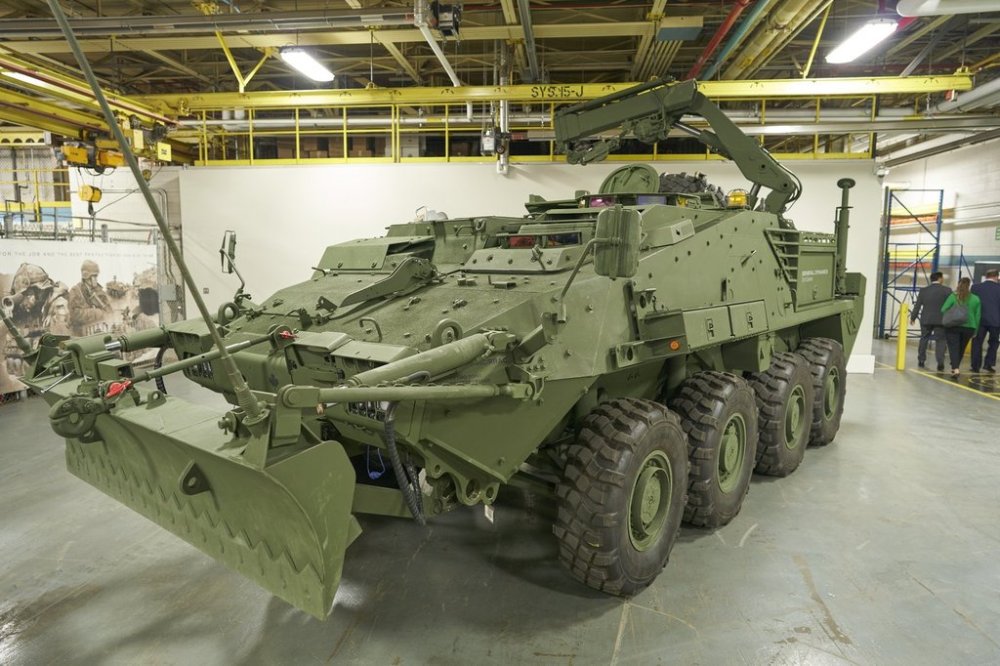
The same might be said of the gear Canadian troops use, and the industry behind it.
An infusion of fresh defence funding is poised to flood parts of Canada’s aerospace, manufacturing and information technology sectors in a bid to reduce reliance on the United States. But experts say this country will remain firmly fastened to its neighbour due to the deep integration of their supply chains and the sheer scale of American military-industrial might.
While not a weapons powerhouse, Canada has expertise in areas ranging from flight simulation and shipbuilding to armoured vehicles and artificial intelligence, as well as abundant critical minerals — tungsten for tanks or germanium for night-vision goggles, for example.
The $9.3-billion in additional defence spending announced by Prime Minister Mark Carney on Monday is poised to boost those sectors, with the goal of greater procurement from domestic companies and sales to allies.
“We’re too reliant on the United States,” stated Carney, who said it had started “to monetize its hegemony, charging for access to its markets.”
“We will ensure that every dollar is invested wisely, including by prioritizing made-in-Canada manufacturing and supply chains. We should no longer send three-quarters of our defence capital spending to America.”
But a massive cash injection means Canada will have to scale up fast, including via foreign suppliers, said Jim Kilpatrick, in charge of global supply chain and network operations at Deloitte.
“Defence supply chains can often go 10 or 11 tiers deep,” he said, stressing their complex international reach.
“Canada will not be self-sufficient in defence products required by our military.”
The country’s relatively small production capacity means it will continue to shell out money on American equipment, technology and aircraft.
Its defence production industry generated $14.3 billion in revenue in 2022 — a fraction of the U.S. total — according to a Royal Bank of Canada report this week.
RBC found that while the vast majority of the nearly 600 defence firms were Canadian-owned, they took in only half of the revenue. The other half went to foreign-owned companies, underscoring the plethora of smaller domestic firms and the outsized presence of American defence contractors on Canadian soil.
“The wider Canadian economy features a lot of branch plants,” noted David Perry, CEO of the Canadian Global Affairs Institute.
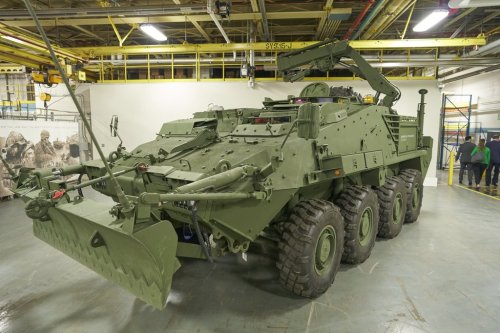
General Dynamics churns out light armoured vehicles bristling with turreted mortars and assault guns in London, Ont., as well as tactical communications systems in Ottawa. Lockheed Martin works on “advanced technology systems” such as naval command software in five provinces. Defence contractor RTX counts 8,500 employees across 14 cities and 2,500 suppliers in Canada.
While the high-tech weapons and machinery of their facilities come to mind at the mention of defence procurement, much of the extra funding this year may well go to more mundane items.
Housing and infrastructure upgrades for Canadian troops make up some of the biggest priorities for Chief of the Defence Staff Gen. Jennie Carignan, she told Quebec radio host Patrick Lagacé on Thursday.
Those concerns require less specialized knowledge than F-35 stealth fighters or an arctic patrol fleet. And the spending reaches businesses beyond the purely military realm.
“Some of it is done through the big stuff — we think about fighter jets. But a lot of it pays for office furniture, software licenses, electricity contracts, snow removal, grass cutting,” said Perry.
Taking a step back, he framed military investment in terms the prime minister, a former investment banker, could appreciate.
“If you think of our defence relationships as an investment portfolio, the PM is saying we’re way over-indexed in the Dow Jones and the S&P,” he said, citing American stock exchanges.
The question is how much Canada can diversify.
“Our existing relationship with the United States is the cornerstone of our previous defence policies. So if that is changing, then it’s important for the government to articulate exactly how that’s going to get shaped out.”
On Monday, Carney said Canada would invest in new submarines, aircraft, ships, armoured vehicles, artillery, radar and drones as well as AI and quantum computing.
Domestic industry already has at least a toehold in most of these areas, except submarine production.
Flight simulator maker CAE, Davie Shipbuilding and plane maker Bombardier in Quebec have one foot firmly in the defence realm. Halifax’s Irving Shipbuilding signed an $8-billion contract with the federal government in March to begin building three destroyers. And AI startups have flourished in Toronto, Montreal and other cities.
“Canada has a very deep and rich pool of AI talent,” said ONE9’s Cowan. “The next war is 100 per cent fought with nerds and money.”
One path to diversification lies across the Atlantic Ocean. If Carney meets his goal of signing Canada on to ReArm Europe — a defence plan that aims to ramp up spending on the Continent by hundreds of billions of euros over the next five years — Canadian suppliers could tap a rapidly expanding market.
“It’s a good strategy to reduce your dependence on any one supplier” — or buyer — said Peter Graham, who heads KPMG’s aerospace and defence team in Canada.
“But I think we also all have to be realistic. The U.S. has some of the most sophisticated equipment and technologies available for defending ourselves.”
On top of better kit, military economies of scale mean a lower cost per unit. And the ubiquity of their gear — from munitions to missile defence, such as Norad — allows for interchangeable components and easier integration on multilateral missions.
“It’s cheaper and you can collaborate easier,” said Graham.
With some major cross-border deals barely off the ground, including for 88 American-made F-35 stealth fighters — whose price tag ballooned by 50 per cent to $28 billion over the last three years, according to a scathing auditor general’s report this week — Canada will be sending defence dollars southward for years to come.
This report by The Canadian Press was first published June 13, 2025.
Companies in this story: (TSX:CAE, TSX:BBD.B)