Disruptions of cellphone internet links in Russia are spreading
Advertisement
Read this article for free:
or
Already have an account? Log in here »
To continue reading, please subscribe:

Digital Subscription
One year of digital access for only $205*
- Enjoy unlimited reading on winnipegfreepress.com
- Read the E-Edition, our digital replica newspaper
- Access News Break, our award-winning app
- Play interactive puzzles
*First annual payment billed as $205.00 + GST for one year. This annual subscription will automatically renew at $233.00 + GST every 52 weeks (10% off the regular annual price of $259.35). Offer available to new and qualified returning subscribers only. Cancel any time.
To continue reading, please subscribe:
Add Free Press access to your Brandon Sun subscription for only an additional
$1 for the first 4 weeks*
- Enjoy unlimited reading on winnipegfreepress.com
- Read the E-Edition, our digital replica newspaper
- Access News Break, our award-winning app
- Play interactive puzzles
*Your next Brandon Sun subscription payment will increase by $1.00 and you will be charged $17.95 plus GST for four weeks. After four weeks, your payment will increase to $24.95 plus GST every four weeks.
Read unlimited articles for free today:
or
Already have an account? Log in here »
Hey there, time traveller!
This article was published 17/07/2025 (446 days ago), so information in it may no longer be current.
TALLINN, Estonia (AP) — A snappy tune by a blogger that mockingly laments his poor internet connection in the southern Russian city of Rostov-on-Don has gotten over a half-million views on Instagram in two weeks.
“How to say you’re from Rostov without saying a word? Show one bar of cellphone service,” Pavel Osipyan raps while walking around the city, smartphone in hand. “We have internet until 12 o’clock, and recently there’s been no connection at all. No need to be angry, just get used to it already.”
The complaints by Osipyan — unable to pay electronically for groceries, or having to use paper maps while driving — aren’t isolated to Rostov-on-Don, which borders Ukraine and, as home to Russia’s Southern Military District, is targeted frequently by drones.
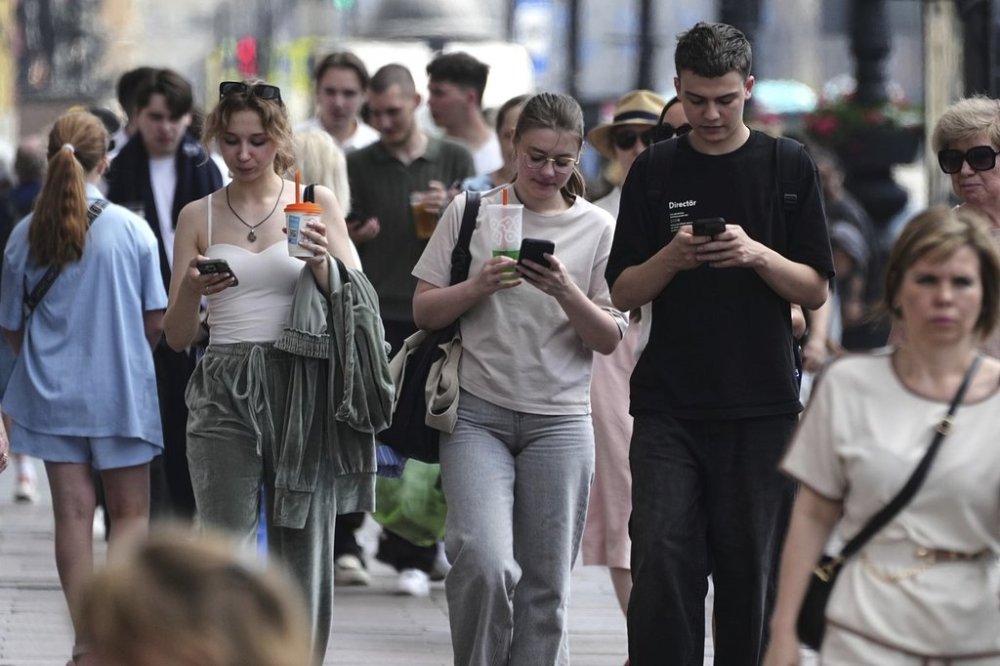
In the last two months, cellphone internet shutdowns, which officials say are needed to foil Ukrainian drones, have hit dozens of Russian regions — from those near the fighting to parts of Siberia and even the Far East. Some Wi-Fi outages also have been reported.
Russians contacted by The Associated Press talked about card payments not going through, taxi and ride-sharing apps not working properly, ATMs that sometimes fail.
Experts point to the unprecedented nature of the measures and warn of far-reaching consequences in a country where the Kremlin already has significantly curtailed online freedom.
Such shutdowns in the name of security legitimize them to the public and open the door for authorities abusing the restrictions, said Anastasiya Zhyrmont, policy manager for Eastern Europe and Central Asia at the Access Now digital rights group.
A signal to regional authorities
Experts say the trend began in May, when Russia celebrated the 80th anniversary of the defeat of the Nazi Germany in World War II and foreign dignitaries flocked to Moscow for a big military parade.
The capital suffered severe disruptions of cellphone connectivity to the internet for days, and Kremlin spokesman Dmitry Peskov confirmed those were deliberate restrictions due to regular Ukrainian drone attacks. Asked how long they’d last, he replied, “This will be done as needed.”
Russia has restricted smartphone connectivity before, with isolated instances during protests, as well as in regions bordering Ukraine.
Shutdowns in the capital, however, sent a signal to authorities across the vast country that it’s a useful tool, said lawyer Sarkis Darbinyan, founder of Russian internet freedom group Roskomsvoboda.
Ukraine’s “Operation Spiderweb” in early June, in which drones launched from containers on trucks attacked airfields deep inside Russia, made officials all the more eager to take action, Darbinyan said.
“They got really scared that drones now may appear, like a jack-in-the-box, in any Russian regions,” he told AP.
By mid-July, deliberate shutdowns spread to most of the country, according to Na Svyazi — Russian for “staying connected” — an activist group tracking internet availability.
On Thursday, the group said 61 of Russia’s more than 80 regions suffered cellphone internet shutdowns. In 42 regions, there were reports of broadband network outages.
The Russian military reported downing 122 Ukrainian drones over a dozen regions overnight Wednesday to Thursday. It said 73 drones were shot down early Friday.
Some regional officials confirmed that cellphone internet was restricted for security reasons. Nizhny Novgorod Gov. Gleb Nikitin said this month the measure will stay in place in the region east of Moscow for “as long as the threat remains.”
Asked Thursday whether such mass shutdowns were justified, Peskov said “everything that has to do with ensuring the safety of citizens, everything is justified and everything is a priority.”
Unpredictable disruptions
Russians from affected regions say the outages can last for hours or days; patterns also are hard to discern, with service working in one part of a city but vanishing elsewhere.
In Voronezh, near Ukraine and frequently targeted by drones, one resident said she felt like she was in “a cave” in early July with no cellphone internet or Wi-Fi in her home. The woman, who spoke to AP on condition of anonymity because of security concerns, said she was only able to get online at work the next day.
Cellphone internet in the southwestern city of Samara “goes out at the most unpredictable moments,” said Natalia, who also spoke on condition that her last name be withheld for safety reasons. Her home Wi-Fi recently also has slowed to a near halt around 11 p.m., staying that way for a few hours, she said.
Connectivity has improved recently in the Siberian city of Omsk, said Viktor Shkurenko, who owns retail stores and other businesses there. But cellphone internet service was out in his office for an entire week. A few of his smaller stores that rely on cellphone networks suffered disruptions, but nothing critical, he said.
“I don’t feel any super strong discomfort,” said Grigori Khromov of Nizhny Novgorod, Russia’s fifth-largest city where regular and widespread shutdowns were reported. “I have an office job and I work either at home or in the office and have either wire internet or Wi-Fi.”
In rural areas, small towns and villages, where cellphone internet often is the only way to get online, the situation was harder to gauge.
Pharmacies in such areas have struggled, Russian media reported and the Independent Pharmacies Association confirmed to AP. Viktoria Presnyakova, head of the association, said in a statement that prescriptions must be logged in special software, but that becomes impossible without an internet connection for weeks.
A social media user in the Belgorod region bordering Ukraine complained on Gov. Vyacheslav Gladkov’s social media page that without cellphone internet and a working alarm system, village residents have to bang on a rail to warn neighbors of an attack. The authorities promised to look into improving connectivity in the area.
Authorities elsewhere also announced steps to minimize disruptions by opening Wi-Fi spots. They also are reportedly planning to establish an agency to coordinate the shutdowns, according to Izvestia, a Kremlin-backed newspaper that cited unidentified government sources. Peskov said he was unaware of the plan.
Russia’s efforts at internet control
Russian and Ukrainian drones use cellphone internet networks to operate, so shutdowns are one way authorities try to counter the attacks, said Kateryna Stepanenko, a Russia analyst at the Washington-based Institute for the Study of War.
But it’s also part of the Kremlin’s long-term effort to rein in the internet. Authorities have actively censored online content in the last decade, blocking thousands of websites of independent media, opposition groups and human rights organizations.
After Russia’s full-scale invasion of Ukraine in 2022, the government blocked major social media like Twitter, Facebook and Instagram, as well as encrypted messenger platform Signal and a few other messaging apps.

Access to YouTube — wildly popular in Russia — was disrupted last year in what experts called deliberate throttling by the authorities. The Kremlin blamed YouTube owner Google for not properly maintaining its hardware in Russia.
State internet watchdogs routinely block virtual private network services that help circumvent the restrictions, and there are plans to introduce a national messenger app, expected to replace foreign ones.
Along with the shutdowns, these are part of a larger campaign “to establish control over the internet, which is something the Kremlin had failed to do 20 years prior on the same level that China did,” said the ISW’s Stepanenko.
Access Now’s Zhyrmont says it’s “very disturbing” that Russians have gotten used to living with growing internet restrictions, including shutdowns.
“This shouldn’t be modern reality,” she said.