The first supermoon of the year is approaching. Here’s what to know
Advertisement
Read this article for free:
or
Already have an account? Log in here »
To continue reading, please subscribe:

Digital Subscription
One year of digital access for only $205*
- Enjoy unlimited reading on winnipegfreepress.com
- Read the E-Edition, our digital replica newspaper
- Access News Break, our award-winning app
- Play interactive puzzles
*First annual payment billed as $205.00 + GST for one year. This annual subscription will automatically renew at $233.00 + GST every 52 weeks (10% off the regular annual price of $259.35). Offer available to new and qualified returning subscribers only. Cancel any time.
To continue reading, please subscribe:
Add Free Press access to your Brandon Sun subscription for only an additional
$1 for the first 4 weeks*
- Enjoy unlimited reading on winnipegfreepress.com
- Read the E-Edition, our digital replica newspaper
- Access News Break, our award-winning app
- Play interactive puzzles
*Your next Brandon Sun subscription payment will increase by $1.00 and you will be charged $17.95 plus GST for four weeks. After four weeks, your payment will increase to $24.95 plus GST every four weeks.
Read unlimited articles for free today:
or
Already have an account? Log in here »
Hey there, time traveller!
This article was published 04/10/2025 (347 days ago), so information in it may no longer be current.
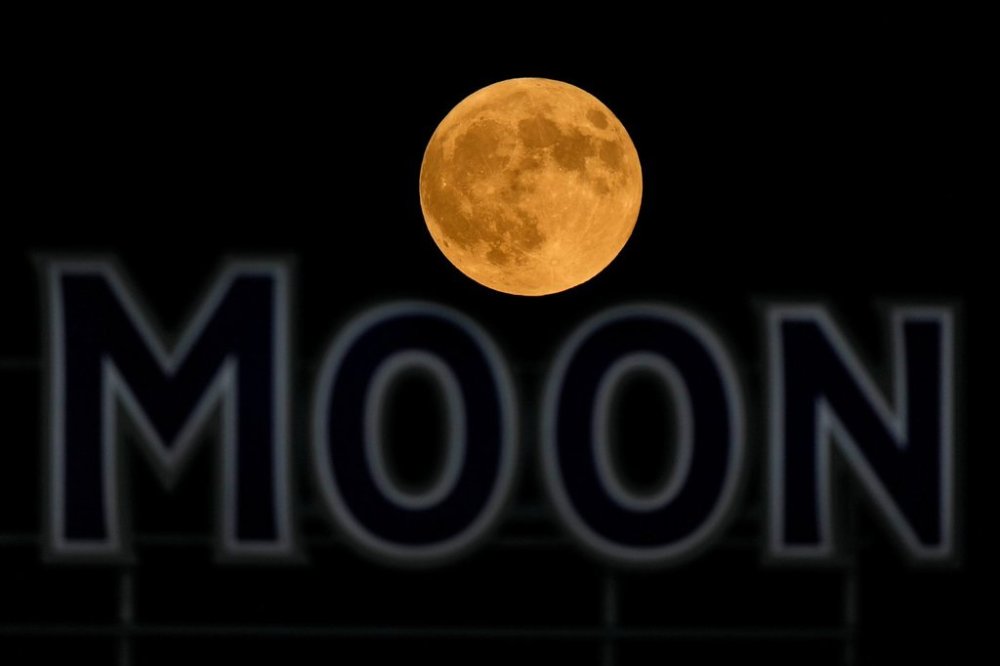
NEW YORK (AP) — The moon will appear slightly larger and brighter Monday night during what’s known as a supermoon.
October’s supermoon is the first of three this year. It happens when a full moon is closer to Earth in its orbit. That makes the moon look up to 14% bigger and 30% brighter than the faintest moon of the year, according to NASA. The subtle difference happens a few times a year, sometimes coinciding with other astronomical events such as lunar eclipses.
“It’s not really very unusual,” said Derrick Pitts, chief astronomer with the Franklin Institute in Philadelphia.
Everyone in the world can see a supermoon without special equipment if clear skies permit. But the difference can be tough to discern, especially if people haven’t observed the regular moon on the nights leading up.
“If you go out and just look at the moon when it’s very high in the sky, there is nothing relative to it to give you an idea of how big it looks,” Pitts said.
In the latest viewing, the moon will pass within about 224,600 miles (361,459 kilometers) of Earth. The closest supermoon of the year is slated for November, followed by another in December.
The spectacles continue in 2026 with two lunar eclipses: a total eclipse across much of North America, Asia and Australia in March, and a partial one in August across the Americas, Africa and Europe.
___
The Associated Press Health and Science Department receives support from the Howard Hughes Medical Institute’s Department of Science Education and the Robert Wood Johnson Foundation. The AP is solely responsible for all content.