A drying-up Rio Grande basin threatens water security on both sides of the border
Advertisement
Read this article for free:
or
Already have an account? Log in here »
To continue reading, please subscribe:

Digital Subscription
One year of digital access for only $205*
- Enjoy unlimited reading on winnipegfreepress.com
- Read the E-Edition, our digital replica newspaper
- Access News Break, our award-winning app
- Play interactive puzzles
*First annual payment billed as $205.00 + GST for one year. This annual subscription will automatically renew at $233.00 + GST every 52 weeks (10% off the regular annual price of $259.35). Offer available to new and qualified returning subscribers only. Cancel any time.
To continue reading, please subscribe:
Add Free Press access to your Brandon Sun subscription for only an additional
$1 for the first 4 weeks*
- Enjoy unlimited reading on winnipegfreepress.com
- Read the E-Edition, our digital replica newspaper
- Access News Break, our award-winning app
- Play interactive puzzles
*Your next Brandon Sun subscription payment will increase by $1.00 and you will be charged $17.95 plus GST for four weeks. After four weeks, your payment will increase to $24.95 plus GST every four weeks.
Read unlimited articles for free today:
or
Already have an account? Log in here »
Hey there, time traveller!
This article was published 20/11/2025 (315 days ago), so information in it may no longer be current.
ALBUQUERQUE, N.M. (AP) — One of North America’s longest rivers, the Rio Grande — or Rio Bravo as it’s called in Mexico — has a history as deep as it is long. Indigenous people have tapped it for countless generations, and it was a key artery for Spanish conquistadors centuries ago.
Today, the Rio Grande-Bravo water basin is in crisis.
Research published Thursday says the situation arguably is worse than challenges facing the Colorado River, another vital lifeline for western U.S. states that have yet to chart a course for how best to manage that dwindling resource.
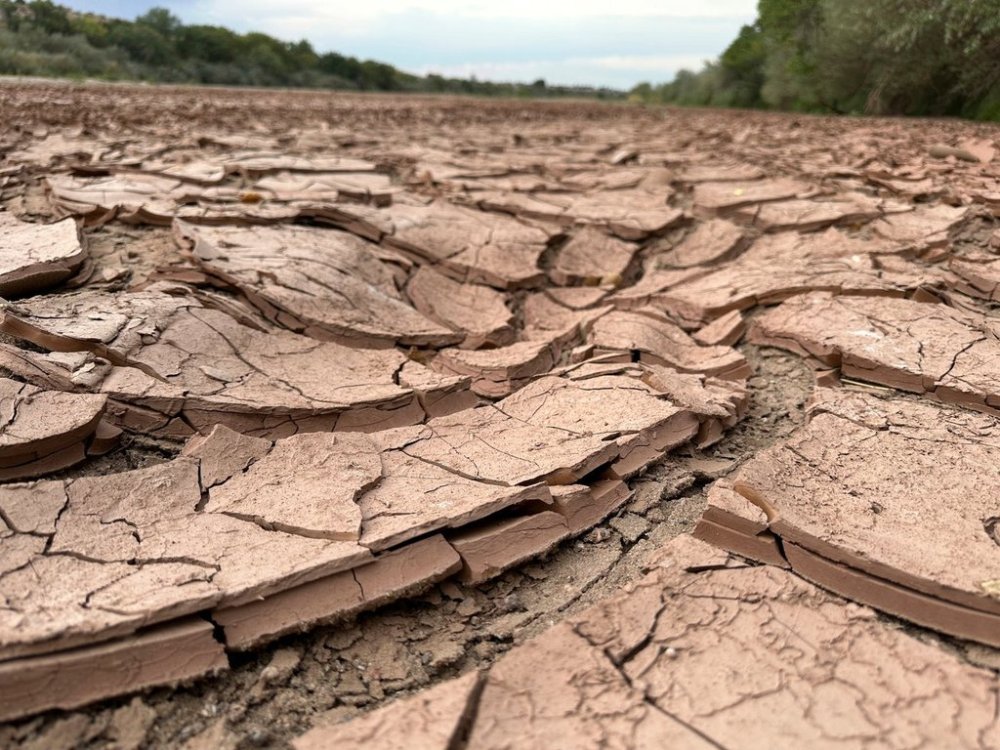
Without rapid and large-scale action on both sides of the border, the researchers warn that unsustainable use threatens water security for millions of people who rely on the binational basin. They say more prevalent drying along the Rio Grande and persistent shortages could have catastrophic consequences for farmers, cities and ecosystems.
The study done by World Wildlife Fund, Sustainable Waters and a team of university researchers provides a full accounting of the consumptive uses as well as evaporation and other losses within the Rio Grande-Bravo basin. It helps to paint the most complete — and most alarming — picture yet of why the river system is in trouble.
Unsustainable
The basin provides drinking water to 15 million people in the U.S. and Mexico and irrigates nearly 2 million acres of cropland in the two countries.
The research shows only 48% of the water consumed directly or indirectly within the basin is replenished naturally. The other 52% is unsustainable, meaning reservoirs, aquifers and the river itself will be overdrawn.
“That’s a pretty daunting, challenging reality when half of our water isn’t necessarily going to be reliable for the future,” said Brian Richter, president of Sustainable Waters and a senior fellow with the World Wildlife Fund. “So we have to really address that.”
By breaking down the balance sheet, the researchers are hopeful policymakers and regulators can determine where water use can be reduced and how to balance supply with demand.
Warnings of what was to come first cropped up in the late 19th century when irrigation in Colorado’s San Luis Valley began to dry the snowmelt-fed river, resulting in diminished flows as far south as El Paso, Texas. Now, some stretches of the river run dry for months at a time. The Big Bend area and even Albuquerque have seen dry cracked mud replace the river more often in recent years.
Irrigating crops by far is the largest direct use of water in the basin at 87%, according to the study. Meanwhile, losses to evaporation and uptake by vegetation along the river account for more than half of overall consumption in the basin, a factor that can’t be dismissed as reservoir storage shrinks.
Vanishing farms
The irrigation season has become shorter, with canals drying up as early as June in some cases, despite a growing season in the U.S. and Mexico that typically lasts through October.
In central New Mexico, farmers got a boost with summer rains. However, farmers along the Texas portion of the Pecos River and in the Rio Conchos basin of Mexico — both tributaries within the basin — did not receive any surface water supplies.
“A key part of this is really connecting the urban populations to what’s going on out on these farms. These farmers are really struggling. A lot of them are on the brink of bankruptcy,” Richter said, linking water shortages to shrinking farms, smaller profits and less ability to afford labor and equipment.
The analysis found that between 2000-2019, water shortages contributed to the loss of 18% of farmland in the headwaters in Colorado, 36% along the Rio Grande in New Mexico and 49% in the Pecos River tributary in New Mexico and Texas.
With fewer farms, less water went to irrigation in the U.S. However, researchers said irrigation in the Mexican portion of the basin has increased greatly.
The World Wildlife Fund and Sustainable Waters are working with researchers at the University of New Mexico to survey farmers on solutions to the water crisis.
Jason Casuga, the chief engineer and CEO of the Middle Rio Grande Conservancy District, said he is not surprised by the findings and was particularly interested in the data on how much water is lost to riparian areas along the river. He talked about his crews clearing thick walls of thirsty invasive salt cedar trees, describing it as an unnatural ecosystem that stemmed from human efforts to manage the river with levees and reservoirs.
While cities and farmers try to conserve, Casuga said there are few rules placed on consumption by riparian areas.
“We’re willing to accept hundreds and hundreds of acres of invasive species choking out native species. And I’m hoping a study like this will cause people to think and ask those kinds of questions because I think our bosque is worth fighting for. As a culture in New Mexico, agriculture is worth fighting for,” he said.
A raft of solutions
The responses to overuse and depletion are as varied as the jurisdictions through which the river flows, said Enrique Prunes, a co-author of the study and the manager of the World Wildlife Fund’s Rio Grande Program.
He pointed to Colorado, where water managers have threatened to shut off groundwater wells if the aquifer that supports irrigated farms cannot be stabilized. There, farmers who pump groundwater pay fees that are used to incentivize other farmers to fallow their fields.
New Mexico’s fallowing program is voluntary, but changes could be in store if the U.S. Supreme Court signs off on proposed settlements stemming from a long-running dispute with Texas and the federal government over management of the Rio Grande and groundwater use. New Mexico has acknowledged it will have to curb groundwater pumping.
New Mexico is behind in its water deliveries to Texas under an interstate compact, while Mexico owes water to the U.S. under a 1944 binational treaty. Researchers said meeting those obligations won’t get easier.
Prunes said policymakers must also consider the environment when crafting solutions.
“Rebalancing the system also means maintaining those basic functions that the river and the aquifers and the groundwater-dependent ecosystems have,” he said. “And that’s the indicator of resilience to a future of less water.”