US and Taiwan sign $250B trade deal, cutting tariffs on Taiwanese goods

Advertisement

Advertise with us

HONG KONG (AP) — The United States and Taiwan reached a trade deal Thursday that cuts tariffs on Taiwanese goods in exchange for $250 billion in new investments in the U.S. tech industry.

Read this article for free:


or

Already have an account? Log in here »

To continue reading, please subscribe:

Subscribe and receive a limited-edition Free Press branded hat or tote.

Digital Subscription

One year of digital access for only $205*

  • Enjoy unlimited reading on winnipegfreepress.com
  • Read the E-Edition, our digital replica newspaper
  • Access News Break, our award-winning app
  • Play interactive puzzles

*First annual payment billed as $205.00 + GST for one year. This annual subscription will automatically renew at $233.00 + GST every 52 weeks (10% off the regular annual price of $259.35). Offer available to new and qualified returning subscribers only. Cancel any time.

To continue reading, please subscribe:

Add Free Press access to your Brandon Sun subscription for only an additional

$1 for the first 4 weeks*

  • Enjoy unlimited reading on winnipegfreepress.com
  • Read the E-Edition, our digital replica newspaper
  • Access News Break, our award-winning app
  • Play interactive puzzles
Start now

*Your next Brandon Sun subscription payment will increase by $1.00 and you will be charged $17.95 plus GST for four weeks. After four weeks, your payment will increase to $24.95 plus GST every four weeks.

Hey there, time traveller!
This article was published 15/01/2026 (248 days ago), so information in it may no longer be current.

HONG KONG (AP) — The United States and Taiwan reached a trade deal Thursday that cuts tariffs on Taiwanese goods in exchange for $250 billion in new investments in the U.S. tech industry.

The deal is the latest President Donald Trump has struck — such as those with the European Union and Japan — since he unveiled a sweeping tariff plan last April to address trade imbalances. Trump also has a one-year trade truce with China to stabilize ties with the world’s second largest economy.

Trump initially set the tariff at 32% on Taiwanese goods but later changed it to 20%. The new agreement slashes the tariff rate to 15%, the same as levied on other U.S. trading partners in the Asia-Pacific region such as Japan and South Korea.
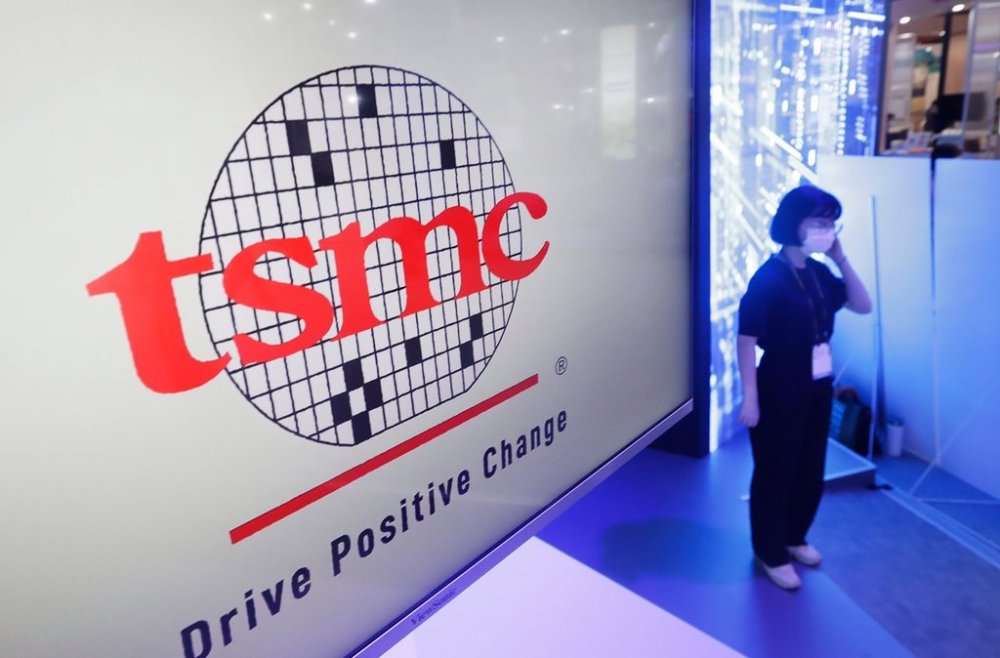
FILE - This photo shows the logo of TSMC (Taiwan Semiconductor Manufacturing Company) during the Taiwan Innotech Expo at the World Trade Center in Taipei, Taiwan, Oct. 14, 2022. (AP Photo/Chiang Ying-ying, File)

In a statement, the U.S. Department of Commerce said the deal with Taiwan would establish an “economic partnership” to create several “world-class” U.S.-based industrial parks in order to help build up domestic production. The department described it as “a historic trade deal that will drive a massive reshoring of America’s semiconductor sector.”

The Taiwanese government affirmed key details in the deal in a statement, saying that the “Taiwan model” will go to the U.S. and help expand the global competitiveness of the island’s technology industry while deepening strategic cooperation between the two nations.

Taiwan’s executive branch said the island’s companies would specifically invest $250 billion in industries such as semiconductors, artificial intelligence applications and energy.

In addition to cutting the tariffs on the island nation, the Commerce Department said it will exempt certain imports such as generic pharmaceuticals and aircraft components from Taiwan. Taiwanese semiconductor producers that invest in the U.S. also will get favorable tariff treatments, including exemptions, the department said.

One day before the deal was announced, Beijing, which claims Taiwan to be part of China, scoffed at it, calling the agreement “an economic plunder” by the U.S. on Taiwan.

TSMC to lead investments

The deal came just when Taiwan-based TSMC, the world’s largest computer chipmaker, on Thursday announced plans to increase its capital spending by as much as nearly 40% this year after it reported a 35% jump in its net profit for the latest quarter thanks to the boom in artificial intelligence.

Taiwan Semiconductor Manufacturing Corp., a major supplier to companies including Nvidia and Apple, reported a net profit of 506 billion new Taiwan dollars ($16 billion) for the October-December quarter, a 35% surge from a year earlier, better than analysts’ estimates.

TSMC said Thursday that its revenue in the last quarter increased 21% from a year earlier to more than 1.046 trillion new Taiwan dollars ($33 billion).

TSMC said it plans to boost its capital expenditure budget to $52 billion-$56 billion for 2026, up from about $40 billion last year.

The company’s Taiwan-listed shares have jumped 59% over the past 12 months, reflecting its strong position in the AI-driven market.

Other tech giants including Microsoft, Meta and Alphabet are spending big on investments in AI infrastructure.

“We expect our business to be supported by continuous strong demand for our leading edge process technologies,” Wendell Huang, TSMC’s chief financial officer, said in a conference call. He said spending would be “significantly higher” in the next three years.

Asked about concerns over an AI bubble — as critics point to ballooning investments which might not pay off — TSMC chairman and CEO C. C. Wei said he is confident that the growing demand from customers is real.

“I’m also very nervous about it, you bet,” said Wei. “AI is real. Not only real, it’s starting to grow into our daily life.”

With a market capitalization — total outstanding shares times share price — of approximately $1.4 trillion, TSMC is currently more valuable than Samsung Electronics and Alibaba. It is Asia’s most valuable listed company.

Alphabet, Google’s parent, passed the $4 trillion market capitalization mark this month, the fourth Big Tech company to hit that mark after Nvidia, Apple and Microsoft, although worries about an AI bubble had led to occasional sell-offs.

TSMC has pledged around $165 billion of investments in the U.S. and said Thursday it’s speeding up construction of new plants in Arizona, looking to create a fabrication plant cluster and meet strong demand from clients.

A primary beneficiary of AI, given its dominant share in cutting-edge chip manufacturing, TSMC’s outlook remains optimistic, analysts from Morningstar said in a recent report.

“It (TSMC) is immune from market share shifts as almost every AI company relies on TSMC to make chips ranging from application-specific integrated circuits to GPUs (graphics processing units),” the Morningstar analysts said. “This reliance translates into strong pricing power.”

TSMC also has strong buffers with a “robust backlog from deep-pocketed customers,” they said, even if there are any short-term drops in demand.

Tang reported from Washington.

Report Error Submit a Tip

More Stories

Grieving child builds backyard rocket ship

Harriet Zaidman 4 minute read 2:01 AM CDT

I Built a Rocket Ship (Kids Can Press, 32 pages, hardcover, $22) by Winnipegger Anna Lazowski is a tender story for children ages 4-8 about a little girl trying to make sense of her mother’s death. The child engages in conversation with her late mom, agreeing and disagreeing about things said as she carries objects (and of course, the cat) to the backyard. There, she is building a rocket ship she will pilot into the skies to find her mom again.

Jennica Lounsbury’s varied perspectives show the range of emotions the little girl experiences.

● ● ●

Northwoods Lullaby by Mary Casanova (University of Minnesota Press, 32 pages, hardover, $25) is a bedtime book for readers up to age eight, perfect to bring a busy, happy day to a close. Just like children who are listening to adults reading the book, all the animal babies are being tucked into their nests and burrows by loving parents: “Thump and scamper,/nimble clover./ Soon it’s time to rest. Baby loon/ nestles in/as Papa floats along.”

Canada-U.S. trade relationship is broken, but the damage can — and will — be repaired

Tom Brodbeck 5 minute read Preview

Canada-U.S. trade relationship is broken, but the damage can — and will — be repaired

Tom Brodbeck 5 minute read Thursday, Sep. 17, 2026

Canada needs to get serious about diversifying its trade beyond the United States. But at the same time, Canadians should expect relations with the U.S. to normalize after Donald Trump is no longer in the White House.

For generations, Canada-U.S. trade was considered almost a fact of geography. The two countries share the world’s longest undefended border, deeply integrated supply chains and a century of commercial relationships.

Canadian manufacturers depend on American customers. American manufacturers depend on Canadian suppliers. Energy, agriculture, automotive production and countless other industries operate across the border as though it barely exists.

That isn’t going to change dramatically, even in the midst of a bitter trade war unleashed by the U.S. president.

Read
Thursday, Sep. 17, 2026

Family account spiced with magic realism, geopolitical intrigue and a ghost story

Reviewed by Zilla Jones 4 minute read Preview

Family account spiced with magic realism, geopolitical intrigue and a ghost story

Reviewed by Zilla Jones 4 minute read 2:01 AM CDT

Tom Lin’s second novel Babylon, South Dakota moves beyond a historical account of an immigrant family’s struggle, delightfully blending and bending genres.

Lin is a Chinese-born novelist whose family emigrated to the U.S. when he was four years old. His debut novel, The Thousand Crimes of Ming Tsu, won the 2022 Andrew Carnegie Medal for Excellence in Fiction, making him the youngest ever recipient of that award. He earned a PhD in English from the University of California Davis and is currently an assistant professor of English and creative writing at the University of Iowa.

Babylon, South Dakota takes place in an unspecified time period that can be understood to be during the Mao era — likely the 1950s or ’60s. A young Chinese couple, the Hsuis, immigrate to the rural community that gives the book its title. They take the names Saul and Mei and settle on a 160-acre homestead left to them by a distant relative.

Saul’s dream is to breed and sell chrysanthemums from seeds he brought from China, while Mei wants to raise livestock. They speak no English, know nothing of life in the United States, are unprepared for the harshness of winter and the isolation of the farm and bring nothing with them except some gold, which Mei hides around the house for emergencies. Their only link to the outside world is a discarded and marginally functioning TV set, which Saul rescues and rigs up.

Read
2:01 AM CDT

Desperate Poilievre wants Canadians to believe the sky is falling when it’s just cloudy outside

Tom Brodbeck 5 minute read Preview

Desperate Poilievre wants Canadians to believe the sky is falling when it’s just cloudy outside

Tom Brodbeck 5 minute read Yesterday at 12:47 PM CDT

Pierre Poilievre has a problem.

Canadians just don’t seem to be paying much attention to him anymore.

So, naturally, the Conservative Opposition leader has decided to turn up the volume.

At a recent party caucus retreat in Penticton, B.C., Poilievre delivered the familiar message: Canada is in trouble, Canadians are hurting and the Liberal government is making everything worse.

Read
Yesterday at 12:47 PM CDT

Kinew delivered what most of us wanted; now we’ll have to deal with the consequences

Dan Lett 5 minute read Preview

Kinew delivered what most of us wanted; now we’ll have to deal with the consequences

Dan Lett 5 minute read Updated: Yesterday at 8:43 AM CDT

Premier Wab Kinew has decided to adopt permanent daylight savings time, which means a permanent end to the spring forward, fall back tradition of adjusting our clocks. And absolutely no one is surprised.

Read
Updated: Yesterday at 8:43 AM CDT

American Hostage stars recall warmth of Winnipeggers during brutal winter

Randall King 7 minute read Preview

American Hostage stars recall warmth of Winnipeggers during brutal winter

Randall King 7 minute read Yesterday at 6:13 PM CDT

TORONTO — When you stream the eight-part series American Hostage, a sense of familiarity may strike.

That’s because the show was shot in Winnipeg — especially in the Exchange District — from November of last year to the beginning of February, with Winnipeg portraying Indianapolis circa 1977.

The whole world seemed to be watching that midwest American city that year as a hostage crisis unfolded involving one Tony Kiritsis, an angry man who goes ballistic when a mortgage brokerage was poised to foreclose on property he had dreamed of developing into a shopping centre.

Kiritsis kidnapped his mortgage broker, Richard Hall, wiring a shotgun to the back of his head, and demanded a public airing of his grievances, with the reluctant help of popular radio broadcaster Fred Heckman.

Read
Yesterday at 6:13 PM CDT