Shrinking North American bird population is getting worse faster. Experts blame agriculture, warming
Advertisement
Read this article for free:
or
Already have an account? Log in here »
To continue reading, please subscribe:

Digital Subscription
One year of digital access for only $205*
- Enjoy unlimited reading on winnipegfreepress.com
- Read the E-Edition, our digital replica newspaper
- Access News Break, our award-winning app
- Play interactive puzzles
*First annual payment billed as $205.00 + GST for one year. This annual subscription will automatically renew at $233.00 + GST every 52 weeks (10% off the regular annual price of $259.35). Offer available to new and qualified returning subscribers only. Cancel any time.
To continue reading, please subscribe:
Add Free Press access to your Brandon Sun subscription for only an additional
$1 for the first 4 weeks*
- Enjoy unlimited reading on winnipegfreepress.com
- Read the E-Edition, our digital replica newspaper
- Access News Break, our award-winning app
- Play interactive puzzles
*Your next Brandon Sun subscription payment will increase by $1.00 and you will be charged $17.95 plus GST for four weeks. After four weeks, your payment will increase to $24.95 plus GST every four weeks.
Read unlimited articles for free today:
or
Already have an account? Log in here »
Hey there, time traveller!
This article was published 26/02/2026 (202 days ago), so information in it may no longer be current.
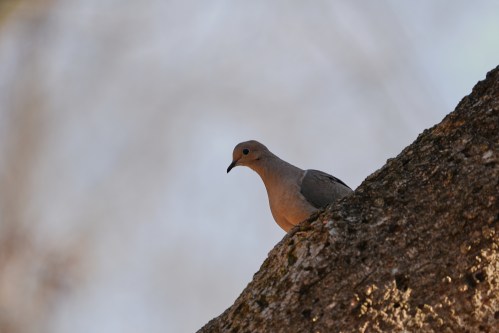
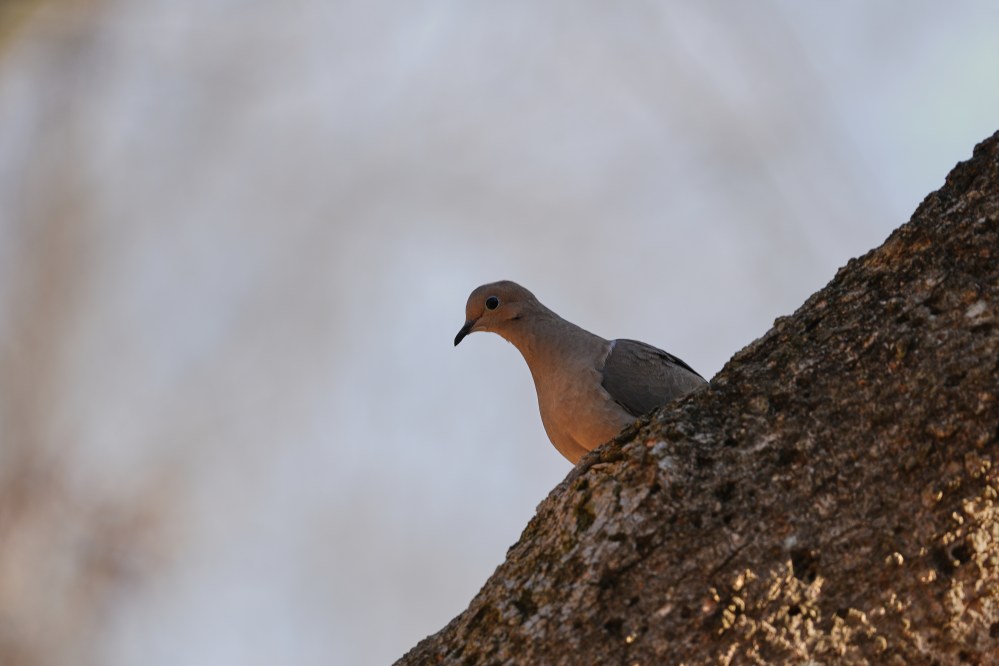
WASHINGTON (AP) — Billions fewer birds are flying through North American skies than decades ago and their population is shrinking ever faster, mostly due to a combination of intensive agriculture and warming temperatures, a new study found.
Nearly half of the 261 species studied showed big enough losses in numbers to be statistically significant and more than half of those declining are seeing their losses accelerate since 1987, according to Thursday’s journal Science. The study is the first to look at more than the total bird population by examining the trends in their decrease, where they are shrinking the most and what the declines are connected to.
“Not only are we losing birds, we are losing them faster and faster from year to year,” said study co-author Marta Jarzyna, an ecologist at Ohio State University. “Except for forest birds, almost every group is doing poorly. So we need to ask ourselves a question. How do we protect these groups of birds?”
The only consolation is that the birds that are shrinking in numbers the fastest are species — such as the European starling, American crow, grackle and house sparrow — with large enough populations that they aren’t yet at risk of going extinct, said study lead author Francois Leroy, also an Ohio State ecologist.
“The thing is that species extinction, they start with a decline in abundance,” Leroy said, adding that “the decline is somehow maybe giving a preview of what it could lead to in terms of species extinction.”
Cornell University conservation scientist Kenneth Rosenberg, who wasn’t part of the study, said the species declining fastest in the new research “are often considered pests or ‘trash birds,’ but if our environment cannot support healthy populations of these extreme generalists and extremely adaptable species that are tolerant of humans, then that is a very strong indicator that the environment is also toxic to humans and all other life.”
A 2019 study by Rosenberg of the same bird species found North America had 3 billion fewer birds than in 1970, but didn’t look at changes in the rate of loss or causes.
Biggest bird losses in areas warming most
The biggest locations for acceleration of bird loss were in the Mid-Atlantic, the Midwest and California, the study found. And geography proved important when Leroy and Jarzyna looked for reasons why so many bird species are shrinking ever faster.
When it came to population declines — not the acceleration — the scientists noticed bigger losses further south. When they did a deeper analysis they statistically connected those losses to warmer temperatures from human-caused climate change.
“In regions where temperatures increase the most, we are seeing strongest declines in populations,” Jarzyna said. “On the other hand, the acceleration of those declines, that’s mostly driven by agricultural practices.”
Farmland issues speed up bird declines
The scientists found statistical correlations between speeded-up decline rates and high fertilizer use, high pesticide use and amount of cropland, Leroy said. He said they couldn’t say any of those caused the acceleration of losses, but it indicates agriculture in general is a factor.
“The stronger the agriculture, the faster we will lose birds,” Leroy said.
Jarzyna said there is a “strong interaction” between climate change and agriculture in their effect on bird populations.
“We found that agricultural intensification causes stronger accelerations of decline in regions where climate warmed the most,” Jarzyna said.
McGill University wildlife biologist David Bird, who wasn’t part of the study, said it was done well and that its conclusions made sense. With a growing human population, agriculture practices are intensified, more bird habitats are being converted to cropland, modern machinery often grind up nests and eggs and single crop plantings offer less possibilities for birds to find food and nests, said Bird, the editor of “Birds of Canada.”
“The biggest impact of agricultural intensity though is our war on insects. Numerous recent studies have shown that insect populations in many places throughout the world, including the U.S., have crashed by well over 40 percent,” Bird said in an email. “Many of the birds in this new study showing population declines depend heavily on insects for food.”
Birds do a lot for humans
This study is both “alarming” and “sobering” because of the sheer numbers of losses and the patterns in those accelerating declines, said Richard Gregory, head of monitoring conservation science at University College London. He was not part of this research.
The paper shows that people need to change the way they live to reduce human-caused warming, reduce agricultural intensity, monoculture of crops and broad application of chemicals, said Cornell University ornithologist Andrew Farnsworth, who wasn’t part of the study.
“Here is why this study is especially important. Birds do a lot for humans,” McGill biologist Bird said in an email. ”They feed us, clothe us, eat pests, pollinate our plants and crops, and warn us about impending environmental disasters. With their songs, colors, and variety, birds enrich our lives… and recent studies show that their immediate presence actually increases our well-being and happiness and can even prolong our lives! To me, a world without birds is simply unfathomable.”
___
The Associated Press’ climate and environmental coverage receives financial support from multiple private foundations. AP is solely responsible for all content. Find AP’s standards for working with philanthropies, a list of supporters and funded coverage areas at AP.org.