Bell Canada to build large data centre outside Regina

Advertisement

Advertise with us

REGINA - The parent company of Bell Canada is planning to build a new data centre outside Regina that is billed to be a major contribution to Canada’s artificial intelligence sovereignty. 

Read this article for free:


or

Already have an account? Log in here »

To continue reading, please subscribe:

Subscribe and receive a limited-edition Free Press branded hat or tote.

Digital Subscription

One year of digital access for only $205*

  • Enjoy unlimited reading on winnipegfreepress.com
  • Read the E-Edition, our digital replica newspaper
  • Access News Break, our award-winning app
  • Play interactive puzzles

*First annual payment billed as $205.00 + GST for one year. This annual subscription will automatically renew at $233.00 + GST every 52 weeks (10% off the regular annual price of $259.35). Offer available to new and qualified returning subscribers only. Cancel any time.

To continue reading, please subscribe:

Add Free Press access to your Brandon Sun subscription for only an additional

$1 for the first 4 weeks*

  • Enjoy unlimited reading on winnipegfreepress.com
  • Read the E-Edition, our digital replica newspaper
  • Access News Break, our award-winning app
  • Play interactive puzzles
Start now

*Your next Brandon Sun subscription payment will increase by $1.00 and you will be charged $17.95 plus GST for four weeks. After four weeks, your payment will increase to $24.95 plus GST every four weeks.

Hey there, time traveller!
This article was published 16/03/2026 (198 days ago), so information in it may no longer be current.

REGINA – The parent company of Bell Canada is planning to build a new data centre outside Regina that is billed to be a major contribution to Canada’s artificial intelligence sovereignty. 

BCE Inc. is to build the 300-megawatt data centre in the rural municipality of Sherwood, Sask., with construction slated to begin this spring.

The facility is projected to generate economic value of up to $12 billion for the province, including short- and long-term job creation. Its construction is expected to support at least 800 trades and engineering jobs, with a minimum of 80 full-time roles created once it’s fully operational.

Bell signage is seen at BCE Inc., headquarters in Montreal on Wednesday, May 7, 2025. THE CANADIAN PRESS/Christopher Katsarov

The facility is expected to come online in stages, with the first expected to go live during the first half of 2027.

The company has also partnered with the Crown corporation SaskTel. The two are to act as go-to-market partners, offering AI-powered products to SaskTel customers.

Premier Scott Moe said more than 1,600 jobs are to be associated to the project. 

“This facility will be the largest of the kind operating in our nation,” he said Monday at a Regina news conference with BCE chief executive Mirko Bibic. 

He said Saskatchewan has enough in its power grid to build and operate the data centre, adding that more would be available as the province moves toward nuclear technology. 

“We need to work with the federal government and industry on ensuring that power that is being built for tomorrow and years ahead is low-carbon power,” Moe said.

“I would suggest there is no more reliable source of low-carbon power than nuclear power, which makes perfect sense in a province where all the Canadian uranium comes from as well.”

He said the facility would have far-reaching benefits in Canada, as more industries rely on AI technology to improve efficiency.

“You need to have access to data storage and these centres,” Moe said. “I would suggest we also have the responsibility to ensure that we are building this data sovereignty in Canada as well.”

Bibic said data centres and compute hardware that power AI are becoming critical infrastructure for the economy. 

“It’s going to be a project that’s going to make a real difference in delivering the infrastructure that Saskatchewan needs and that Canada needs to win in the global AI economy,” he said.

“Canadian governments, researchers and enterprises will be able to access that top tier globally leading compute models, software and technology while keeping their data in Canada managed by Canadians under Canadian laws.”

For the project, Bibic said BCE is to bring in $10 billion worth of compute hardware from Cerebras and CoreWeave, both U.S. companies. 

He said the project will use a closed-loop cooling system and won’t draw from a local water source.

Bibic added that discussions are underway with nearby university campuses and George Gordon First Nation to reuse the access heat generated by the facility for their own energy needs.

This report by The Canadian Press was first published March 16, 2026.

Companies in this story: (TSX: BCE)

— By Daniela Germano in Edmonton
Report Error Submit a Tip

More Stories

Port of Churchill signs agreement with Dutch port

Aaron Epp 2 minute read Preview

Port of Churchill signs agreement with Dutch port

Aaron Epp 2 minute read Yesterday at 4:40 PM CDT

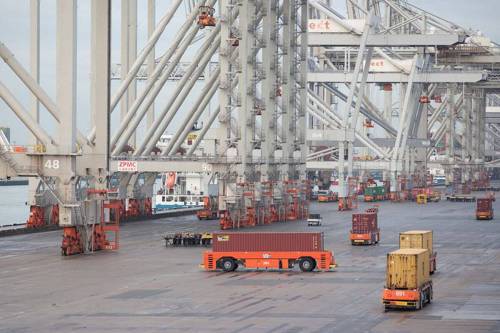
Arctic Gateway Group, operator of the Port of Churchill, has signed an agreement with the Port of Rotterdam in the Netherlands to attract business and strengthen supply chains linking Western Canada and Europe.

The agreement enables the two ports to work together to develop new trade in critical minerals and energy products, connect Canadian producers with European buyers, and identify opportunities to improve the supply chain from Western Canadian resource projects through Churchill and into European markets.

The Port of Rotterdam is Europe’s largest port and home to more than 3,000 businesses across its industrial complex, serving as a major gateway for critical raw materials and energy.

Meanwhile, the Port of Churchill has been identified as a transformative national strategy for Canada and is emerging as a northern trade corridor connecting Western Canada’s resources to global markets.

Read
Yesterday at 4:40 PM CDT

What does the PC stand for in party’s name? Seems to be Pretty Confused

Tom Brodbeck 5 minute read Preview

What does the PC stand for in party’s name? Seems to be Pretty Confused

Tom Brodbeck 5 minute read Yesterday at 1:11 PM CDT

It should have been obvious from the beginning that the Manitoba Progressive Conservative party was going to have trouble holding itself together under Obby Khan.

Read
Yesterday at 1:11 PM CDT

Bell Canada to build large data centre outside Regina

The Canadian Press 3 minute read Preview

Bell Canada to build large data centre outside Regina

The Canadian Press 3 minute read Tuesday, Mar. 17, 2026

REGINA - The parent company of Bell Canada is planning to build a new data centre outside Regina that is billed to be a major contribution to Canada’s artificial intelligence sovereignty. 

BCE Inc. is to build the 300-megawatt data centre in the rural municipality of Sherwood, Sask., with construction slated to begin this spring.

The facility is projected to generate economic value of up to $12 billion for the province, including short- and long-term job creation. Its construction is expected to support at least 800 trades and engineering jobs, with a minimum of 80 full-time roles created once it's fully operational.

The facility is expected to come online in stages, with the first expected to go live during the first half of 2027.

Read
Tuesday, Mar. 17, 2026

Puzzles Palace

1 minute read Monday, Jul. 27, 2026

To solve our puzzles, please subscribe with this special offer: |

Hydro reports $446-M loss in 2025-26, points to fourth drought year in past five

Scott Billeck 3 minute read Preview

Hydro reports $446-M loss in 2025-26, points to fourth drought year in past five

Scott Billeck 3 minute read Yesterday at 6:38 PM CDT

Manitoba Hydro posted a $446-million loss in 2025-26, as drought conditions slashed hydroelectric generation, forcing the Crown corporation to buy more power while leaving it with less electricity to sell outside the province.

The loss was $666 million worse than the $220-million profit Hydro had budgeted. The utility posted a $63-million loss the previous year, according to the utility’s annual report released Tuesday.

Hydro said the 2025-26 fiscal year, which ended on March 31, marked its fourth low-water year in the past five years, among the worst stretches of water-flow conditions in its recorded history.

Hydroelectric generation fell 23 per cent to 24 billion kilowatt-hours from 31 billion the previous year, leaving Hydro a net importer of electricity.

Read
Yesterday at 6:38 PM CDT

Canada resorting to its tried and true playbook

Niigaan Sinclair 5 minute read Preview

Canada resorting to its tried and true playbook

Niigaan Sinclair 5 minute read Monday, Sep. 28, 2026

In 1846, Britain faced an emergency influenced by the Irish famine, so leaders repealed the country’s “Corn Laws” and restrictions on imported food and grain, transitioning to a system of free trade.

This created a crisis in the then Province of Canada, which had relied on British “preferential” status to prop up its agricultural and resource industries.

As a result, Canada looked south for new markets and eventually negotiated a free trade agreement with the United States.

This required land to be acquired and converted for industrial use quickly, so Canada quickly dispatched Commissioner William Robinson to negotiate with Indigenous communities along Lake Huron and Lake Superior for land.

Read
Monday, Sep. 28, 2026