No radiation leak after ‘contamination’ events at Africa’s only nuclear plant, regulator says
Advertisement
Read this article for free:
or
Already have an account? Log in here »
To continue reading, please subscribe:

Digital Subscription
One year of digital access for only $205*
- Enjoy unlimited reading on winnipegfreepress.com
- Read the E-Edition, our digital replica newspaper
- Access News Break, our award-winning app
- Play interactive puzzles
*First annual payment billed as $205.00 + GST for one year. This annual subscription will automatically renew at $233.00 + GST every 52 weeks (10% off the regular annual price of $259.35). Offer available to new and qualified returning subscribers only. Cancel any time.
To continue reading, please subscribe:
Add Free Press access to your Brandon Sun subscription for only an additional
$1 for the first 4 weeks*
- Enjoy unlimited reading on winnipegfreepress.com
- Read the E-Edition, our digital replica newspaper
- Access News Break, our award-winning app
- Play interactive puzzles
*Your next Brandon Sun subscription payment will increase by $1.00 and you will be charged $17.95 plus GST for four weeks. After four weeks, your payment will increase to $24.95 plus GST every four weeks.
Read unlimited articles for free today:
or
Already have an account? Log in here »
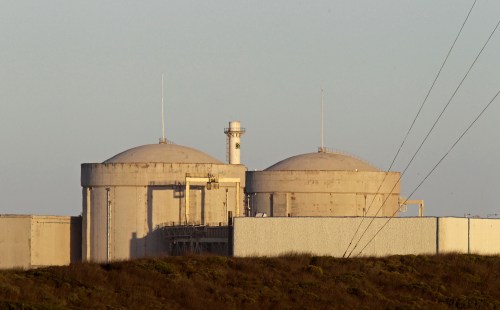
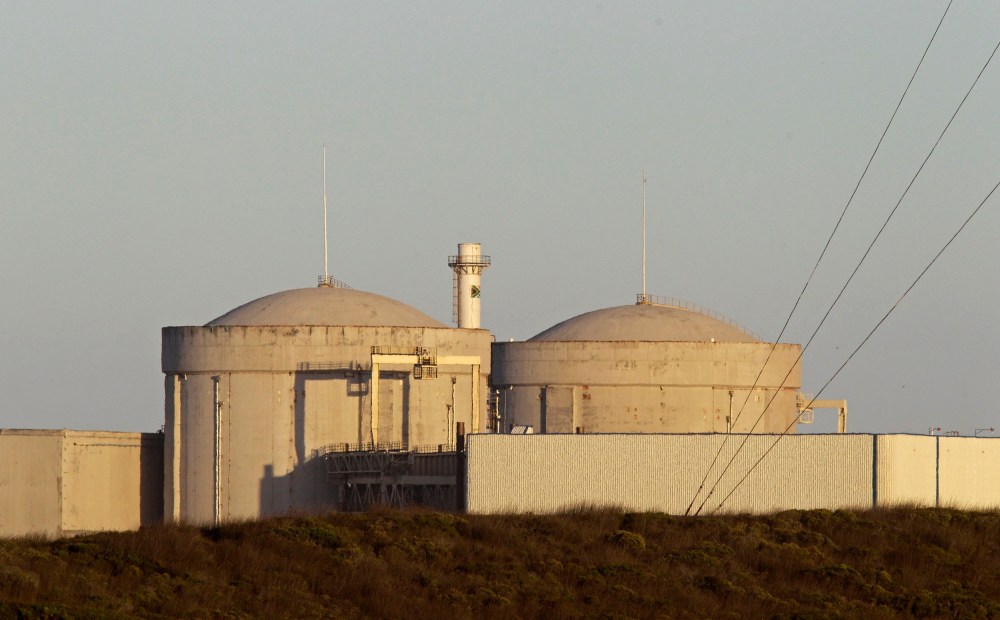
CAPE TOWN, South Africa (AP) — South Africa’s nuclear regulator said Thursday that no radioactive material leaked into the environment during three recent “contamination” events inside Africa’s only nuclear power station.
The incidents involved “elevated airborne radioactive contamination” inside the Koeberg Power Station, on South Africa’s west coast, when there was a loss of power to ventilation units during maintenance work, the National Nuclear Regulator said, adding there was no danger to the public.
It said the three separate contamination events on June 30, July 2 and July 7 were contained inside the station.
Workers inside the power station who may have been exposed were screened and recorded radioactive contamination below the radioactivity a person is exposed to when they have a dental X-ray, the NNR said.
The regulator said that while it was conducting further inspections the recent events “did not meet the criteria for classification as a nuclear or radiological incident or emergency and did not result in any off-site radiological consequences.”
The Koeberg plant is located around 40 kilometers (25 miles) north of South Africa’s second biggest city, Cape Town. It is Africa’s only commercial nuclear power station and was commissioned in the 1980s during apartheid. It has two reactors which generate around 5% of South Africa’s electricity, and is operated by the national electricity company, Eskom.
Its reactors were recently granted 20-year life extensions, clearing them to be operational until after 2040.

South Africa has plans to expend its commercial nuclear capability with new stations to support its unreliable and polluting energy supply, which is struggling to provide for a growing population and heavily based on burning coal.
Other countries are also turning more towards nuclear power to meet skyrocketing energy demands despite long-held safety fears from opponents of nuclear power citing disasters like Chernobyl and, more recently, Fukushima in Japan.
Several other African nations are advancing their own commercial nuclear plans, including Egypt, which is building its first nuclear power station with four large Russian reactors that it hopes will be operational around 2030 and generate around 10% of the country’s electricity, according to the World Nuclear Association.
___
AP Africa news: https://apnews.com/hub/africa