Pit found by Quebecer confirmed to be a 390-million-years-old meteorite impact crater
Advertisement
Read this article for free:
or
Already have an account? Log in here »
To continue reading, please subscribe:

Digital Subscription
One year of digital access for only $205*
- Enjoy unlimited reading on winnipegfreepress.com
- Read the E-Edition, our digital replica newspaper
- Access News Break, our award-winning app
- Play interactive puzzles
*First annual payment billed as $205.00 + GST for one year. This annual subscription will automatically renew at $233.00 + GST every 52 weeks (10% off the regular annual price of $259.35). Offer available to new and qualified returning subscribers only. Cancel any time.
To continue reading, please subscribe:
Add Free Press access to your Brandon Sun subscription for only an additional
$1 for the first 4 weeks*
- Enjoy unlimited reading on winnipegfreepress.com
- Read the E-Edition, our digital replica newspaper
- Access News Break, our award-winning app
- Play interactive puzzles
*Your next Brandon Sun subscription payment will increase by $1.00 and you will be charged $17.95 plus GST for four weeks. After four weeks, your payment will increase to $24.95 plus GST every four weeks.
Read unlimited articles for free today:
or
Already have an account? Log in here »
MONTREAL – In late 2023, amateur astronomer Joël Lapointe was using Google Maps to plan a summer road trip when he stumbled upon a strange looking pit.
Now, that chance discovery has become something much more as researchers have confirmed it to be the remnant of a meteorite impact 390 million years ago.
“For an amateur astronomer who loves to connect with space and loves meteorites, it was just amazing,” said Lapointe in an interview.
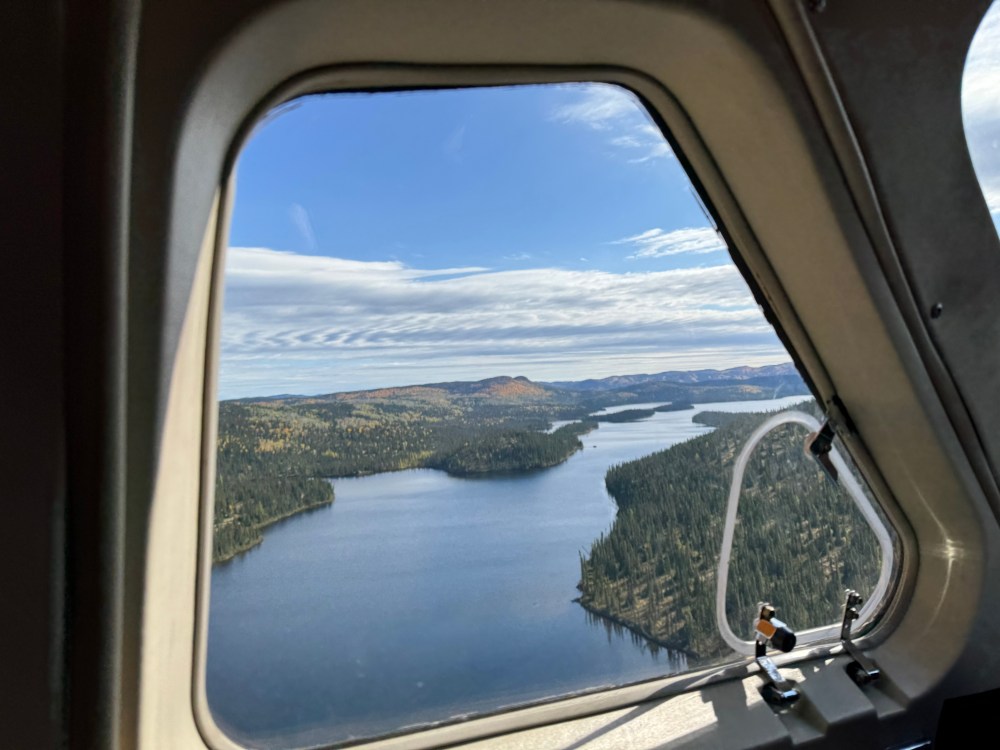
The team of researchers who followed up on the Quebec man’s discovery will present their findings at the Annual Meeting of the Meteoritical Society, in Germany, less than a month from now.
When he first spotted the circular pit, located 100 kilometres north of the town of Magpie, Que., Lapointe had been exploring the map of forest paths in the area. He recalls not believing at first that he could have made an important discovery.
“I told myself, ‘You haven’t discovered anything, Joël, it’s not possible, they must already know about this,’” he said.
But Lapointe, who says his love of space dates back to watching the stars at his grandmother’s house as a child, could not shake the thought that this pit might be something more. When he didn’t find it in crater databases, he decided to reach out to experts.
It took him a few tries to find an academic who wanted to look into his finding, but he finally reached a French research centre that decided to dig into his theory.
“It was exciting, I wanted to have the latest news as soon as possible — but I didn’t bother them, because they’re professionals,” recalled Lapointe.
When Gordon Osinski, professor at the department of earth sciences at Western University in London, Ont., heard about this potential crater from his French colleagues, he was skeptical. Osinski runs the website Impact Earth, where people can report potential impact craters, and he says he gets emails about a lot of “discoveries” that don’t pan out.
But in this case, the circular topographical features of the pit and early analysis of rock samples piqued his interest, and he eventually co-led an expedition to the crater in 2025.
He flew to the location by float plane with a small team, and they discovered rugged terrain that made field work challenging.
“We didn’t really know what to expect, where we could land to get to shore and where we could set up camp. So it was going into the unknown, which I enjoy — a bit of an adventure,” said Osinski.
To prove that this was a meteorite impact crater, the researchers would either need to find the projectile — the meteorite — or signs that nearby rock had reacted to the intense pressure of an impact. The former was unlikely, Osinski explains, as pieces of meteorites are usually found in smaller craters, and this one was 25 kilometres in diameter.
But the researchers quickly found evidence of the latter. The team discovered examples of shattercones and surprisingly well-preserved impact melt rock, which are both indicative of a meteorite impact.
“We almost had a bet — how old do you think the crater is?” said Osinski, adding that he initially thought the crater would be 38 to 200 million years old. “It turns out to be way older, so that was a surprise.”
According to Osinski, people discover one or two impact craters every year around the world, with the most recent ones being smaller craters.
“The last crater, period, to be discovered in Canada was (in) 2010. So it’s been 16 years since we’ve had any new creators reported in Canada, so it’s kind of fun to add to the list,” he said.
After discussions with the Ekuanitshit Innu council, the crater was named Uhackatik.

The team sent Lapointe a few details and photos from their expedition and confirmed that they had found signs the pit was indeed a meteorite crater. He recalls having butterflies in his stomach and being sworn to secrecy until the researchers published the first details of the discovery.
“At that point, I was over the moon, because it was real,” he said.
Lapointe was at work when the researchers gave him the okay to finally speak about the discovery. He immediately told one of his coworkers and fellow amateur astronomer, and they marveled together at the immensity of a crater dating back 390 million years, to a period before dinosaurs, mammals and long before humans.
“At that time, life on Earth was still in its infancy. There were primitive amphibians — it takes us back to a completely different era. It’s pretty impressive that we still have traces (of that period) after all this time,” he said.
This report by The Canadian Press was first published July 19, 2026.
Related Articles
2,000 volunteers join a painstaking effort to restore massive skeleton of prehistoric predator
Advertisement Advertise With Us
Advertisement Advertise With Us