Private mission to rescue NASA’s aging telescope runs into its own trouble
Advertisement
Read this article for free:
or
Already have an account? Log in here »
To continue reading, please subscribe:

Digital Subscription
One year of digital access for only $205*
- Enjoy unlimited reading on winnipegfreepress.com
- Read the E-Edition, our digital replica newspaper
- Access News Break, our award-winning app
- Play interactive puzzles
*First annual payment billed as $205.00 + GST for one year. This annual subscription will automatically renew at $233.00 + GST every 52 weeks (10% off the regular annual price of $259.35). Offer available to new and qualified returning subscribers only. Cancel any time.
To continue reading, please subscribe:
Add Free Press access to your Brandon Sun subscription for only an additional
$1 for the first 4 weeks*
- Enjoy unlimited reading on winnipegfreepress.com
- Read the E-Edition, our digital replica newspaper
- Access News Break, our award-winning app
- Play interactive puzzles
*Your next Brandon Sun subscription payment will increase by $1.00 and you will be charged $17.95 plus GST for four weeks. After four weeks, your payment will increase to $24.95 plus GST every four weeks.
Read unlimited articles for free today:
or
Already have an account? Log in here »
CAPE CANAVERAL, Fla. (AP) — The spacecraft rushing to the rescue of an aging and sinking NASA telescope has run into its own problem.
Katalyst Space Technologies said Tuesday that its Link satellite is experiencing thruster problems and has gone into an uncontrollable spin that is disrupting communication.
The trouble struck over the weekend, three weeks after the three-armed robotic spacecraft blasted into orbit.
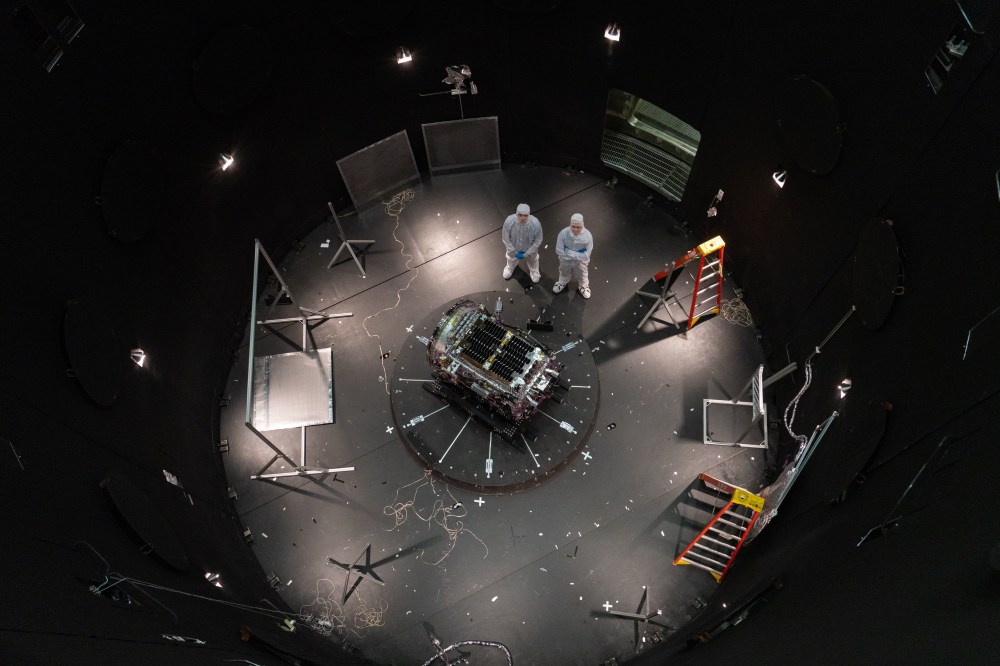
The startup company said it’s working nonstop to get Link back in action so it can capture Swift and boost the telescope to a higher orbit. Swift will crash back to Earth this fall without help. NASA is paying $30 million for the rescue effort, which was thrown together in under a year.
Launched in 2004, Swift is descending faster than expected because of recent solar activity. It needs a lift as soon as possible in order to continue scanning the universe for some of the biggest explosions, including gamma ray bursts and exploded stars. Scientific observations are on hold until then.
Neither Katalyst nor NASA is giving up hope. All of Link’s other major subsystems appear to be doing fine, according to the company.
“The mission remains active and we continue to believe that with these changes, Link has a viable path to rendezvous with Swift,” Katalyst said in a statement.
___
The Associated Press Health and Science Department receives support from the Howard Hughes Medical Institute’s Department of Science Education and the Robert Wood Johnson Foundation. The AP is solely responsible for all content.