Elon Musk’s space company to build new rocket launching site in Louisiana
Advertisement
Read this article for free:
or
Already have an account? Log in here »
To continue reading, please subscribe:

Digital Subscription
One year of digital access for only $205*
- Enjoy unlimited reading on winnipegfreepress.com
- Read the E-Edition, our digital replica newspaper
- Access News Break, our award-winning app
- Play interactive puzzles
*First annual payment billed as $205.00 + GST for one year. This annual subscription will automatically renew at $233.00 + GST every 52 weeks (10% off the regular annual price of $259.35). Offer available to new and qualified returning subscribers only. Cancel any time.
To continue reading, please subscribe:
Add Free Press access to your Brandon Sun subscription for only an additional
$1 for the first 4 weeks*
- Enjoy unlimited reading on winnipegfreepress.com
- Read the E-Edition, our digital replica newspaper
- Access News Break, our award-winning app
- Play interactive puzzles
*Your next Brandon Sun subscription payment will increase by $1.00 and you will be charged $17.95 plus GST for four weeks. After four weeks, your payment will increase to $24.95 plus GST every four weeks.
Read unlimited articles for free today:
or
Already have an account? Log in here »
ABBEVILLE, La. (AP) — Elon Musk’s space company plans to spend $100 billion to build a massive new spaceport in Louisiana to launch rockets, state officials and the company announced Tuesday.
Louisiana Gov. Jeff Landry said the deal was a big win for the state and country, likening the impact of the new launch site to the 1803 Louisiana Purchase.
“Today is nothing short of a transformational moment,” he told lawmakers and others at a special event to celebrate the deal.
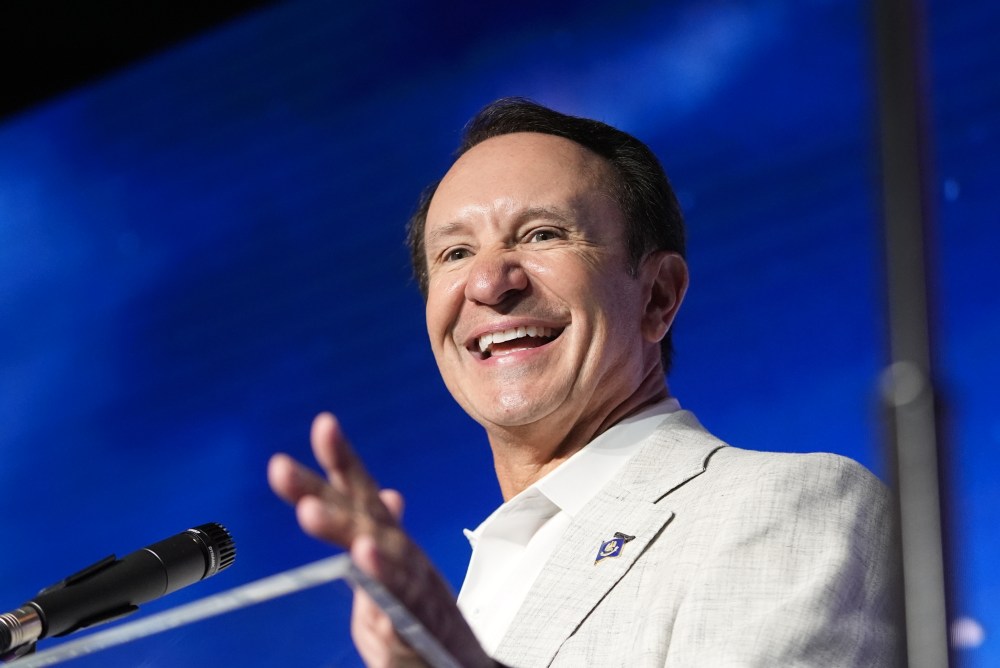
Musk was not there, but he appeared with Landry in a promotional video that played before the Republican governor’s speech. SpaceX President and Chief Operating Officer Gwynne Shotwell also spoke at the event.
The spaceport would be located on 125,000 acres (50,600 hectares) of land formerly owned by Exxon along Louisiana’s southern coast about 200 miles (322 km) west of New Orleans in Vermilion Parish. The location provides key advantages, state officials said, including access to abundant natural gas and the ability to launch to a wide range of trajectories.
It would be the company’s fourth and largest launch site, playing a key role in ramping up missions of its reusable Starship launch system, according to a news release from Louisiana Economic Development. SpaceX wants to dramatically increase rocket launches as it aims to put more satellites in orbit. The Louisiana site could support thousands of launches each year, the news release said.
State lawmakers had approved sizable tax incentives for the project.
Anne Rolfes, director of the environmental advocacy group, the Louisiana Bucket Brigade, said she was worried the state was moving too fast with a project that would “irrevocably alter” the state’s fragile coastline. Construction is expected to begin in 2027, with the first launch targeted for as early as 2029, according to state officials.
“It should be thoughtfully done – with public hearings, and a public process that is transparent and gives people time to understand and consider the project,” Rolfes said in a statement. “The speed of the project and the fanfare and bombast make it all highly questionable.”
Shotwell said SpaceX planned to keep much of the site undeveloped and would help with restoration and protection efforts, including working to reverse land loss from erosion and “careless use.”

“We are committed to doing our part to ensure that this land doesn’t disappear,” she said.
The company plans to host town halls and other community engagement events in the coming months. State officials said the project would generate 3,000 jobs over a decade.
In June, Musk sold SpaceX shares to the public for the first time in the biggest initial public offering ever. Shares jumped as high as $225 a share, briefly making Musk a trillionaire.
___
Thanawala reported from Atlanta. Associated Press writer Jack Brook in New Orleans contributed to this report.