AI ads are popular in the 2026 midterms, but state laws haven’t stopped a lack of disclosure
Advertisement
Read this article for free:
or
Already have an account? Log in here »
To continue reading, please subscribe:

Digital Subscription
One year of digital access for only $205*
- Enjoy unlimited reading on winnipegfreepress.com
- Read the E-Edition, our digital replica newspaper
- Access News Break, our award-winning app
- Play interactive puzzles
*First annual payment billed as $205.00 + GST for one year. This annual subscription will automatically renew at $233.00 + GST every 52 weeks (10% off the regular annual price of $259.35). Offer available to new and qualified returning subscribers only. Cancel any time.
To continue reading, please subscribe:
Add Free Press access to your Brandon Sun subscription for only an additional
$1 for the first 4 weeks*
- Enjoy unlimited reading on winnipegfreepress.com
- Read the E-Edition, our digital replica newspaper
- Access News Break, our award-winning app
- Play interactive puzzles
*Your next Brandon Sun subscription payment will increase by $1.00 and you will be charged $17.95 plus GST for four weeks. After four weeks, your payment will increase to $24.95 plus GST every four weeks.
Read unlimited articles for free today:
or
Already have an account? Log in here »
In what appears at first to be a typical campaign advertisement, two people introduce themselves as Zohran Mamdani and Kathy Hochul while strolling through a park on a beautiful sunny day.
But as the 43-second video continues, Mamdani, the mayor of New York City, and Hochul, the governor of New York State, have a conversation that paints them in a negative light. At one point Hochul is described in a voiceover as “the political delusion pill for New Yorkers who would rather think about what four more years could actually cost them.”
That’s because the video is actually a campaign ad for Bruce Blakeman, the Trump-endorsed Republican candidate for New York governor who is running against Hochul, the Democratic incumbent. The images of Mamdani and Hochul were generated using artificial intelligence. Blakeman’s connection to the video is disclosed in small text reading “paid for by Blakeman for New York” that appears throughout. Its use of AI is never mentioned, despite a New York law requiring such disclosures in political communications.
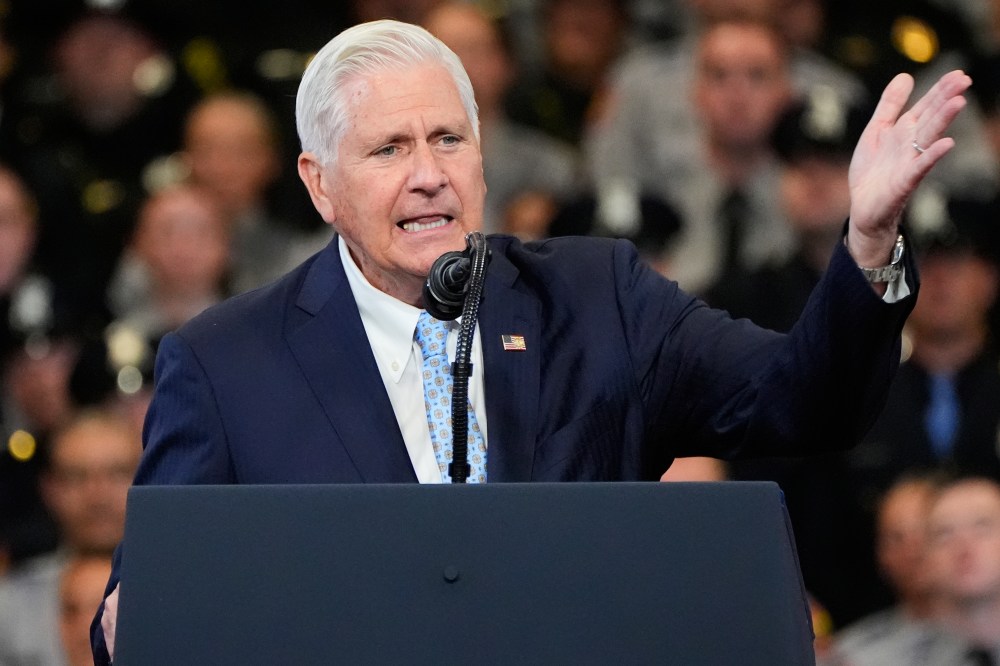
The New York State Democratic Party filed a complaint in August with the state’s Board of Elections about Blakeman’s use of AI in his ads, alleging that he has broken this new law. Blakeman’s campaign did not immediately respond to a request for comment.
Campaign advertisements that use AI to attack rival candidates are not uncommon in the 2026 midterms, some more obviously fake than others. A patchwork of state laws has emerged around how transparent candidates must be about this practice, but data shows candidates at times disregarding those laws. Experts say that although it is too soon to assess the impact such AI-generated ads will have on voters, with or without labels, more effective regulation is imperative.
“I’m generally not opposed to the sort of labels that exist, on narrowly targeted and materially deceptive content,” said Scott Babwah Brennen, the director of New York University’s Center on Technology Policy and a policy research affiliate at its Center for Social Media, AI, and Politics. He added, however, that because misinformation is the result of the existing media environment, it’s important to address the problem as a whole, not just on a case-by-case basis.
By the numbers
The Wesleyan Media Project, which tracks and analyzes election advertising, has identified at least 164 political ads generated or enhanced with AI during the current election cycle. A press release about the data cautions that there are likely many more since it can be difficult to tell definitively if AI was used. Of this total, 69% of the ads did not disclose the use of AI tools.
Asked about how many of the ads without disclosures were aired in states with laws about AI use in political campaigns, Travis Ridout, the project’s co-director, cross-referenced his data with that from the National Conference of State Legislatures. He found that in states with no laws regarding the disclosure of AI use in campaign ads, 32% of such ads contained a disclaimer anyway. Only 29% of those from states with regulations included a disclosure.
Ridout cautioned that there are some caveats to these findings. One, some ads in the project’s database are not subject to regulation by these laws because of how the AI was used. For example, Tennessee’s law only concerns deepfakes impersonating candidates. Two, an AI law may have been enacted after an ad aired. The fact that campaigns disclosed the use of AI when they weren’t legally required to still surprised him.
“I think it’s a time when campaigns are really trying to figure out what are the norms surrounding this, what are the laws surrounding this?” he said. “It may depend on the campaign consultant or the firm that’s producing the ads. It’s a time of uncertainty and so it’s all shaking out right now.”
Deception vs. satire
While some ads appear to be intentionally deceptive, others come across as humorous, satirical, or too extreme to be real.
Republican Mike Rogers, who is in a tight race against Democrat Abdul El-Sayed for an open Senate seat in Michigan, posted a video to X in June that showed him as a superhero performing physically impossible tasks such as stopping an out-of-control car with one hand. “Haters will say it’s AI,” the post read, presumably in jest.
The campaign for North Carolina Republican state Sen. Michael Lee posted an ad in August attacking his opponent, Democrat Jessica Bichler, for being too liberal. It shows Bichler, a yoga instructor, contorting her limbs into impossible positions. A disclaimer states, “You guessed it! AI was definitely used to generate these silly video clips.”
Out of the 164 ads identified by the Wesleyan Media Project, 80% were sponsored by either Republican candidates or pro-Republican groups. Eleven percent were from pro-Democratic sponsors, while the remaining 9% were ads for independent candidates in addition to ads focused on specific issues and more.
What’s next?
Basil Smikle, a Democratic political strategist and policy adviser, said that a lack of disclosure on AI ads could be intentional, but that it could also be an oversight or the result of campaigns simply not knowing that they should include one. He explained that the ease with which AI ads can be created means increased cost savings and efficiency for campaigns. However, their use risks a loss of authenticity and the potential for voters to feel misled. And of course, they can easily lead to the spread of misinformation.
“In the wrong hands, it could be a really dangerous trend, but if done well it can help do things that campaigns need to do and should do, which is tell good stories,” Smikle said.
Labeling ads as AI is important for accountability around technology “we still don’t fully comprehend,” he added, and gives voters the information they need to make good choices.
While they may promote transparency, an October 2024 report co-authored by Babwah Brennen found that labels can end up hurting a candidate. Respondents in an online experiment rated candidates as less trustworthy and less appealing when their ads contained AI disclaimers, and the ads themselves as less accurate. Labels also created a “backfire effect” in which respondents expressed lower opinions of creators of attack ads than of the candidates being attacked. As many as 37% of respondents didn’t even remember seeing an AI label.
Babwah Brennen advocates for more of an overarching approach to addressing the arrival of AI campaign ads. For example, improving campaign transparency in general and investing in local journalism. He also noted that because laws regulating such AI use are so new, it’s not yet clear how enforcement works and what falls within their purview.
Standardizing these regulations could help, Ridout said.
“If we could get something at the federal level I think that would make it clearer for campaigns what we can, what we can’t do,” he said. “Congress hasn’t done anything yet, nor have the regulatory agencies. And so into that vacuum many of the states have entered.”