Boeing crew capsule launches to space station on test redo
Advertisement
Read this article for free:
or
Already have an account? Log in here »
To continue reading, please subscribe:

Digital Subscription
One year of digital access for only $205*
- Enjoy unlimited reading on winnipegfreepress.com
- Read the E-Edition, our digital replica newspaper
- Access News Break, our award-winning app
- Play interactive puzzles
*First annual payment billed as $205.00 + GST for one year. This annual subscription will automatically renew at $233.00 + GST every 52 weeks (10% off the regular annual price of $259.35). Offer available to new and qualified returning subscribers only. Cancel any time.
To continue reading, please subscribe:
Add Free Press access to your Brandon Sun subscription for only an additional
$1 for the first 4 weeks*
- Enjoy unlimited reading on winnipegfreepress.com
- Read the E-Edition, our digital replica newspaper
- Access News Break, our award-winning app
- Play interactive puzzles
*Your next Brandon Sun subscription payment will increase by $1.00 and you will be charged $17.95 plus GST for four weeks. After four weeks, your payment will increase to $24.95 plus GST every four weeks.
Read unlimited articles for free today:
or
Already have an account? Log in here »
Hey there, time traveller!
This article was published 19/05/2022 (1583 days ago), so information in it may no longer be current.
CAPE CANAVERAL, Fla. (AP) — Boeing’s crew capsule rocketed into orbit Thursday on a repeat test flight without astronauts, after years of being grounded by flaws that could have doomed the spacecraft.
Only a test dummy was aboard. If the capsule reaches the International Space Station on Friday and everything else goes well, two or three NASA test pilots could strap in by the end of this year or early next for the company’s first crew flight.
It’s Boeing’s third shot at the high-stakes flight demo.
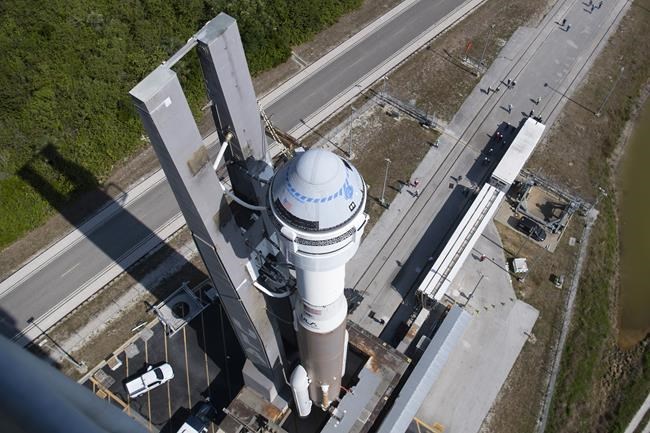
At least this time, Starliner made it to the proper orbit, quickly giving chase to the space station. But the all-important rendezvous and docking loomed.
Starliner’s first test flight in 2019 was stricken by software errors so severe that the capsule ended up in the wrong orbit and had to skip the space station. The spacecraft came close to being destroyed as ground controllers hastily cut short the mission.
After dozens of safety fixes, Boeing returned a different capsule to the launch pad last summer. Corroded valves halted the countdown, resulting in another round of repairs.
The drawn-out test flight program has cost Boeing approximately $600 million.
“We’re not going to fly (crews) unless we feel like we’ve bought down the risk,” NASA space operations chief Kathy Lueders stressed on the eve of liftoff.
Boeing is seeking redemption as it attempts to catch up with SpaceX, NASA’s other contracted taxi service. Elon Musk’s company has been flying astronauts to and from the space station for two years and delivering cargo for a full decade.
Eager to reduce its high-priced dependency on Russia for crew transport, NASA hired Boeing and SpaceX to launch astronauts to the space station after the shuttle program ended in 2011. That’s why it’s so important for Boeing’s Starliner to succeed, said NASA Administrator Bill Nelson.
“We always, in this case, want to have a backup,” Nelson told The Associated Press hours before liftoff.
Different in looks but similar in function to SpaceX’s Dragon capsule, Boeing’s fully automated capsule will attempt to dock at the space station on its own. Station astronauts will be ready to steer the capsule by remote control, if necessary.
Starliner will spend close to a week at the space station before aiming for a touchdown in the New Mexico desert.
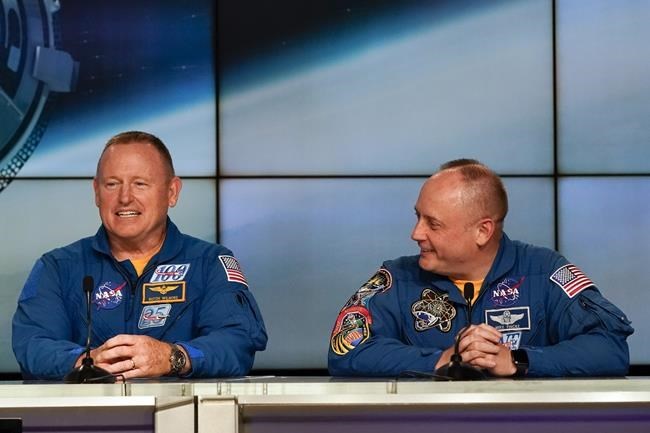
NASA has yet to finalize which astronauts will be on the first Starliner crew. The program is so far behind that the original three have stepped aside. The leading candidates gathered at Cape Canaveral for the evening launch of Starliner atop United Launch Alliance’s Atlas V rocket.
“We’re thrilled for this because the next one is us,” said astronaut Butch Wilmore.
Besides Rosie the Rocketeer — a space-age version of World War II’s Rosie the Riveter — the capsule is carrying groceries and spacewalking gear for the seven station residents. U.S. spacewalks have been on hold since an astronaut’s helmet took on water in March. NASA is sending up extra absorbent pads for use in helmets, in case an emergency spacewalk is required as the investigation continues.
Boeing also is flying mementos from historically black colleges and universities and tree seeds similar to those Apollo astronauts took to the moon that became so-called moon trees here on Earth.
___
The Associated Press Health and Science Department receives support from the Howard Hughes Medical Institute’s Department of Science Education. The AP is solely responsible for all content.