US seeks new lithium sources as demand for batteries grows
Advertisement
Read this article for free:
or
Already have an account? Log in here »
To continue reading, please subscribe:

Digital Subscription
One year of digital access for only $205*
- Enjoy unlimited reading on winnipegfreepress.com
- Read the E-Edition, our digital replica newspaper
- Access News Break, our award-winning app
- Play interactive puzzles
*First annual payment billed as $205.00 + GST for one year. This annual subscription will automatically renew at $233.00 + GST every 52 weeks (10% off the regular annual price of $259.35). Offer available to new and qualified returning subscribers only. Cancel any time.
To continue reading, please subscribe:
Add Free Press access to your Brandon Sun subscription for only an additional
$1 for the first 4 weeks*
- Enjoy unlimited reading on winnipegfreepress.com
- Read the E-Edition, our digital replica newspaper
- Access News Break, our award-winning app
- Play interactive puzzles
*Your next Brandon Sun subscription payment will increase by $1.00 and you will be charged $17.95 plus GST for four weeks. After four weeks, your payment will increase to $24.95 plus GST every four weeks.
Read unlimited articles for free today:
or
Already have an account? Log in here »
Hey there, time traveller!
This article was published 28/03/2022 (1640 days ago), so information in it may no longer be current.
NEWRY, Maine (AP) — The race is on to produce more lithium in the United States.
The U.S. will need far more lithium to achieve its clean energy goals — and the industry that mines, extracts and processes the chemical element is poised to grow. But it also faces a host of challenges from environmentalists, Indigenous groups and government regulators.
Although lithium reserves are distributed widely across the globe, the U.S. is home to just one active lithium mine, in Nevada. The element is critical to development of rechargeable lithium-ion batteries that are seen as key to reducing climate-changing carbon emissions created by cars and other forms of transportation.
Worldwide demand for lithium was about 350,000 tons (317,517 metric tons) in 2020, but industry estimates project demand will be up to six times greater by 2030. New and potential lithium mining and extracting projects are in various stages of development in states including Maine, North Carolina, California and Nevada.
“Nobody really foresaw this huge spike in demand,” said Tim Crowley, vice president of government affairs for Lithium Nevada, a subsidiary of a company developing a mine in Thacker Pass, Nevada. “We owned the lithium space for a long time, and we forfeited it to China.”
Much of the world’s lithium comes from South America and Australia, and China dominates the worldwide supply chain for lithium-ion batteries. The U.S. produces less than 2% of the world’s supply of lithium, although it has about 4% of the reserves. The largest reserves in the world are in Chile.
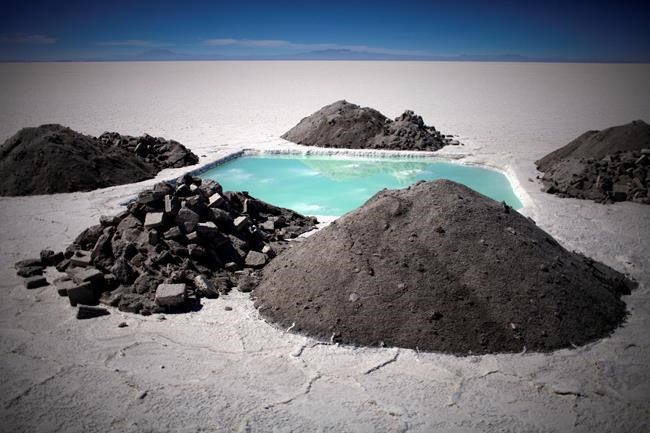
Expanding domestic lithium production would involve open pit mining or brine extraction, which involves pumping a mineral-rich brine to the surface and processing it. Opponents including the Sierra Club have raised concerns that the projects could harm sacred Indigenous lands and jeopardize fragile ecosystems and wildlife.
But the projects could also benefit the environment in the long run by getting fossil fuel-burning cars off the road, said Glenn Miller, emeritus professor of environmental sciences at the University of Nevada.
“A domestic source has tremendous value. Then we can do things that only China is doing with production,” Miller said.
Lithium — the lightest metal on Earth — was discovered by Swedish chemist Johan August Arfwedson more than 200 years ago. Since then, lithium and its compounds have been used in everything from psychiatric medicine to lubricating grease.
But interest in lithium has exploded in recent years because of its use in rechargeable batteries for electric and hybrid cars, lawnmowers, power tools and more. Lithium batteries also power laptops and cell phones.
The Biden administration has made a plan for half a million charging stations for electric vehicles a signature piece of its infrastructure goals. That effort, and the growth of electric vehicle companies such as Tesla, will require much more lithium to make batteries.
The new lithium mining project closest to development is the one proposed for Thacker Pass by Lithium Americas. That northern Nevada mine would make millions of tons of lithium available, but Native American tribes have argued that it’s located on sacred lands and should be stopped.
Construction could start late this year, said Lithium Americas CEO Jonathan Evans, noting that it would be the first lithium project on federal land permitted in six decades.
Evans said there will likely be more U.S. attempts to extract lithium because of the rising demand. “It has been a small industry and it has grown quickly,” he said. “I do expect larger companies to enter the space via acquisitions or other means.”
Australian-based Ioneer also wants to build a large lithium mine in Nevada, which the company says is expected to produce 22,000 tons (19,958 metric tons) of lithium — enough to power hundreds of thousands of electric vehicles annually.
Lithium mining projects represent a challenge for environmentalists because they carry the promise of decarbonization in exchange for heavy impacts on ecosystems and local communities. Lithium mining could jeopardize water quality and ranching in some states, the Sierra Club has argued.
The big challenge is making sure lithium mines are located in places where they do the least amount of damage, said Lisa Belenky, senior attorney for the Center for Biological Diversity.
“It really is very site specific as far as what impacts it would have to the local species, water,” Belenky said. “Almost every energy project we look at for climate change has its own greenhouse gas footprint.”
The drive for more domestic lithium has opened the potential for mining and extracting in states beyond Nevada. An Australian company called Piedmont Lithium wants to develop an open-pit mining project it has proposed for the Kings Mountain area west of Charlotte, North Carolina. The area was a major supplier of lithium from the mid-20th century into the 1980s, the company said.
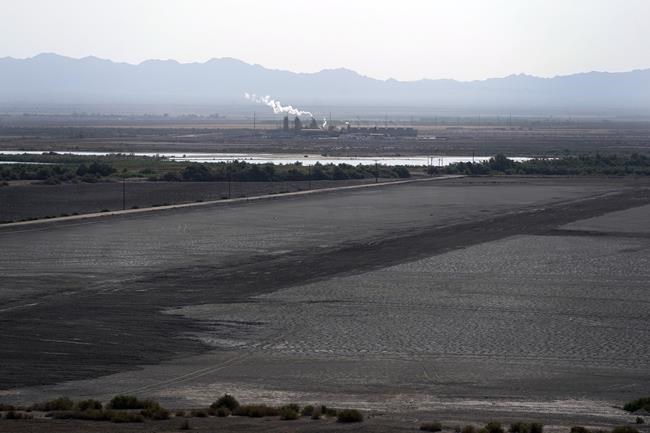
California’s largest lake, the salty and shrinking Salton Sea, is also primed to host lithium operations. Lithium can be extracted from geothermal brine, and the Salton Sea has been the site of geothermal plants that have pumped brine for decades. Proponents of extracting lithium from the lake said it would require less land and water than other brining operations.
One project, led by EnergySource Minerals, is expected to be operational next year, a spokesperson for the company said. General Motors Corp. is also an investor in another project on the Salton Sea that could start producing lithium by 2024.
Gov. Gavin Newsom, a Democrat, envisions that California’s lithium can position the state to become a leader in the production of batteries. He called the state the “Saudi Arabia of lithium” during a January address.
Dee Dee Myers, a senior adviser to Newsom focused on business, said that lithium is an “increasingly critical resource” as California and the world pursue clean energy development to slow climate change impacts.
The state has an opportunity to produce “epic quantities of lithium” given the resources around the Salton Sea, Myers said. But she said it wants to ensure lithium is extracted and produced sustainably.
State government could play a role in regulating the extraction process. In 2020, California also created the Lithium Valley Commission to review and analyze incentives for lithium extraction. They must file a report with their findings by October.
In Maine, Plumbago Mountain in the western part of the state has attracted mining interest. The mountain is “a potentially significant new lithium resource,” with a higher average lithium content than similar deposits around the world, according to a 2020 paper in the scientific journal Mineralium Deposita.
However, Maine mining regulations could make it difficult to extract the lithium. The Maine Department of Environmental Protection is reviewing the possibility of quarrying for lithium at Plumbago at the request of the property’s owners, state mining coordinator Mike Clark said.
Plumbago Mountain is the kind of site that could be significant for the U.S. as it seeks to fulfill its clean energy goals, said Alicia Cruz-Uribe, an associate professor of petrology and mineralogy at University of Maine.
The country’s lithium reserves rank among the largest in the world, Cruz-Uribe said. “But the amount that we produce is peanuts.”
___
Associated Press writer Kathleen Ronayne contributed to this report from Sacramento, California.
___
Associated Press climate and environmental coverage receives support from several private foundations. See more about AP’s climate initiative here. The AP is solely responsible for all content.