States weigh bans on shackling jailed moms during childbirth
Advertisement
Read this article for free:
or
Already have an account? Log in here »
To continue reading, please subscribe:

Digital Subscription
One year of digital access for only $205*
- Enjoy unlimited reading on winnipegfreepress.com
- Read the E-Edition, our digital replica newspaper
- Access News Break, our award-winning app
- Play interactive puzzles
*First annual payment billed as $205.00 + GST for one year. This annual subscription will automatically renew at $233.00 + GST every 52 weeks (10% off the regular annual price of $259.35). Offer available to new and qualified returning subscribers only. Cancel any time.
To continue reading, please subscribe:
Add Free Press access to your Brandon Sun subscription for only an additional
$1 for the first 4 weeks*
- Enjoy unlimited reading on winnipegfreepress.com
- Read the E-Edition, our digital replica newspaper
- Access News Break, our award-winning app
- Play interactive puzzles
*Your next Brandon Sun subscription payment will increase by $1.00 and you will be charged $17.95 plus GST for four weeks. After four weeks, your payment will increase to $24.95 plus GST every four weeks.
Read unlimited articles for free today:
or
Already have an account? Log in here »
Hey there, time traveller!
This article was published 13/03/2019 (2713 days ago), so information in it may no longer be current.
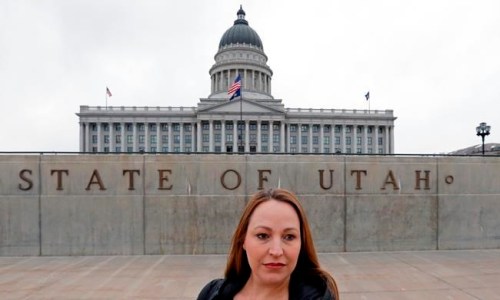
SALT LAKE CITY – Michelle Aldana gave birth to her first child chained to a hospital bed.
Then serving time at the Utah state prison on a drug charge, she says she laboured through the difficult 2001 birth for nearly 30 hours, her ankles bleeding as the shackles on both her legs and one arm dug in. “I felt like a farm animal,” she says.
The practice of keeping inmates shackled during childbirth was once common around the United States, but that’s gradually been changing after women began speaking out, with 22 states passing laws against it over the past two decades.
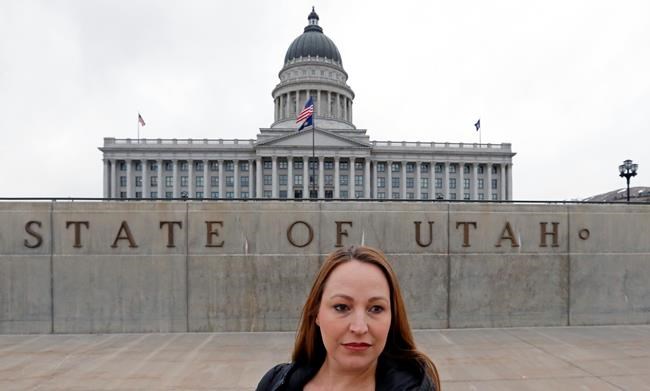
Utah and at least three other states are considering joining them this year, after the federal government recently banned the practice with a sweeping criminal justice reform law. Many other states have policies against shackling, but advocates say that without a law it’s harder to stop a practice they condemn as dangerous and inhumane.
Women are America’s fast-growing segment of prisoners. The American Civil Liberties Union estimates about 12,000 pregnant women are incarcerated in U.S. jails or prisons each year.
“For me, it’s just a fundamental issue of dignity,” said Democratic state Rep. Stephanie Pitcher, who is sponsoring the Utah measure. “A woman deserves dignity in childbirth.”
Though the state prison changed its official policy to prohibit shackling in 2015, Pitcher has heard from a number of Utah doctors who have treated incarcerated women having babies in shackles, some as recently as this year. Her bill, which would apply to both the prison and local jails, passed the state House and is being considered by the Senate.
The practice is an outgrowth of policies requiring all prisoners to be restrained during medical treatment for safety, said Amy Fettig, deputy director of the National Prison Project at the ACLU.
But childbirth is different, she said. Preventing a woman from moving during labour increases the risk of potentially life-threatening health risks inherent in childbirth, like blood clots. It also makes it harder to move her if there is an emergency, or feed the baby after it’s born.
Meanwhile, the physical conditions of labour make escape attempts unlikely, and there are no documented cases of a woman getting away while having a child, Fettig said.
Still, some have raised safety concerns. In Utah, Republican Rep. Eric Hutchins has pointed out that violent incidents happen often in state prisons, and hospitals have far less built-in security.
He ultimately voted in favour of the bill, which does allow some shackling during transportation and the use of soft restraints if an inmate is documented to be dangerous. Prison officials are also in support, and say their policy change means women like Aldana are treated differently today.

Most other states without laws against shackling do have policies in place, but without strict controls, the practice is hard to stamp out, said Lauryn King, a public-policy Ph.D. student at The George Washington University who completed a state-by-state analysis of laws on the topic.
“What are the odds that without specific training, your average corrections officer knows every policy?” she said. In New York, for example, a report found the practice continued even after a law was passed.
In Wisconsin, a woman said in a lawsuit she was shackled with a chain so short that she couldn’t reach the stirrups during labour in February 2014. Tennessee and Arkansas have faced similar lawsuits and are weighing bans on the practice this year, along with South Carolina.
In Utah, Aldana was bloody and sore after her tough labour, which also left her with a broken pelvis from the pressure of the baby. She was released a month after her son was born, and in the years since she’s recovered and become a substance abuse counsellor. Now pregnant with her third child, she still suffers with anxiety about childbirth but said a law against shackling would be a relief.
“I just don’t think any woman, when they’re that vulnerable, should ever be treated that way,” she said. “It’s just wrong.”