The colourful history of the little black dress
La Petite Robe Noire showcases eight decades of the LBD at the Costume Museum of Canada

Advertisement
Read this article for free:
or
Already have an account? Log in here »
To continue reading, please subscribe:

Digital Subscription
One year of digital access for only $205*
- Enjoy unlimited reading on winnipegfreepress.com
- Read the E-Edition, our digital replica newspaper
- Access News Break, our award-winning app
- Play interactive puzzles
*First annual payment billed as $205.00 + GST for one year. This annual subscription will automatically renew at $233.00 + GST every 52 weeks (10% off the regular annual price of $259.35). Offer available to new and qualified returning subscribers only. Cancel any time.
To continue reading, please subscribe:
Add Free Press access to your Brandon Sun subscription for only an additional
$1 for the first 4 weeks*
- Enjoy unlimited reading on winnipegfreepress.com
- Read the E-Edition, our digital replica newspaper
- Access News Break, our award-winning app
- Play interactive puzzles
*Your next Brandon Sun subscription payment will increase by $1.00 and you will be charged $17.95 plus GST for four weeks. After four weeks, your payment will increase to $24.95 plus GST every four weeks.
Read unlimited articles for free today:
or
Already have an account? Log in here »
Hey there, time traveller!
This article was published 09/04/2022 (1635 days ago), so information in it may no longer be current.
What’s in a dress?
The little black dress has been through many changes over the years.
But while its hems may have risen and fallen, its sleeves cut in varying styles, and its silhouette shifting from flattering A-lines to slimming Empire waists to clingy sheaths, the dress itself remains a firm staple in most wardrobes.

Commonly abbreviated as the LBD, the deceptively simple garment is the subject of the latest exhibition at the Costume Museum of Canada
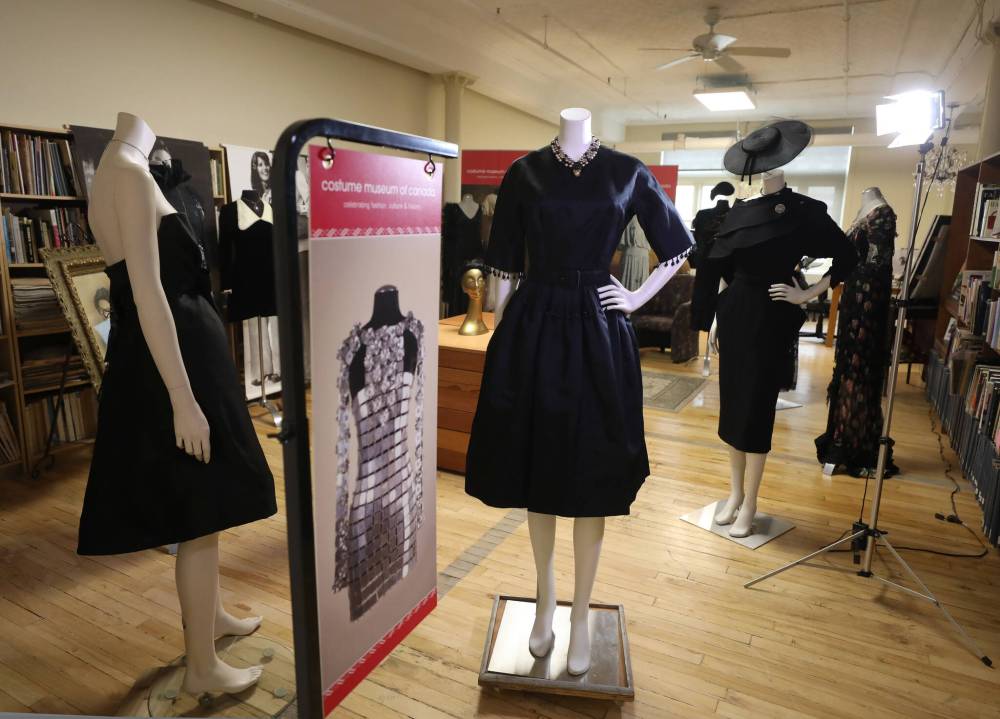
La Petite Robe Noire showcases 80 years of the dress through 12 pieces that have been donated to the museum.
Nowadays the dress is worn in any way the wearer likes, from thigh-grazing minis to more conservative hems which flutter around the ankles.
But there is one constant: it is always black.
“The colour black is something that often looks like it is proper. I think it has an elegant look to it. It goes well with a tuxedo, it can be haute couture, it can be dressed up or dressed down,” says Andrea Brown, president of the Costume Museum.
The LBD is a transformative item, depending on its style.
It can imbue the wearer with the elegance of Audrey Hepburn wafting across the screen in Breakfast at Tiffany’s.
Or it can be scintillating in the vein of a statuesque Anita Ekberg under the Trevi Fountain in La Dolce Vita, her black gown clinging to every curve.
And who can forget the sartorial power the dress wielded in 1994 when Princess Diana chose it to be her ‘revenge’ frock, a daring off-the-shoulder creation she wore on the night Prince Charles admitted to adultery on national television.
In more recent times this ever-evolving item of clothing has been seen on the likes of Grammy Awards red-carpet presenter Laverne Cox where it was worn lengthy and sheer, on the actress Zendaya who seems to prefer hers sharp and modern and on Beyonce who often opts for a form-skimming incarnation.
The term little black dress was coined in 1926 by Vogue Magazine editors when they featured Coco Chanel’s sketch of the calf-length, long-sleeved drop-waisted creation in the publication.
Vogue called the dress the ‘Chanel Ford’ dubbing it the equal to the Model T, the editors claiming that it would “become sort of a uniform for all women of taste.”
But Chanel wasn’t the first person to spot the appeal of a simple black outfit — the idea of a loosely structured unembellished dark frock came from humbler beginnings as it was often the outfit of choice for servants of the moneyed classes.
“We often want to bring in a social context to our costume exhibitions and the dresses on show give a glimpse into what was going on in the world at that time,” Brown says.
A piece from the 1920s takes pride of place in the exhibition, a heavily-beaded flapper dress which was bought in Paris by a Major Peter Dodd of Montreal as a gift to his wife, Francis, and donated to the museum in 1971.
“We also have this beautiful 1930s dress with a boa. The ’30s were considered the golden age of glamour despite the Depression. You had movie stars of the day like Bette Davies and Greta Garbo wearing such stunning dresses,” Brown says.
The oldest item featured in the exhibition is an Edwardian chiffon evening gown circa 1911. The floor-length gown has a gathered skirt and features a print of the zinnia flower in rose, mauve, cream and green.
“The newest dress is a 1990 strapless Scaasi dinner dress donated by Arnold Scaasi, the designer himself, in 1997,” Brown says.
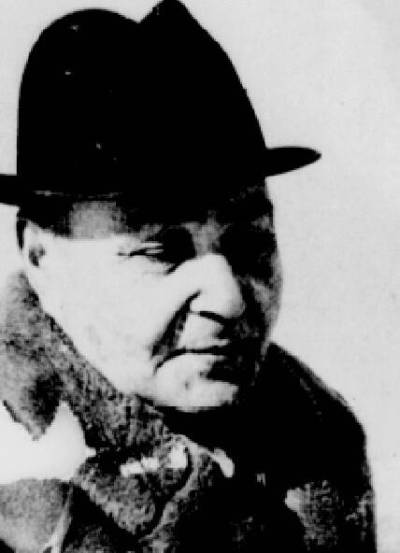
“Born in Montreal in 1930, Arnold Isaacs studied in Paris where it was suggested he reverse him name to make it sound more Italian. He has donated over 40 gowns to the Costume Museum of Canada.”
Great care has to be taken of the costumes on display, with controlled lighting and temperature to ensure the items are not damaged.
“We have to be careful to have the correct lightning in here with UV protection. You don’t want a garment hanging on a mannequin for a lengthy period of time,” Brown says.
Brown’s favourite dress in the exhibition is a 1953 narrow mid-calf length with small capelet.
“The faux pockets turn out giving this dress amazing lines. We styled it with a rhinestone brooch and a wide brim straw hat worn slightly at an angle,” she says.
When the exhibition ends at the end of the month, the 12 dresses will go on display in B.C.
“The dresses will be going on tour to Sidney B.C. in the summer time. They will be there for three months and then will most likely come back to Manitoba into curatorial storage,” Brown says.
As well as the little black dress exhibition, the museum offers other costumes for loan from its 35,000 donated artefacts including wedding dresses, bathing costumes and clothes from the1940s and 1950s.
“We’ve got something in the collection from the 1700s,” Brown says, referring to a blue and white silk taffeta dress with matching shoes from 1765.

Last year the museum held a fashion revue on the grounds of Dalnavert Museum where guests were treated to an outdoor display of historical fashion.
“We will always have our eyes open to offerings of donations. We are looking for dresses now into the 1990s to 2020.”
The museum is open to the public now for exhibits and events. The current exhibit is on until April 30 on Tuesdays and Thursdays from 1-4 p.m. and on Saturdays by appointment (call 204-989-0072 or email costumemuseumcanada@gmail.com).
There will be a spring and summer vintage sale on May 6 at the offices on 70 Arthur St. Also, on May 28-29, the museum takes part in the Doors Open Winnipeg exhibit (doorsopenwinnipeg.ca).
Twitter: @nuchablue
AV Kitching is an arts and life writer at the Free Press. She has been a journalist for more than two decades and has worked across three continents writing about people, travel, food, and fashion. Read more about AV.
Every piece of reporting AV produces is reviewed by an editing team before it is posted online or published in print — part of the Free Press‘s tradition, since 1872, of producing reliable independent journalism. Read more about Free Press’s history and mandate, and learn how our newsroom operates.
Our newsroom depends on a growing audience of readers to power our journalism. If you are not a paid reader, please consider becoming a subscriber.
Our newsroom depends on its audience of readers to power our journalism. Thank you for your support.
AV Kitching is an arts and life writer at the Free Press. She has been a journalist for more than two decades and has worked across three continents writing about people, travel, food, and fashion. Read more about AV.
Every piece of reporting AV produces is reviewed by an editing team before it is posted online or published in print — part of the Free Press‘s tradition, since 1872, of producing reliable independent journalism. Read more about Free Press’s history and mandate, and learn how our newsroom operates.
Our newsroom depends on a growing audience of readers to power our journalism. If you are not a paid reader, please consider becoming a subscriber.
Our newsroom depends on its audience of readers to power our journalism. Thank you for your support.
Advertisement Advertise With Us
Advertisement Advertise With Us