US officials declare end to outbreak from romaine lettuce
Advertisement
Read this article for free:
or
Already have an account? Log in here »
To continue reading, please subscribe:

Digital Subscription
One year of digital access for only $205*
- Enjoy unlimited reading on winnipegfreepress.com
- Read the E-Edition, our digital replica newspaper
- Access News Break, our award-winning app
- Play interactive puzzles
*First annual payment billed as $205.00 + GST for one year. This annual subscription will automatically renew at $233.00 + GST every 52 weeks (10% off the regular annual price of $259.35). Offer available to new and qualified returning subscribers only. Cancel any time.
To continue reading, please subscribe:
Add Free Press access to your Brandon Sun subscription for only an additional
$1 for the first 4 weeks*
- Enjoy unlimited reading on winnipegfreepress.com
- Read the E-Edition, our digital replica newspaper
- Access News Break, our award-winning app
- Play interactive puzzles
*Your next Brandon Sun subscription payment will increase by $1.00 and you will be charged $17.95 plus GST for four weeks. After four weeks, your payment will increase to $24.95 plus GST every four weeks.
Read unlimited articles for free today:
or
Already have an account? Log in here »
Hey there, time traveller!
This article was published 09/01/2019 (2754 days ago), so information in it may no longer be current.
NEW YORK – U.S. health officials are declaring an end to a food poisoning outbreak blamed on romaine lettuce from California.
From October to December, the E. coli outbreak sickened 62 people in 16 states. No one died, but 25 people were hospitalized. Illnesses were also reported in Canada.
Investigators concluded that romaine lettuce grown in central and northern California was the likely source. They found the same bacteria strain in a reservoir at a farm in Santa Barbara County.
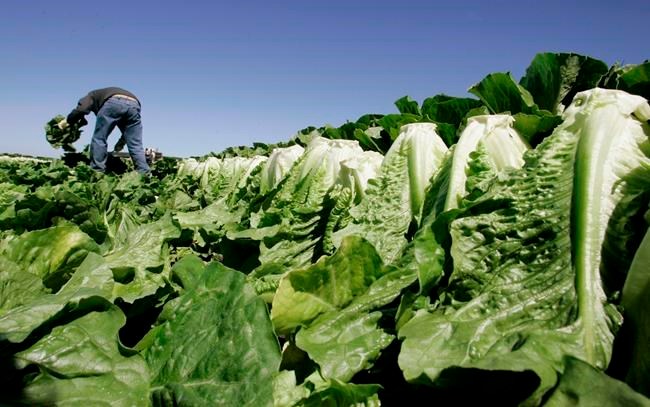
Officials said Wednesday that no new illnesses have been reported for a month, and lettuce from the area is no longer in stores or restaurants. Romaine harvesting has since shifted to winter growing areas, primarily Arizona, Florida, Mexico and California’s Imperial Valley.