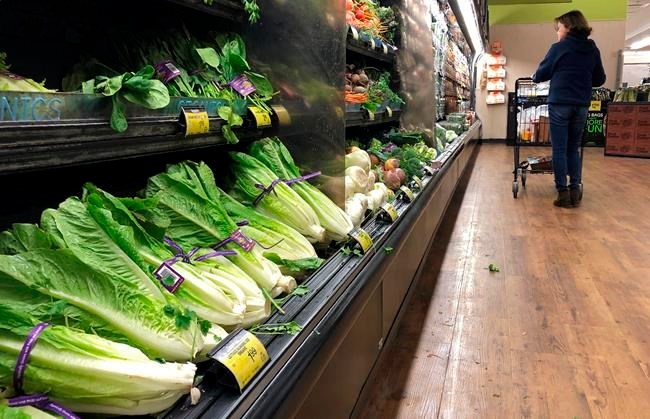
Tainted romaine lettuce traced to at least 1 California farm
Advertisement
Read this article for free:
or
Already have an account? Log in here »
To continue reading, please subscribe:

Digital Subscription
One year of digital access for only $205*
- Enjoy unlimited reading on winnipegfreepress.com
- Read the E-Edition, our digital replica newspaper
- Access News Break, our award-winning app
- Play interactive puzzles
*First annual payment billed as $205.00 + GST for one year. This annual subscription will automatically renew at $233.00 + GST every 52 weeks (10% off the regular annual price of $259.35). Offer available to new and qualified returning subscribers only. Cancel any time.
To continue reading, please subscribe:
Add Free Press access to your Brandon Sun subscription for only an additional
$1 for the first 4 weeks*
- Enjoy unlimited reading on winnipegfreepress.com
- Read the E-Edition, our digital replica newspaper
- Access News Break, our award-winning app
- Play interactive puzzles
*Your next Brandon Sun subscription payment will increase by $1.00 and you will be charged $17.95 plus GST for four weeks. After four weeks, your payment will increase to $24.95 plus GST every four weeks.
Read unlimited articles for free today:
or
Already have an account? Log in here »
Hey there, time traveller!
This article was published 13/12/2018 (2801 days ago), so information in it may no longer be current.
WASHINGTON – U.S. health officials have traced a food poisoning outbreak from romaine lettuce to at least one farm in California.
But they cautioned Thursday that other farms are likely involved in the E. coli outbreak and consumers should continue checking the label before purchasing romaine lettuce.
The Food and Drug Administration said 59 people in 15 states have now been sickened by the tainted lettuce. That’s seven more cases than previously reported, but regulators said they are fairly confident that the lettuce which first triggered the outbreak has been removed from the market. The FDA told consumers to avoid romaine lettuce just before Thanksgiving.
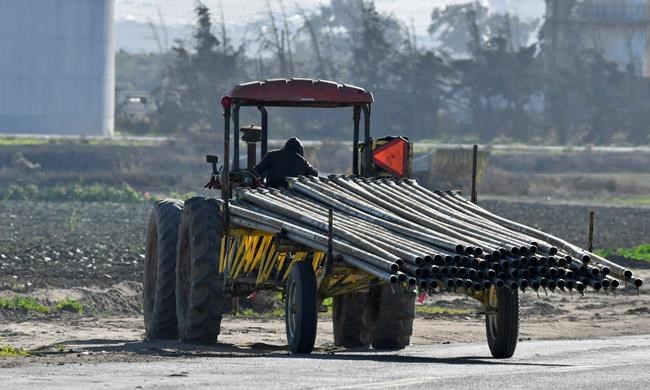
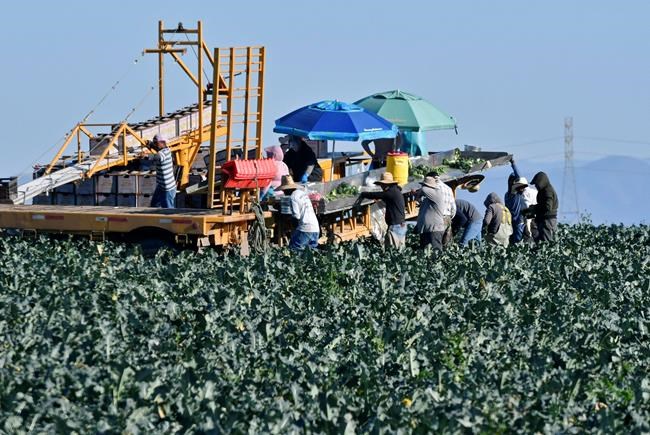
Officials said a water reservoir at Adam Bros. Farms in Santa Barbara County tested positive for the bacterial strain and the owners are co-operating with U.S. officials. Officials from the FDA and the Centers for Disease Control and Prevention have not determined how the water reservoir — which is used to irrigate lettuce — became contaminated.
The bacteria can get into water and soil through multiple routes, including waste from domesticated animals or wild animals, fertilizer and other agricultural products.
The FDA’s Dr. Stephen Ostroff said investigators have linked the tainted lettuce to multiple distributors and processors, suggesting it must have come from several farms.
A man who answered the phone at Adam Bros. Farms said he could not comment on the government announcement. According to the company’s website, it only grows vegetables products, including broccoli, cauliflower, celery and various types of lettuce.
The government also narrowed the source of the outbreak to three California counties: Santa Barbara, Monterey and San Benito. That’s down from six California counties under investigation when regulators began warning the public last month.
Regulators said people should only buy lettuce with a label listing where and when it was harvested. Lettuce from outside the three California counties that was harvested after Nov. 23 should be safe to eat.
Romaine harvesting recently began shifting from California’s Central Coast to winter growing areas, primarily Arizona, Florida, Mexico and California’s Imperial Valley. Those winter regions weren’t yet shipping when the illnesses began.

E. coli, the bacteria often associated with food poisoning, usually causes sickness two to eight days later, according to health authorities. Most people with the infection get diarrhea and abdominal cramps. Some cases can be life-threatening, causing kidney failure and seizures.
___
This version corrects spelling of Adam Bros. Farms, not Adams.
___
The Associated Press Health & Science Department receives support from the Howard Hughes Medical Institute’s Department of Science Education. The AP is solely responsible for all content.