Your houseplants are getting hungry; some feeding tips
Advertisement
Read this article for free:
or
Already have an account? Log in here »
To continue reading, please subscribe:

Digital Subscription
One year of digital access for only $205*
- Enjoy unlimited reading on winnipegfreepress.com
- Read the E-Edition, our digital replica newspaper
- Access News Break, our award-winning app
- Play interactive puzzles
*First annual payment billed as $205.00 + GST for one year. This annual subscription will automatically renew at $233.00 + GST every 52 weeks (10% off the regular annual price of $259.35). Offer available to new and qualified returning subscribers only. Cancel any time.
To continue reading, please subscribe:
Add Free Press access to your Brandon Sun subscription for only an additional
$1 for the first 4 weeks*
- Enjoy unlimited reading on winnipegfreepress.com
- Read the E-Edition, our digital replica newspaper
- Access News Break, our award-winning app
- Play interactive puzzles
*Your next Brandon Sun subscription payment will increase by $1.00 and you will be charged $17.95 plus GST for four weeks. After four weeks, your payment will increase to $24.95 plus GST every four weeks.
Read unlimited articles for free today:
or
Already have an account? Log in here »
Hey there, time traveller!
This article was published 26/03/2019 (2681 days ago), so information in it may no longer be current.
No matter what the weather outdoors, plants indoors are getting hungrier and thirstier this time of year. How are you going to give them the food they need to keep growth apace with burgeoning sunlight?
If the plants are new to your home or you just repotted them, the potting soil itself might supply food — for a while, at least. Compost in potting mixes slowly releases a smorgasbord of nutrients, sparing you — if there’s enough compost — the need to even think about having to feed a plant for a year or more. Most potting mixes that you buy or that new plants come in, however, do not contain compost.
Still, even a compost-less potting mix might provide extended sustenance if it contains some slowly available food source, either an organic one such as soybean meal or a specially formulated, slow-release chemical one. Those little glass-like beads you may have noticed on the soil beneath commercial plants? That’s probably a slow-release chemical fertilizer.
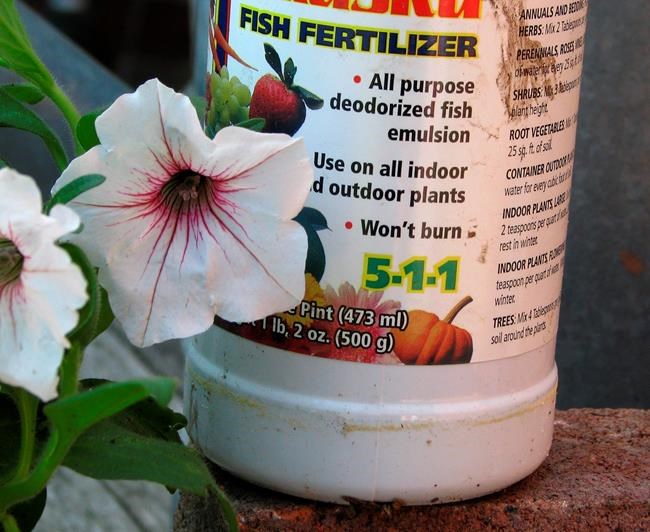
ONE OPTION: SPRINKLE FERTILIZER ON THE SOIL
Feeding is eventually necessary, and the most straightforward way to do it is to just sprinkle plant food on the surface of the potting soil. If there’s room below the rim of the pot, a half-inch or so of compost will do the job and confer other benefits of a compost mulch: better water infiltration, smothering of small weeds, and some protection against pests.
Your plants won’t get these other benefits with the previously mentioned soybean meal fertilizer, the slow-release chemical, or other concentrated fertilizers.
Nutrients in the compost, soybean meal or slow-release chemical fertilizer percolate into the soil when you water from above.
Some gardeners water their houseplants from below, filling the saucers beneath the pots so water is drawn up into the pots. In this case, fertilizer applied on the soil’s surface won’t get down to plant roots. Furthermore, if water is applied from below too frequently, salts build up in the soil, damaging roots. So it’s always a good idea to water from above at least occasionally.
ANOTHER OPTION: FERTILIZE WITH YOUR WATERING
Another way to fertilize houseplants is to feed them as you water them. You need a food that dissolves readily in water. Many gardeners use one of the popular brands of water-soluble, chemical fertilizer, but they all work well as long as you follow their specific application directions.
If you’d rather “grow organically,” then use one of the commercially available seaweed or fish extracts, or make your own extract by steeping compost or manure in water until the water turns the colour of tea. Once everything greens up in spring, you can even make a nourishing “tea” by steeping a nutrient-rich plant such as stinging nettles in water for a few days.
As long as your “tea” or water-soluble fertilizer is not too concentrated, go ahead and use it to water your plants every time they are thirsty. Alternatively, feed periodically — once every two weeks, for example — with a more concentrated solution.
YET MORE WAYS TO FERTILIZE HOUSEPLANTS
Wander along the fertilizer aisle of any store selling gardening products and you’ll see that there are fancier ways to feed your houseplants. You can buy marble-size balls or spikes of compressed fertilizer that begin to slowly bleed nutrients after you push them into the soil.
Leaves can absorb nutrients to some degree, and foliar feeding provides yet another way to nourish your plants. However, foliar sprays are best reserved for emergency use on starving plants because they’re not very efficient and can damage leaves.

In fact, any fertilizer can cause damage. (Compost cannot damage plants, but it has a low nutrient content so is technically an “amendment” rather than a “fertilizer”.) Just as you would not eat the same amount of calorie-rich ice cream as calorie-poor broccoli, you should not feed your plants the same amount of a rich food — such as a concentrated chemical fertilizer — as a leaner food, such as seaweed extract. And, furthering the comparison, ice cream — even in the correct dose — is not better for you than broccoli, just more concentrated in calories.
Your plants are at your mercy, so follow feeding rates on fertilizer packaging with even more care than you follow “serving size” recommendations on that carton of ice cream.
___
http://www.leereich.com/blog
http://leereich.com