

The real problem: a fixation with the female body

Advertisement
Read this article for free:
or
Already have an account? Log in here »
To continue reading, please subscribe:

Digital Subscription
One year of digital access for only $205*
- Enjoy unlimited reading on winnipegfreepress.com
- Read the E-Edition, our digital replica newspaper
- Access News Break, our award-winning app
- Play interactive puzzles
*First annual payment billed as $205.00 + GST for one year. This annual subscription will automatically renew at $233.00 + GST every 52 weeks (10% off the regular annual price of $259.35). Offer available to new and qualified returning subscribers only. Cancel any time.
To continue reading, please subscribe:
Add Free Press access to your Brandon Sun subscription for only an additional
$1 for the first 4 weeks*
- Enjoy unlimited reading on winnipegfreepress.com
- Read the E-Edition, our digital replica newspaper
- Access News Break, our award-winning app
- Play interactive puzzles
*Your next Brandon Sun subscription payment will increase by $1.00 and you will be charged $17.95 plus GST for four weeks. After four weeks, your payment will increase to $24.95 plus GST every four weeks.
Read unlimited articles for free today:
or
Already have an account? Log in here »
Hey there, time traveller!
This article was published 27/05/2015 (4089 days ago), so information in it may no longer be current.
In 2014, Newsweek ran a cover story called Sex and the Single Tween. The cover image was a close up of a young girl’s mouth, lips parted. Because to effectively illustrate something you must become part of the problem, one supposes.
The story itself was about the sexualization of tween girls, 10- to 12-year-olds who exist somewhere between child and teenager. It was in equal turns alarmist and disturbing, and reiterated what we already know: it’s incredibly tough to be a girl.
Girls are constantly bombarded with images that being sexy is important — even if they don’t understand what “sexy” means. And every so often there is outrage about a Bratz doll, or a Katy Perry video, or a thong for 12-year-olds that says “eye candy” on it — which is a real thing that Abercrombie & Fitch once retailed. Then we forget about our outrage, and we go back to buying T-shirts that say “Cute” and “Flirt” on them, and then those T-shirts become the only option. Media messaging creates the demand.
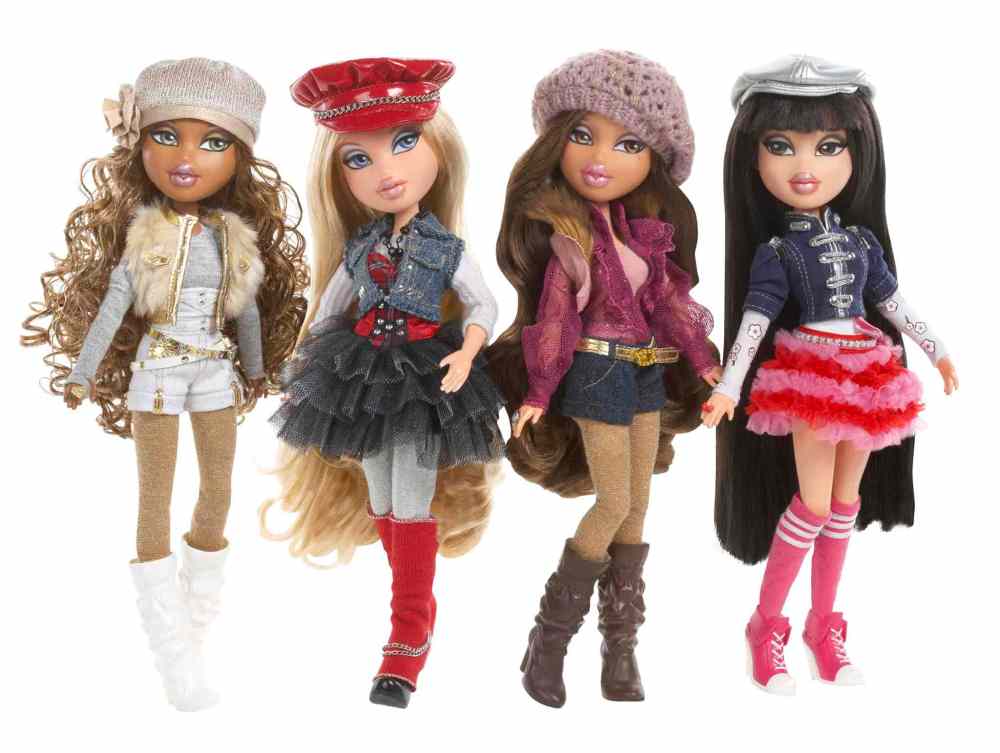
I received several emails from the parents of elementary-school age children in response to my May 26 column on school dress codes, many lamenting the fact that there’s a dearth of clothing options out there for girls. One Winnipeg dad, John Baluta, was buying shorts for his daughters and found that “style quotient is inversely related to its length.” Indeed, short and shorter seem to be the only choices.
The sexualization of tween and teen clothing is not a new concern. It was certainly top of mind when I was a tween in 1997 — but back then, instead of Katy Perry, our parents blamed the perceived influx of skank wear on the Spice Girls.
“I’ve never seen you wear anything remotely sexual,” I remember a Grade 7 classmate remarking to me. She was right. I mostly wore oversized cat T-shirts from Northern Reflections — and, also, I was 12. I decided that I wanted to be sexy — but more than that, I wanted to fit in. So, I braved one of those stores in Polo Park that aggressively blares dance music at you and purchased a spaghetti strap tank top emblazoned with the cast of South Park. I reasoned that a semi-revealing shirt promoting an offensive TV show was a win-win.
It sat in a drawer. I never had the guts to wear it. I didn’t want to “look like a slut.”
And there’s the rub. Girls — and women — are told to look sexy, but not too sexy. Too sexy and you’re a slut. Too covered and you’re a prude. And clothes that aren’t even necessarily sexy — a tank top, for example — have become sexy, because somewhere along the way we’ve decided that shoulders and clavicles are “distracting.”
Meanwhile, antiquated ideas about purity and modesty are just the other side of the same coin. Our culture has a fixation with the female body. And that’s the real problem — not Bratz dolls or pop stars.

Older teenage girls, who are carving out their identities and expressing them through clothing, might indeed want to look sexy. They might not. But the point remains the same: their bodies are nobody’s bodies but theirs. They do not exist solely as sexual “distractions” regardless of what is or isn’t covering them. Policing or shaming young women’s bodies doesn’t do anything to address the bigger issues — such as the link between objectification and violence against women or, say, the damaging ways in which female sexuality is commodified, marketed and sold back to girls and women.
On Tuesday, Toronto students declared #CropTopDay, protesting their school dress codes. A principal at Etobicoke School of the Arts commented to the Toronto Star that he was proud of the students and invited them to a lunch time chat about dress codes.
What an amazing teachable moment that is. Young people should be questioning why things are the way they are and thinking critically — and schools should be encouraging that by actually discussing the big issues with them.
They’re there to learn, right?
jen.zoratti@freepress.mb.ca
Jen Zoratti is a columnist and feature writer working in the Arts & Life department, as well as the author of the weekly newsletter NEXT. A National Newspaper Award finalist for arts and entertainment writing, Jen is a graduate of the Creative Communications program at RRC Polytech and was a music writer before joining the Free Press in 2013. Read more about Jen.
Every piece of reporting Jen produces is reviewed by an editing team before it is posted online or published in print – part of the Free Press‘s tradition, since 1872, of producing reliable independent journalism. Read more about Free Press’s history and mandate, and learn how our newsroom operates.
Our newsroom depends on a growing audience of readers to power our journalism. If you are not a paid reader, please consider becoming a subscriber.
Our newsroom depends on its audience of readers to power our journalism. Thank you for your support.
Jen Zoratti is a columnist and feature writer working in the Arts & Life department, as well as the author of the weekly newsletter NEXT. A National Newspaper Award finalist for arts and entertainment writing, Jen is a graduate of the Creative Communications program at RRC Polytech and was a music writer before joining the Free Press in 2013. Read more about Jen.
Every piece of reporting Jen produces is reviewed by an editing team before it is posted online or published in print – part of the Free Press‘s tradition, since 1872, of producing reliable independent journalism. Read more about Free Press’s history and mandate, and learn how our newsroom operates.
Our newsroom depends on a growing audience of readers to power our journalism. If you are not a paid reader, please consider becoming a subscriber.
Our newsroom depends on its audience of readers to power our journalism. Thank you for your support.
Related Articles
Anxieties about the body unfold in artist's eerie, beautiful fabric portraits


Advertisement Advertise With Us
Advertisement Advertise With Us
History
Updated on Wednesday, May 27, 2015 4:39 PM CDT: Adds image