

Winnipeg casts eye to all-electric light fleet future

Advertisement
Read this article for free:
or
Already have an account? Log in here »
To continue reading, please subscribe:
Digital Subscription
One year of digital access for only $1.44 a week*
- Enjoy unlimited reading on winnipegfreepress.com
- Read the E-Edition, our digital replica newspaper
- Access News Break, our award-winning app
- Play interactive puzzles
*Billed as $5.77 plus GST every four weeks. After 52 weeks, price increases to the regular rate of $19.95 plus GST every four weeks. Offer available to new and qualified returning subscribers only. Cancel any time.
To continue reading, please subscribe:
Add Free Press access to your Brandon Sun subscription for only an additional
$1 for the first 4 weeks*
- Enjoy unlimited reading on winnipegfreepress.com
- Read the E-Edition, our digital replica newspaper
- Access News Break, our award-winning app
- Play interactive puzzles
*Your next Brandon Sun subscription payment will increase by $1.00 and you will be charged $17.95 plus GST for four weeks. After four weeks, your payment will increase to $24.95 plus GST every four weeks.
Read unlimited articles for free today:
or
Already have an account? Log in here »
Hey there, time traveller!
This article was published 06/06/2023 (1236 days ago), so information in it may no longer be current.
The City of Winnipeg is exploring options to add enough charging stations to power 1,627 all-electric vehicles.
The city is seeking a consultant to pinpoint options, and prices, to install one Level 2 (medium-speed) electric vehicle charging station connector per electric vehicle.
The recommendations would support the potential electrification of all city-owned light fleet vehicles, which have a gross weight of less than 4,500 kilograms. That includes lighter vehicles used by the Winnipeg Police Service and Winnipeg Fire Paramedic Service.
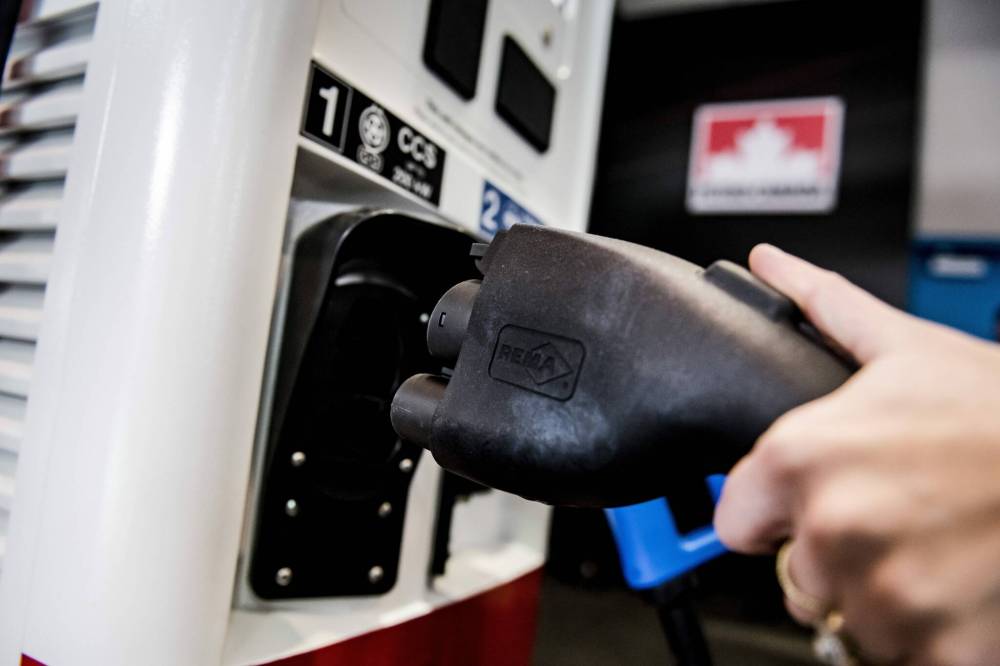
The City of Winnipeg is seeking advice on how to add enough charging stations to power a fleet of city-owned all-electric vehicles. (Christopher Katsarov / The Canadian Press files)
“This is part of a large push to promote electric vehicles, so I’m pleased to see it going forward. I don’t know what the cost would be to implement all of the 1,600 electric vehicles but… I think this (effort) is doable and it’s taking advantage of technology that’s coming on stream pretty quickly. I’m excited to see us at least considering (a greener fleet),” said Coun. Brian Mayes, chairman of council’s water, waste and environment committee.
While Winnipeg Transit vehicles and provincially-owned ambulances are not included in the study, the affected fleet would include light vehicles used by the remaining city departments, including public works, forestry and community services.
The city now owns two electric vehicles and two electric vehicle chargers, while it offers another eight chargers for public use, spokesman Adam Campbell wrote in an email.
“We are still studying (the) environmental impact of electrifying our entire light fleet… Estimated costs and timelines will be looked at as part of the consultant’s report, which we anticipate to receive by the end of 2023,” added Campbell.
In 2021, the city completed a one-year pilot project to test out two all-electric vehicles and two Level 3 (the fastest possible) charging stations. It found the switch did produce fuel and maintenance savings, while the vehicles themselves cost more than hybrid or gas-powered options.
“I don’t know what the cost would be to implement all of the 1,600 electric vehicles but… I think this (effort) is doable.”–Coun. Brian Mayes
Mayes said the higher initial price tag has been a key obstacle to the city acquiring more electric vehicles. “We have no shortage of vision here, I think. Most of the time it’s just trying to find the money to do these projects… (but) I think the technology has progressed to the point where this becomes viable.”
The request for proposal says the consultant’s study should list priority locations for charging infrastructure upgrades and show where the Manitoba Hydro electric grid is most suited to the technology.
An environmental advocate said building capacity for a greener city fleet is an important step to combat climate change.
“This is exactly what agencies like this should be doing. (It) is looking at that future and then looking at what the plan would be in order to move towards that future… That is the right thing to do,” said Curt Hull, a project director with Climate Change Connection.

Hull noted vehicle transportation accounts for nearly half of total greenhouse gas emissions in Winnipeg, making it a key source of pollution to address. “Electrification of vehicle transportation will have a huge impact on our greenhouse gas emissions.”

Due to the high demand for electric vehicles and the fact they cost much less to operate on a per-kilometre basis than gas models, organizations should realize the electrification of vehicle transportation is “inevitable” and prepare for the change, said Hull.
Switching to an electric fleet could also help the city meets key goals of its climate change action plan, such as achieving net zero emissions by 2050 (meaning Winnipeg would release no greenhouse gas emissions or offset all emissions it releases by that year).
The RFP notes the city has budgeted $200,000 for the contract and will accept bids until June 26.
joyanne.pursaga@freepress.mb.ca
Twitter: @joyanne_pursaga
Joyanne is city hall reporter for the Winnipeg Free Press. A reporter since 2004, she began covering politics exclusively in 2012, writing on city hall and the Manitoba Legislature for the Winnipeg Sun before joining the Free Press in early 2020. Read more about Joyanne.
Every piece of reporting Joyanne produces is reviewed by an editing team before it is posted online or published in print — part of the Free Press‘s tradition, since 1872, of producing reliable independent journalism. Read more about Free Press’s history and mandate, and learn how our newsroom operates.
Our newsroom depends on a growing audience of readers to power our journalism. If you are not a paid reader, please consider becoming a subscriber.
Our newsroom depends on its audience of readers to power our journalism. Thank you for your support.
Joyanne is city hall reporter for the Winnipeg Free Press. A reporter since 2004, she began covering politics exclusively in 2012, writing on city hall and the Manitoba Legislature for the Winnipeg Sun before joining the Free Press in early 2020. Read more about Joyanne.
Every piece of reporting Joyanne produces is reviewed by an editing team before it is posted online or published in print — part of the Free Press‘s tradition, since 1872, of producing reliable independent journalism. Read more about Free Press’s history and mandate, and learn how our newsroom operates.
Our newsroom depends on a growing audience of readers to power our journalism. If you are not a paid reader, please consider becoming a subscriber.
Our newsroom depends on its audience of readers to power our journalism. Thank you for your support.
Related Articles
Canada, U.S. to build bilateral charging corridor

Advertisement Advertise With Us
Advertisement Advertise With Us