A half-century later: ‘you are innocent’ King’s Bench chief justice acquits, apologizes to Indigenous men found guilty in 1973 slaying
Read this article for free:
or
Already have an account? Log in here »
To continue reading, please subscribe:
Digital Subscription
One year of digital access for only $1.44 a week*
- Enjoy unlimited reading on winnipegfreepress.com
- Read the E-Edition, our digital replica newspaper
- Access News Break, our award-winning app
- Play interactive puzzles
*Billed as $5.77 plus GST every four weeks. After 52 weeks, price increases to the regular rate of $19.95 plus GST every four weeks. Offer available to new and qualified returning subscribers only. Cancel any time.
To continue reading, please subscribe:
Add Free Press access to your Brandon Sun subscription for only an additional
$1 for the first 4 weeks*
- Enjoy unlimited reading on winnipegfreepress.com
- Read the E-Edition, our digital replica newspaper
- Access News Break, our award-winning app
- Play interactive puzzles
*Your next Brandon Sun subscription payment will increase by $1.00 and you will be charged $17.95 plus GST for four weeks. After four weeks, your payment will increase to $24.95 plus GST every four weeks.
Read unlimited articles for free today:
or
Already have an account? Log in here »
Hey there, time traveller!
This article was published 18/07/2023 (1196 days ago), so information in it may no longer be current.
“You are innocent.”
Brian Anderson and Allan John (A.J.) Woodhouse longed to hear those words for the past 50 years. And in a Winnipeg courtroom at noon Tuesday, Manitoba Court of King’s Bench Chief Justice Glenn Joyal finally spoke them aloud, acquitting the two First Nations men of the murder charges they were convicted of in 1974.
“You are heroes in every sense of the word,” Joyal told the packed courtroom, which erupted in cheers and applause when he declared their innocence.
Joyal went several steps further — he apologized to Anderson and Woodhouse on behalf of the Manitoba justice system, he asserted the entire case against them was rooted in systemic racism and he applauded their conviction, resilience and courage.
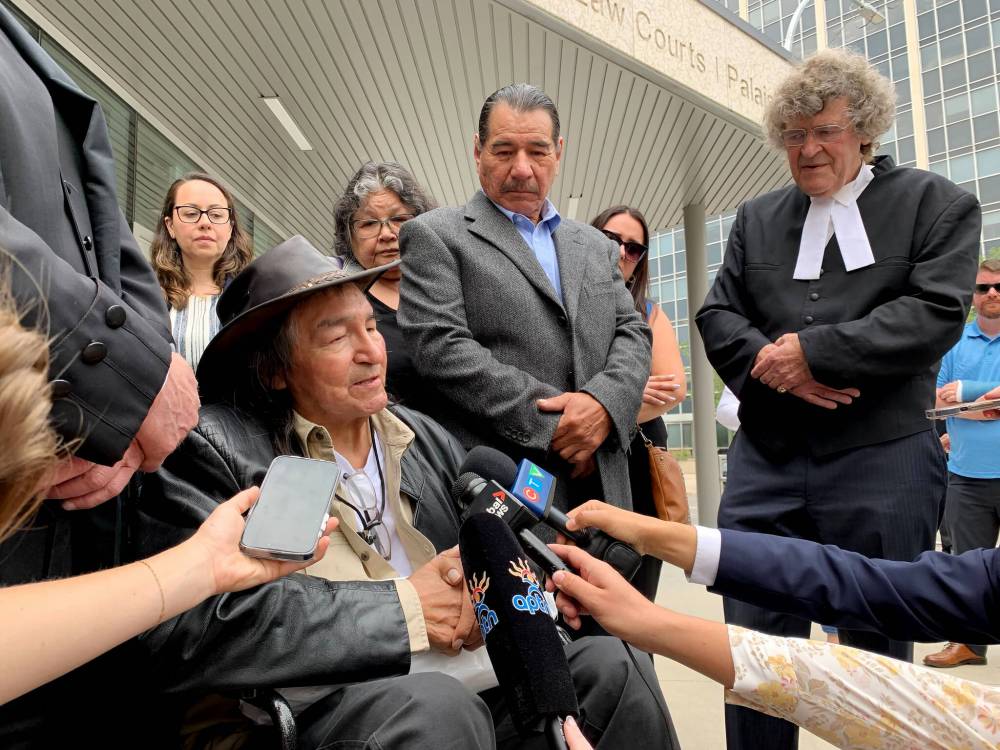
The decision puts to rest the men’s 50-year fight to clear their names. It comes after federal Justice Minister David Lametti quashed their convictions last month after new evidence came to light, prompting him to order a new trial in Manitoba. In court Tuesday, the Crown called no evidence, signalling Manitoba Justice’s recognition that a wrongful conviction occurred.
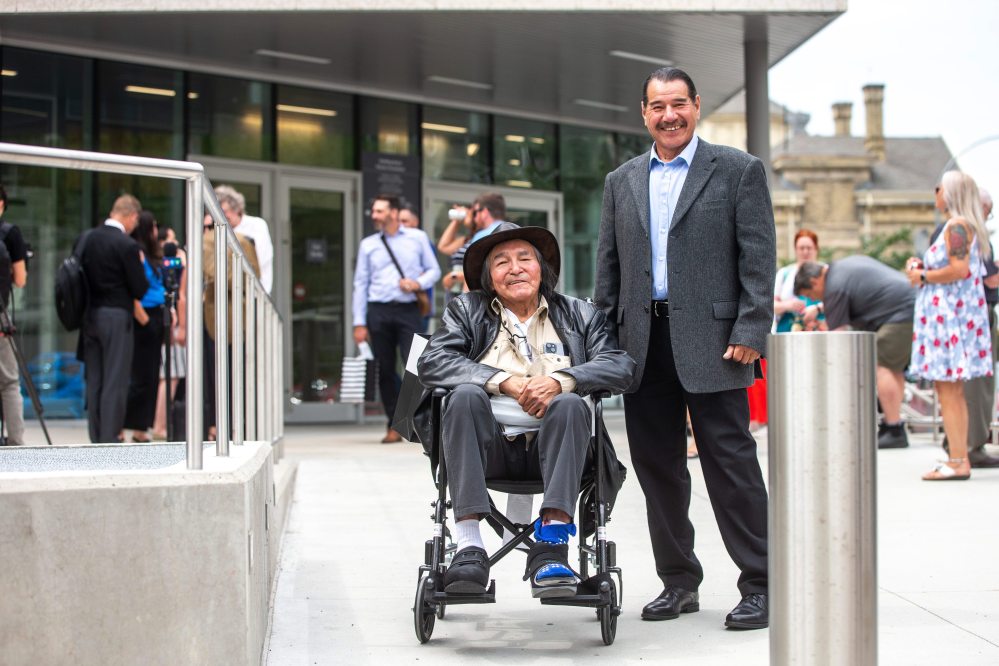
“I feel free,” Woodhouse, seated in his wheelchair, said after the hearing on the steps of the Law Courts, the same building where he was convicted.
In 1973, the two men from Pinaymootang First Nation (then known as Fairford First Nation, located 240 kilometres northwest of Winnipeg) became suspects in the brutal beating and stabbing of chef Ting Fong Chan. The 40-year-old father of two was killed on July 17, 1973, while walking home from work in Winnipeg.
Anderson and Woodhouse, then 18 and 17 respectively, were part of a group of four First Nations men who police decided committed the crime. They were convicted by an all-white, male jury. Anderson and Woodhouse were sentenced to life in prison with no eligibility for parole for 10 years.
Woodhouse served 23 years before he was granted full parole in 1990. Anderson served 10 years. He was granted full parole in 1983. They always maintained their innocence.
In an eerie moment in court, lawyers for Anderson and Woodhouse played a video clip from 1978 in which CTV’s W5 featured an interview with Anderson about his claims of innocence. Now 68, Anderson watched as he, then 22, told reporter Lloyd Robertson he didn’t know anything about the murder, and that the confessions were forced and false.
Crown attorney Michele Jules told court Tuesday the case “fell well below” the standards for prosecution in 1974 and “wouldn’t even come close” to meeting today’s charging standards.
Jules said the same Winnipeg police detective squad that obtained the confessions had been accused of using violence and intimidation to produce manufactured statements in similar cases. Anderson and Woodhouse testified during their initial trial that their statements were false, coerced and manufactured.
Of the new evidence that came to light: a forensic linguist reviewed the confessions and determined the word patterns differ from Anderson and Woodhouse’s speech patterns. In 1973, both had a shaky grasp of English and had only recently moved to Winnipeg from Pinaymootang.
“Systemic racism impacted the investigation, the prosecution and the adjudication of this case,” Jules said. “There is no question that there is not credible or reliable evidence to proceed.”
In response to the criticism leveled at the Winnipeg Police Service, the force sent the Free Press a statement: “The justice system has evolved, and will continue to evolve through the establishment of case law. Investigative standards involving statements and the collection of evidence reflect those changes. These are attempts by the justice system to address systemic issues. It is difficult to comment on conduct that occurred 50 years ago in an era before the Charter of Rights, and case law… that provide disclosure practices.”
Police said they support the decision to acquit Anderson and Woodhouse.
Court documents further detail the police and Crown failures in the case. While both Woodhouse and Anderson said they were at home and asleep on the night of the homicide, living with others who could have corroborated the alibis, police did not check.
And the Crown attorney in the case was former star prosecutor George Dangerfield, who has four other wrongful convictions to his name. As in his other overturned convictions, information that should have been disclosed to the defence — police reports, in Anderson and Woodhouse’s case — was not.
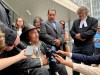
MIKAELA MACKENZIE / WINNIPEG FREE PRESS Innocence Canada lawyers Jerome Kennedy (left) and James Lockyer speak to the media after Allan Woodhouse and Brian Anderson were acquited at the Law Courts on Tuesday.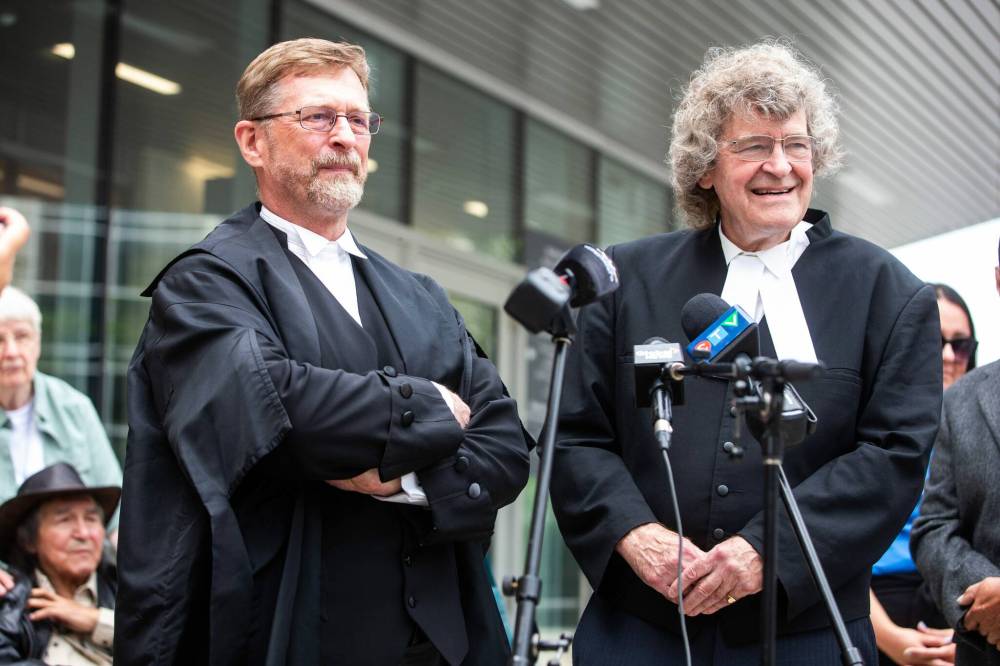
James Lockyer, founding director of Innocence Canada (formerly the Association in Defence of the Wrongly Convicted) who represented Anderson and Woodhouse, told court police would have known they could get away with falsifying confessions.
“And they did get away with it. And these men spent 50 years (incarcerated or on parole),” Lockyer said.
Jerome Kennedy, a lawyer with Innocence Canada, called the case “a tragedy of epic proportions.”
In a statement issued as the hearing was set to begin, Manitoba Justice Minister Kelvin Goertzen apologized to Anderson and Woodhouse and said he recognizes the “hardship” for the Chan family.
“While nothing that can be said that will bring back the years of lost freedom or the time away from family and friends, as the current attorney general of Manitoba I offer my heartfelt apologies to Mr. Anderson, Mr. Woodhouse and their families,” said Goertzen, who was not available for an interview with the Free Press.
“While nothing that can be said that will bring back the years of lost freedom… I offer my heartfelt apologies to Mr. Anderson, Mr. Woodhouse and their families.”–Justice Minister Kelvin Goertzen
The hearing was initially delayed because it had to be moved to a bigger courtroom to accommodate the large number of supporters. They included Thomas Sophonow and Frank Ostrowski, two men previously wrongfully convicted by Dangerfield.
Also present were Chan’s son, who was 14 when his father was killed, and Chan’s two grandchildren, who would never have known their grandfather.
Jules said the Chan family was gracious for attending and noted the wrongful conviction “only compounds” the tragedy for them.
MIKAELA MACKENZIE / WINNIPEG FREE PRESS Brian Anderson said his ambition is to enjoy life free from the burden of being wrongly labelled a murderer.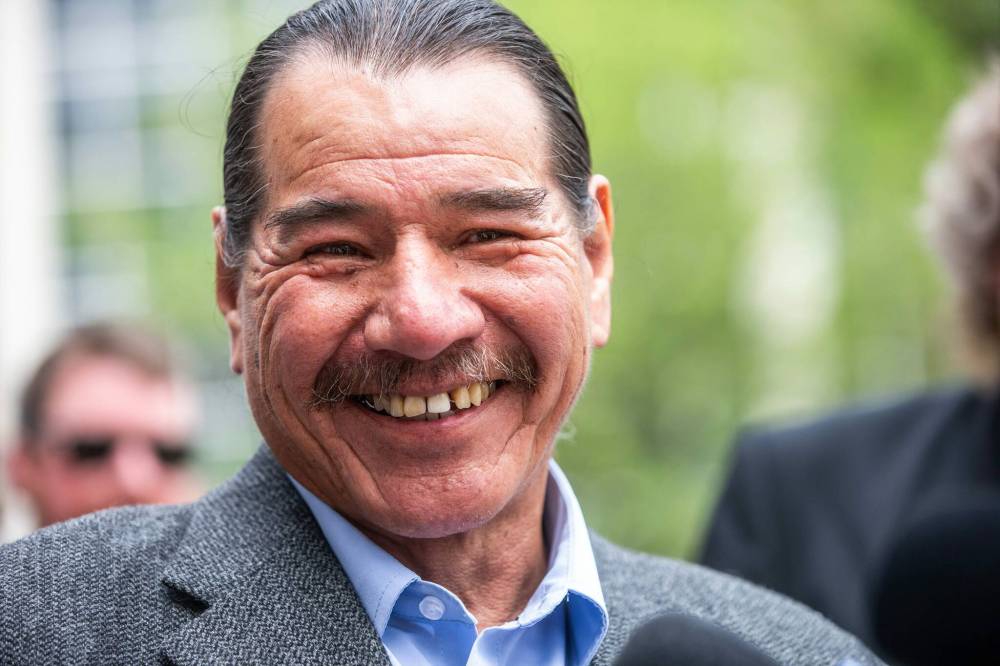
As the trio left the courtroom following the hearing, Anderson and Woodhouse’s supporters lined the sides of the exit shaking their hands and thanking them for attending.
Lockyer and Kennedy told reporters that Russell Woodhouse, who was convicted of manslaughter in the case, is now dead. And they haven’t been able to locate Clarence Woodhouse, who was convicted of murder.
Anderson, flanked by his extended family, said his ambition is to enjoy a life free from the burden of being wrongly labelled a murderer.
“I just want to be happy,” he said.
— With files from Erik Pindera
katrina.clarke@freepress.mb.ca

Katrina Clarke
Investigative reporter
Katrina Clarke is an investigative reporter at the Winnipeg Free Press. Katrina holds a bachelor’s degree in politics from Queen’s University and a master’s degree in journalism from Western University. She has worked at newspapers across Canada, including the National Post and the Toronto Star. She joined the Free Press in 2022. Read more about Katrina.
Every piece of reporting Katrina produces is reviewed by an editing team before it is posted online or published in print — part of the Free Press‘s tradition, since 1872, of producing reliable independent journalism. Read more about Free Press’s history and mandate, and learn how our newsroom operates.
Our newsroom depends on a growing audience of readers to power our journalism. If you are not a paid reader, please consider becoming a subscriber.
Our newsroom depends on its audience of readers to power our journalism. Thank you for your support.
Related Articles
Better 15 years late than never for innocent victims of corrupted prosecution